
AI assisted editorial. Published following automated quality checks, not independent fact verification. Confirm factual, safety and legal matters with appropriate professionals.
The short answer
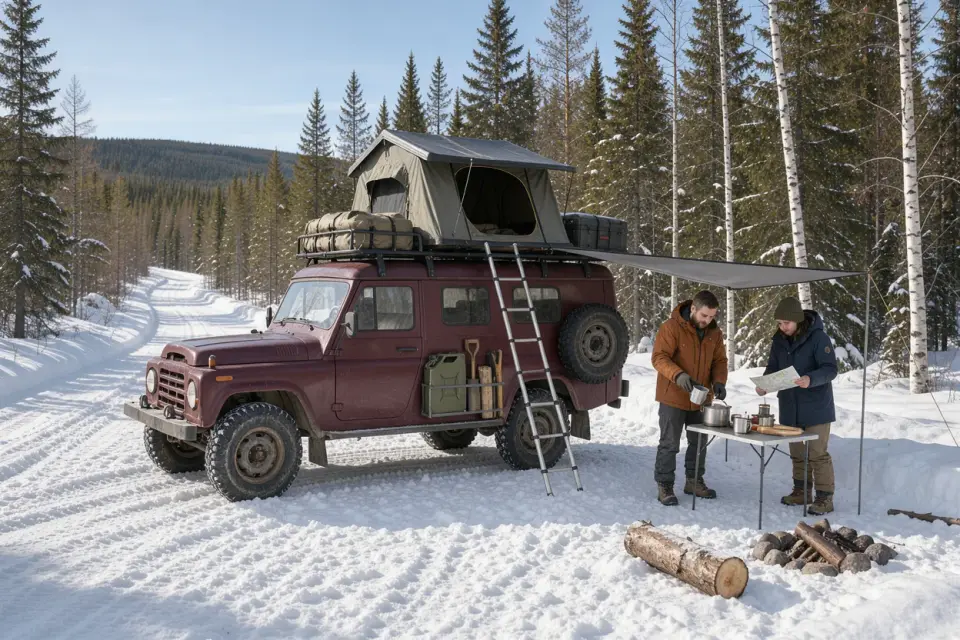
Selecting vehicle mounted sleeping gear requires balancing setup speed, packed footprint, roof load capacities, and living space. This guide outlines how hard shell and soft shell roof tents fit different overland journeys, using partner RoofBunk · UK by RoofBunk as a clear market example to help you evaluate design tradeoffs, vehicle suitability, and gear durability before making an investment.
Key takeaways
- Hard shell roof tents generally offer faster setup and a lower aerodynamic profile, whereas soft shell folding models often provide a larger mattress area for families.
- Always calculate dynamic and static roof weight limits for your vehicle and roof rack before committing to any rooftop sleeping system.
- Verify weatherproofing fabrics, ventilation ports, and ladder anchoring designs against the specific climate conditions you expect on remote tracks.
- Ask suppliers directly about spare parts availability, ladder extensions, and bracket mounting compatibility for your specific rack style.
The Role of Rooftop Tents in Overland Travel
In vehicle based adventure travel, sleep systems define the daily rhythm of camp life. Moving your sleeping quarters onto the roof rack keeps living quarters clear of damp ground, rocky terrain, and crawling insects, while liberating interior cargo room for water storage, recovery equipment, and cooking setups. However, mounting heavy equipment high on an overland rig affects driving dynamics, fuel efficiency, and trail clearance.
Choosing gear in the camping and outdoor equipment category requires a clear understanding of your vehicle platform and travel cadence. Frequent touring with daily campsite moves demands a setup that opens and closes in minutes, whereas longer static stays in remote trail camps prioritise spacious living annexes and weather protection over pure packing speed.
As a partner example in this market, RoofBunk · UK by RoofBunk provides hard shell and soft shell roof tents designed to fit cars, vans, pickups, and 4x4s, alongside accessories and spare parts according to company descriptions. Examining these distinct styles allows overland buyers to clarify their own operational needs before purchasing.
Comparing Shell Formats: Tradeoffs on the Trail
Roof mounted shelters broadly divide into two engineering formats: hard shell pop up or wedge systems, and fold out soft shell canvas platforms. Neither format is universally superior; each solves distinct challenges encountered during life on the road.
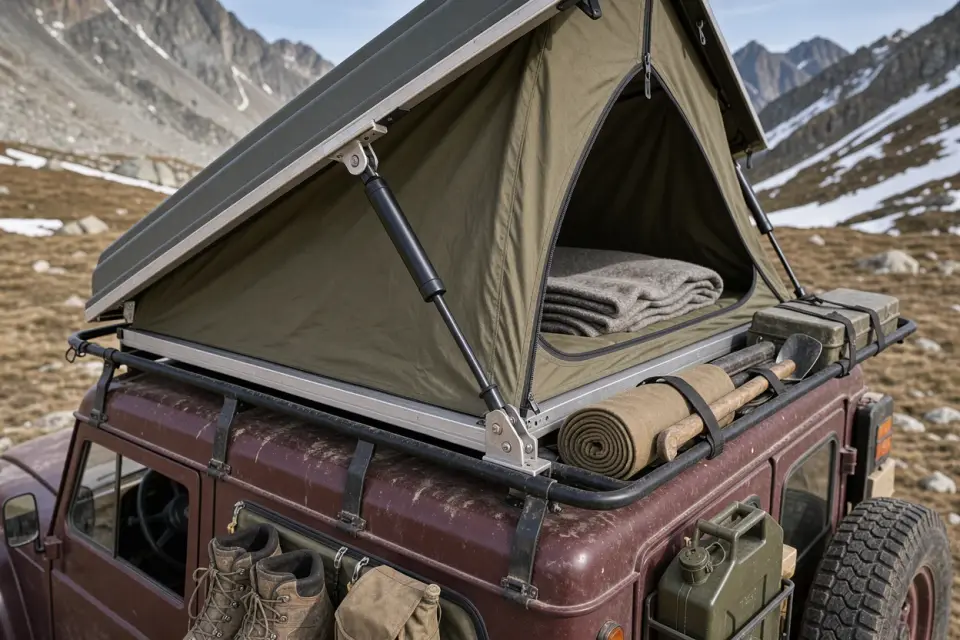
Hard shell enclosures feature rigid upper lids made from materials like fibreglass or aluminium. They open rapidly using internal gas struts or mechanical hinges. Because bedding often remains packed inside when closed, they allow overland travellers to arrive late at a trail camp and establish a secure berth within moments. The primary tradeoffs are interior headroom distribution, heavier overall dry weights, and fixed mattress footprints that rarely accommodate more than two adults.
Soft shell designs fold outward from an aluminium baseboard, using an external ladder as structural leverage. They unfurl into expansive sleeping spaces, frequently doubling the footprint of the roof rack itself. This makes them well suited to family overland journeys or crews requiring extra elbow room. In exchange, soft shell tents require manual zip covers, take longer to pack away when wet, and present a taller profile that increases wind resistance on highway transit stages.
Practical Comparison Framework for Vehicle Sleeping Systems
When auditing camping and outdoor equipment for your vehicle, apply this three tier comparison framework to assess suitability: transit efficiency, camp livability, and structural compatibility.
Transit efficiency covers aerodynamic drag, overall folded height, and mass distribution. An overland rig negotiating off camber tracks or dense woodland canopy suffers if its roof mass is excessive. Assess whether the closed tent clears standard garage doorways or low hanging branches along your intended routes.
Camp livability involves internal usable volume, condensation control, and bad weather endurance. Inspect window awning structures, mesh insect screens, and whether built in mattress foam provides sufficient thermal insulation from the cold baseplate underneath. Consider whether the tent design permits attaching an annex room for changing, cooking, or sheltering during extended downpours.
Structural compatibility centres on hardware interfaces. Confirm whether the mounting channels fit standard square crossbars, aerodynamic wing profiles, or heavy duty platform racks without requiring bespoke fabrication or custom spacers.
Hypothetical Decision Example: Choosing for a Rig and Route
Consider a hypothetical overland traveller preparing a mid sized four wheel drive for extended exploration across remote mountain tracks and coastal routes. The trip involves two adults moving campsites every single afternoon, frequently arriving near dusk in wet weather conditions.
In this scenario, a hard shell wedge model presents significant advantages over a fold out soft shell alternative. The rapid gas strut deployment allows the crew to establish camp without wrestling a saturated exterior travel cover. The rigid upper shell provides superior resistance to buffeting coastal gales, and the narrow packed profile maintains lower centre of gravity stability on technical off camber trails.
Conversely, if that same vehicle were carrying a family of three planning multi day basecamps in warm forest regions, the soft shell format would prove more practical. The overhang creates sheltered ground level shade beneath the ladder, and the expansive interior platform discounts the necessary mattress space for comfortable rest days.
Key Inquiries to Put to Equipment Suppliers
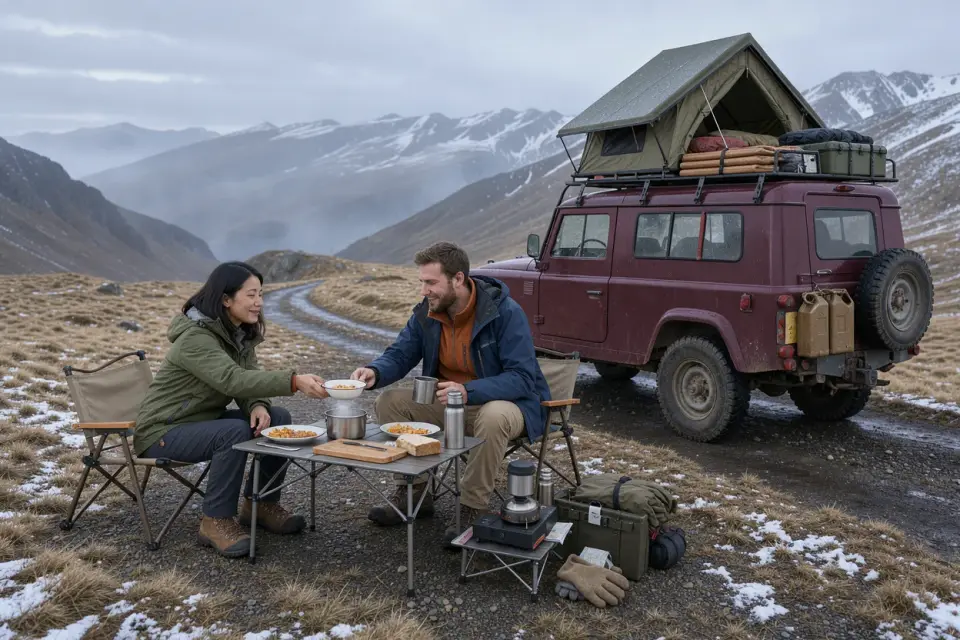
Before purchasing rooftop camping equipment from brands like RoofBunk or independent retailers, obtain precise verification directly from the vendor regarding your rig's configuration.
First, ask: What is the exact dry weight of the tent including the mounting brackets and internal ladder, and how does this correlate with typical dynamic roof load limits? Ensure you distinguish between static ratings (weight supported while stationary) and dynamic limits (weight supported while driving on rough terrain).
Second, enquire about replacement components: Are individual parts such as replacement gas struts, mounting track sliders, rainfly tension rods, and ladder brackets kept in stock for domestic dispatch if damaged on the trail?
Third, request clarity on fabric treatment and ventilation: How does the canvas handle extended rainfall, and what specific venting configurations are installed to manage interior condensation during cold overnight halts in high humidity areas?
Common questions
What is the difference between dynamic and static vehicle roof limits?
A dynamic roof load limit is the maximum permissible weight allowed on your vehicle roof while travelling, calculated to account for braking, cornering, and terrain forces. The static limit is the stationary capacity when the vehicle is parked, which is significantly higher to support occupants.
Can roof tents remain mounted to overland vehicles all year round?
While durable travel covers and hard shells withstand outdoor elements, continuous exposure accelerates fabric wear, increases fuel consumption, and exposes mounting hardware to road salt. Storing the unit indoors between expedition seasons helps preserve seal integrity and fabric coatings.
How do overland travellers handle condensation inside rooftop shelters?
Condensation occurs when warm body vapour contacts cooler tent fabrics. Manage it by maintaining cross flow ventilation through cracked window flaps, using an anti condensation mesh beneath the mattress, and thoroughly airing out canvas before prolonged storage.
Do I need specialised roof bars to mount a roof tent to my vehicle?
Most roof tents require robust aftermarket crossbars or an expedition platform rack with a certified dynamic rating that matches or exceeds the tent weight. Flimsy factory fitted decorative rails are rarely suitable for carrying overland sleeping systems across rough terrain.
Partner discounts in this guide
Overland Finds may earn a commission from qualifying purchases made by customers in the UK through this link, at no additional cost to you. This does not imply independent product testing or endorsement. Confirm current terms and availability with the partner.

RoofBunk · UK
Hard shell and soft shell roof tents that fit cars, vans, pickups and 4x4s, plus accessories and spare parts from RoofBunk.
- Valid in
- UK
- Discount
- UK offer · Shop roof tents