
AI assisted editorial. Published following automated quality checks, not independent fact verification. Confirm factual, safety and legal matters with appropriate professionals.
The short answer
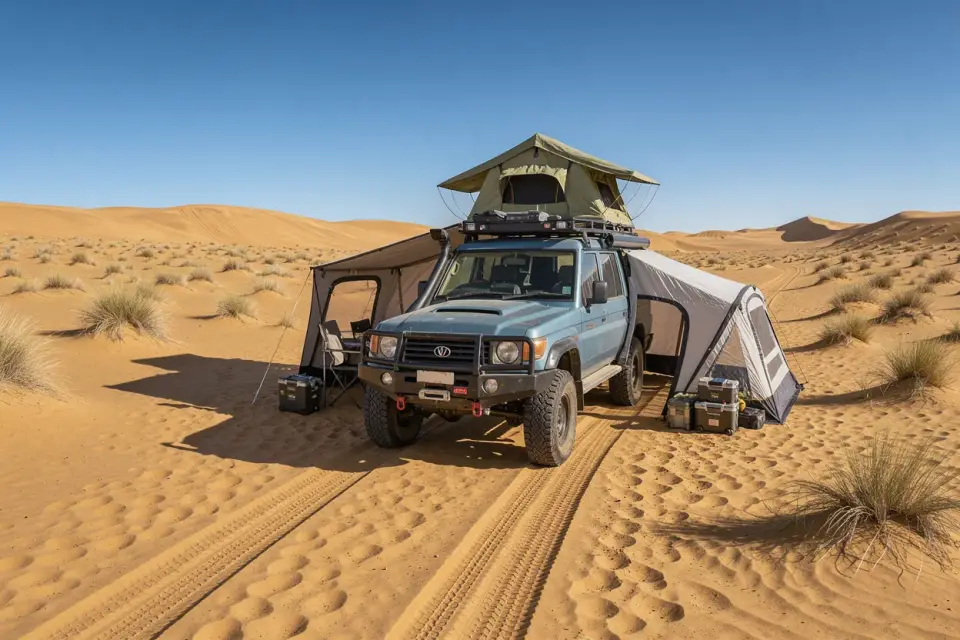
Selecting camping and outdoor equipment for vehicle based travel requires balancing pack size, pitch speed, and weather resistance against limited interior storage. This guide examines how core equipment categories like campervan awnings, vehicle blinds, and camp furniture fit overland journeys, using British brand OLPRO as a clearly identified partner example of what to check before buying.
Key takeaways
- Assess whether your travel rhythm favours quick pitch drive away awnings or compact canopy systems before buying auxiliary shelter.
- Verify rig specific dimensions, rail heights, and sliding door clearances rather than relying on generic vehicle category labels.
- Inspect pack down volume and payload impact alongside living space to protect your vehicle gross weight and interior accessibility.
- Inquire about modular spare parts, pole or beam replacements, and long term repairability when investing in overland camp gear.
Integrating Outdoor Equipment into Overland Travel
Vehicle based adventure travel places distinctive demands on camping and outdoor equipment. Unlike standard pitch and stay campsite holidays, overlanding involves repeated pack downs, varied terrain, unpredictable microclimates, and restricted internal vehicle volumes. Every piece of equipment carried inside or mounted outside a rig must earn its spot by offering durability, efficient deployment, and straightforward maintenance.
In overland life, an awning or tent often serves as a vital weather buffer, kitchen extension, or mudroom rather than merely a bedroom. Window blinds act as essential thermal barriers against condensation and heat transfer while securing interior privacy in remote laybys or urban transit stops. Compact, sturdy furniture turns an informal roadside stopping place into a functional workstation and cooking area without occupying excessive boot space.
As a partner example in this category, OLPRO is a British outdoor brand and certified B Corporation. Partner supplied descriptions state that OLPRO discounts tents, campervan and motorhome awnings, caravan covers, vehicle blinds, camping furniture, and accessories under their OLPRO · UK banner. Independent buyers evaluating this or any other brand must weigh these catalogued categories against their vehicle payload, available mounting rails, and touring style.
Practical Comparison Framework for Vehicle Shelters
When expanding living space beyond the vehicle cabin, overlanders typically choose between three distinct shelter formats: fixed vehicle mounted canopies, freestanding drive away awnings, and traditional ground tents. Selecting the right setup requires balancing convenience on the move against stability at camp.
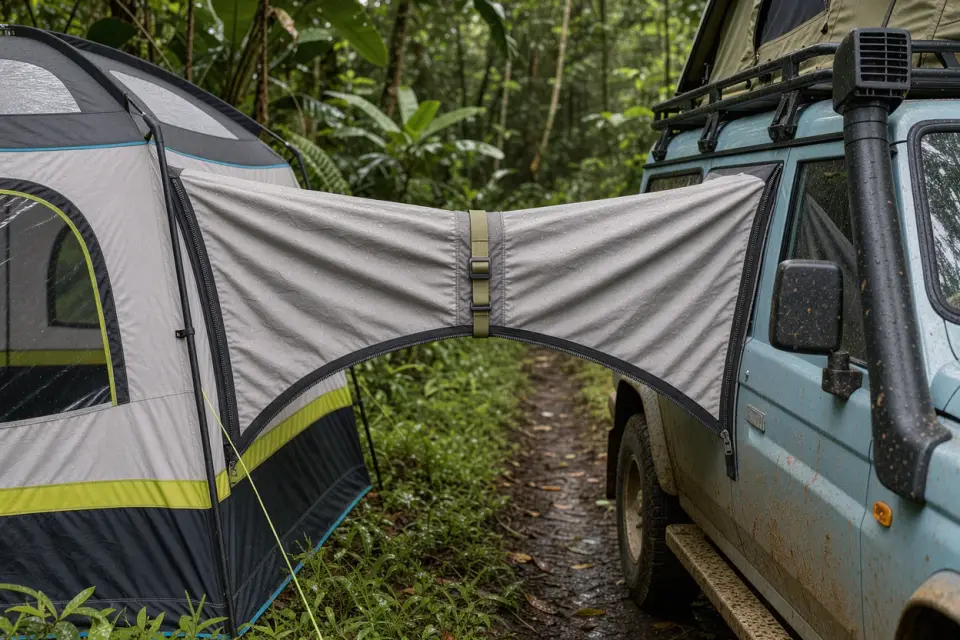
Drive away awnings connect to the vehicle via an awning channel, gutter, or magnetic strip, featuring a tunnel section that detaches so the vehicle can leave camp for daytime excursions. They offer enclosed weather protection and stand independently while the rig is away. The trade off lies in bulk and setup effort: even air beam variants require substantial interior storage space and meaningful time to peg out properly, which can hinder itineraries that demand daily relocations.
Canopy pull outs mount directly to roof racks or gutters. They deploy in minutes, creating instant shade or drizzle protection with zero interior footprint. However, their open sided nature leaves gear vulnerable in driving rain, and leaving camp requires rolling the unit away every single time.
Ground tents offer full independence from the vehicle, freeing up roof weight and rack space entirely. They serve well for rugged exploration where trails are too tight for external attachments, yet they lack the seamless, dry transit corridor between the vehicle interior and living quarters that integrated awnings provide.
Essential Questions to Ask Equipment Sellers
Before purchasing vehicle awnings, blinds, or camp furniture from outdoor retailers, ask pointed questions tailored to life on the road. High street advice frequently assumes manicured campsite lawns, whereas overlanders regularly face rocky ground, coastal winds, and unusual vehicle configurations.
What is the exact connection tunnel height range, and how does the fabric clear open sliding doors? Vehicle conversions vary widely in ride height due to suspension upgrades, all terrain tyres, or pop top installations. An awning tunnel that is too low will pull taut or foul sliding doors, while one that is too tall collects rainwater.
What are the compressed pack dimensions and total gross weight of the kit? Space inside an overland vehicle is finite. Knowing the bag size ensures you can designate a secure, low down storage position that does not compromise driving visibility or safety.
Are replacement air beams, poles, connection strips, and valve seals available separately? Overlanding trips subject equipment to vibrations, abrasive dust, and sustained UV exposure. A seller should be able to supply individual replacement parts rather than requiring an entirely new purchase if an isolated component fails.
What fabric coatings, hydrostatic head ratings, and seam constructions are used? Persistent mountain rain and damp morning pack downs demand robust water repellency and mould resistant materials that can tolerate being packed damp for short drives to the next camp.
Hypothetical Decision Example: Fast Touring vs Static Basecamp
To illustrate how touring style dictates gear choice, consider a hypothetical comparison between two overland parties planning different styles of vehicle based travel.
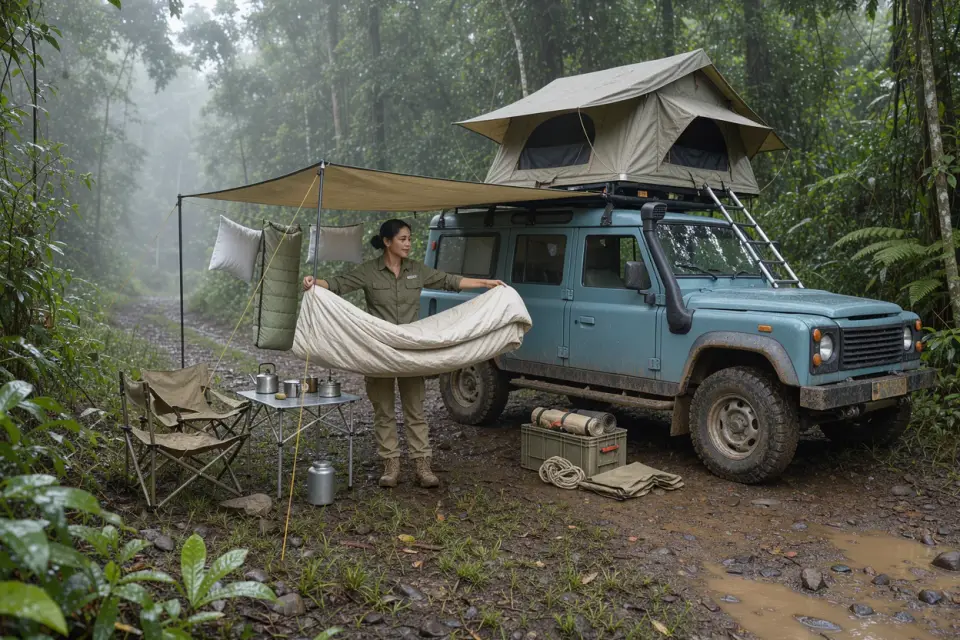
Traveller A drives a short wheelbase 4x4 camper on an active three week touring route across northern Scotland, changing wild camp locations every afternoon. For this itinerary, large drive away air awnings would become a chore due to constant pitching, unpegging, and packing bulky wet fabric into tight living quarters. Traveller A opts for tailored internal thermal window blinds, a simple fold out canopy, and low profile aluminium camp chairs that slide under a drawer system, keeping daily transition times under ten minutes.
Traveller B operates a medium wheelbase campervan as a family basecamp, spending four to seven nights at each remote valley location to hike and telecommute. Their vehicle serves as a sleeping cabin, but they require a dry, standing height living room and dining zone. Traveller B selects a drive away inflatable awning with an adaptable connecting cowl, plus full height camp furniture and an external ground tarp. The larger pack volume is an acceptable compromise because the vehicle stays parked for days at a time, or detaches effortlessly from the freestanding shelter for supply runs.
Common questions
How do vehicle blinds assist overlanders during extended trips?
Vehicle thermal blinds provide both privacy when sleeping in public or exposed laybys and vital thermal regulation. They help reduce solar heat gain in warm climates, minimise interior heat loss in cold mountain conditions, and reduce morning condensation on interior glass panels.
What is the difference between poled and inflatable drive away awnings for overland rigs?
Poled awnings use fibreglass or steel frames, which pack into longer, narrower bundles and remain simple to field repair with splints. Inflatable air beam awnings replace rigid poles with pressurised air tubes, pitching faster with a manual or electric pump, but packing down into larger, heavier bags.
What should I inspect regarding my vehicle before ordering an awning?
Measure the rail or gutter attachment height from level ground to your mounting point, accounting for loaded suspension and tyre sizes. Check the swing path of rear barn doors or the clearance of sliding side doors, and identify whether your vehicle uses an awning rail, roof bars, or gutter clamps.
Can camping furniture withstand prolonged overland travel?
Overland travel subjects furniture to continuous road vibration, dirt, and variable terrain. Look for tables and chairs built with reinforced pivot points, corrosion resistant hardware, adjustable leg lengths for uneven ground, and flat folding profiles that stow securely against bulkhead tie downs.
Partner discounts in this guide
Overland Finds may earn a commission from qualifying UK purchases made through this link, at no additional cost to you. This does not imply independent product testing or endorsement. Confirm current terms and availability with the partner.
OLPRO · UK
Shop tents, campervan and motorhome awnings, caravan covers, vehicle blinds, camping furniture and accessories from OLPRO, a British outdoor brand and certified B Corporation.
- Valid in
- UK
- Discount
- UK offer · Shop tents and awnings