
AI assisted editorial. Published following automated quality checks, not independent fact verification. Confirm factual, safety and legal matters with appropriate professionals.
The short answer
Choosing the right camping and outdoor equipment requires balancing shelter dimensions, pack size, transit durability, and climate suitability. Rather than buying all in one bundles without checking specifications, overland travellers should audit vehicle payload, storage volume, and pitch frequency. This guide provides a balanced evaluation framework using Camping World UK as a partner example.
Key takeaways
- Audit vehicle payload and packed dimensions before ordering bulky items such as drive away awnings, family tents, or camp furniture.
- Differentiate between fast pitch weekend shelters and robust, weather resistant seasonal setups suited to extended travel.
- Review aftersales support, spare part availability, and warranty policies directly with the retailer prior to purchase.
- Prioritise modular equipment that can be adapted across diverse climates rather than overly specialised single purpose camping items.
Understanding Camping and Outdoor Equipment Categories
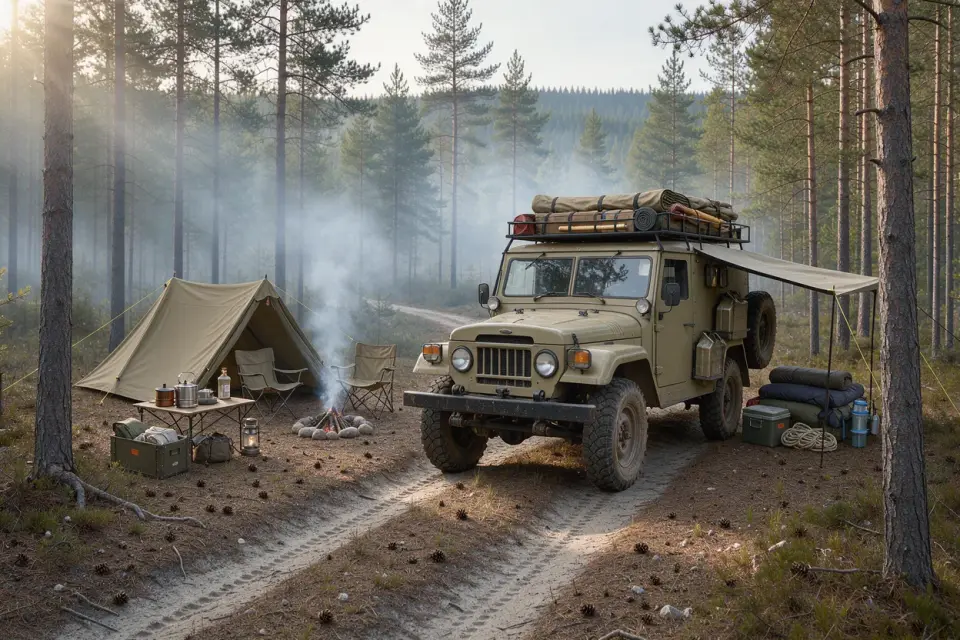
Equipping a vehicle for life on the road involves selecting gear that withstands continuous packing, vibration, and shifting weather conditions. Camping equipment generally spans four core categories: living shelters, sleep systems, camp kitchen setups, and structural utility gear such as awnings. Because every vehicle has finite payload and interior volume, each purchase requires an honest assessment of functional trade offs.
Shelters range from compact ground tents to inflatable family structures and vehicle mounted awnings. While ground tents offer standalone flexibility when leaving a pitch for daytime exploration, awnings create sheltered transitions between the vehicle interior and the surrounding campsite. Choosing between them depends heavily on whether your travel style prioritises rapid single night roadside stops or longer stays at designated pitches.
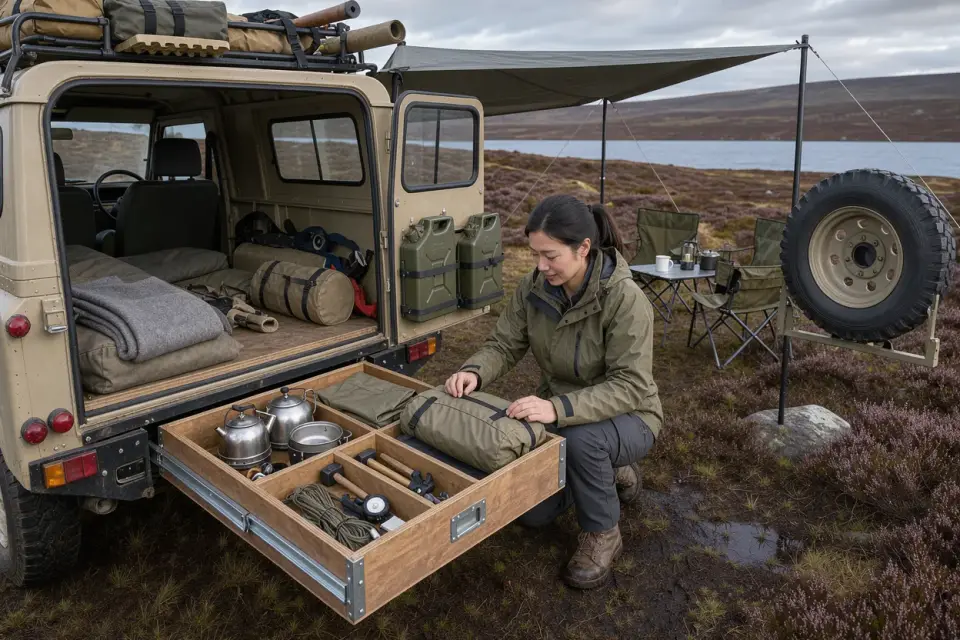
Sleep systems and furniture also represent substantial storage commitments. Camp chairs, folding tables, self inflating mats, and camp beds vary widely in folded bulk. In a touring vehicle, items that pack flat or nest cleanly are inherently more manageable than lightweight backpacking gear that may lack the durability required for everyday multi week vehicle travel.
Evaluating Camping World UK as an Equipment Source
When sourcing outdoor gear in the British market, specialist retailers offer broad product catalogues designed for general holidaymakers as well as touring campers. In this guide, Camping World · UK by Camping World serves as a clear commercial partner example. According to retailer provided promotional materials, the store invites customers to explore tents, camping equipment, and awnings for outdoor adventures across their current catalogue range.
Because partner provided descriptions focus on general range breadth rather than verified overland suitability, buyers must look closely at independent specifications before committing. A large camping retailer often carries high volume consumer brands alongside more rugged touring brands. This variety discounts convenience, allowing shoppers to consolidate orders for sleeping accessories, cooking hardware, and communal shelters under a single retailer.
However, broad availability does not guarantee that every tent or awning is suited to rough terrain, high wind exposure, or damp off grid conditions. Buyers should independently evaluate fabric hydrostatic head ratings, pole materials, and packed weights rather than assuming all family camping kit is engineered for demanding overland conditions.
A Practical Comparison Framework for Camp Gear
To evaluate competing gear options objectively, consider assessing candidate products against three primary operational trade offs: deployment speed versus stability, packed volume versus internal comfort, and fabric weight versus long term weather resistance.
Deployment speed versus structural stability: Air beam and pop up systems allow rapid single handed pitching, which is invaluable after long driving days in failing light. Conversely, traditional poled frames and heavy duty polycotton shelters often demand more time and additional hands to pitch, yet they generally provide superior stability in gusting conditions and lower risk of air tube puncture over prolonged expeditions.
Packed volume versus interior comfort: High headroom tents and expansive drive away awnings provide exceptional wet weather living space, which is critical when bad weather confines you to camp. However, their bulky carry bags can rapidly consume the boot or drawer space of an expedition vehicle, competing directly with tools, recovery gear, water containers, and vehicle maintenance spares.
Fabric weight versus weather durability: Lightweight polyester can dry quickly and pack into tight spaces, but it tends to flap loudly in windy moorland conditions and degrade faster under sustained ultraviolet exposure. Heavier technical cotton or ripstop materials offer quieter, more breathable interiors and robust service lives, balanced against increased bulk and higher initial investment.
Questions to Ask Before Placing an Order
Before purchasing large shelters, awnings, or camp furniture from a supplier like Camping World UK or an equivalent camping retailer, contacting customer support with focused questions can prevent costly ordering mistakes.
First, ask: What are the exact packed dimensions and total boxed weights of the items? Published descriptions sometimes list footprint dimensions accurately but omit the compressed transport size, which is critical for planning vehicle storage configurations.
Second, ask: Are replacement poles, air beams, valves, and flysheets stocked or readily orderable through the retailer? Wear and tear is an inevitable reality of road travel; knowing whether simple spare parts can be sourced avoids retiring an otherwise functional shelter after a single broken section.
Third, ask: How does the retailer handle warranty claims and returns for bulky items that develop faults during travel? Understanding return logistics and inspection timelines ensures you are prepared if equipment fails while you are away from home.
Hypothetical Decision Example: The Weekend Tourer vs Extended Overlander
Consider a hypothetical buying scenario involving two distinct travel profiles seeking a vehicle adjacent shelter from a major camping retailer.
Travel Profile A represents a couple taking short weekend breaks in mild conditions, using an estate car or small crossover. Their vehicle has limited internal storage, and their journeys involve frequent, spontaneous campsite changes. In this scenario, choosing a compact inflatable awning or quick pitch polyester ground tent prioritises low pack weight and rapid 15 minute setup, leaving sufficient boot space for basic camp bedding and a compact cooker.
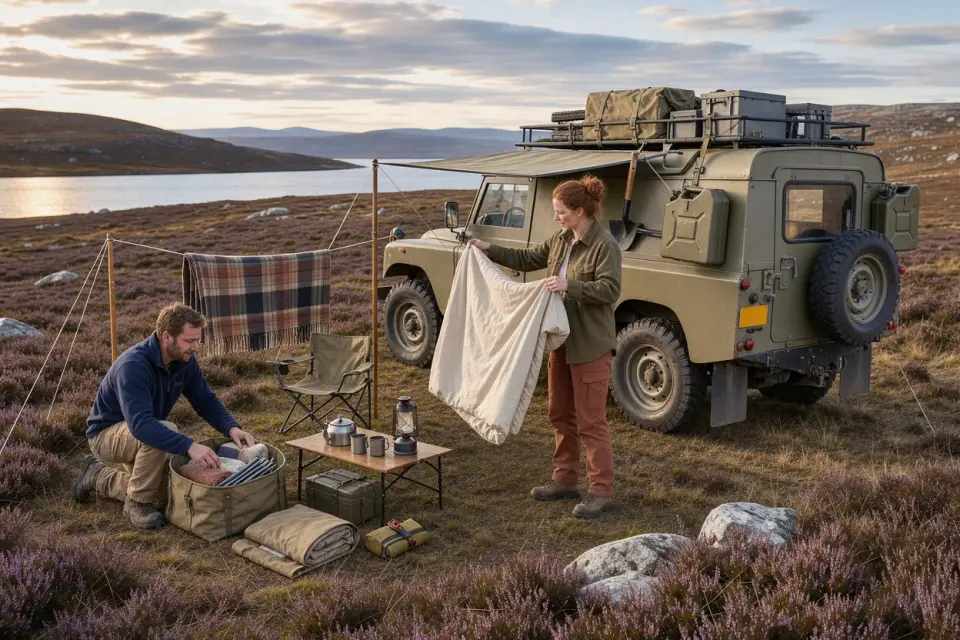
Travel Profile B represents an overland crew travelling for three consecutive weeks in variable autumn weather across northern latitudes. They remain at base locations for three to four days at a time and work or cook outdoors regardless of rain. For this profile, opting for a heavier technical canvas shelter with full storm guying and separate living compartments justifies the substantial boot space requirement, as the improved thermal regulation, durability, and interior headroom outweigh the penalty of a slower pitch.
Common questions
What is the difference between an awning and a standard tent for vehicle travel?
A vehicle awning attaches directly to roof rails, gutters, or a kador rail to provide covered transition space beside the vehicle. A standard tent stands independently and can remain fully pitched on a site if you drive away to explore during the day.
How do I ensure a drive away awning fits my specific vehicle height?
Measure the vertical distance from flat ground to your vehicle attachment rail or roof bar. Awnings are typically categorised into low, mid, and high connection ranges, and matching these measurements prevents loose, sagging fabric or strained attachment points.
Why does packed gear size matter as much as total weight for overland trips?
Bulky items consume essential interior cargo space, often forcing gear into passenger footwells or requiring high roof loads that can alter vehicle handling. Flat packing or compact gear preserves safe weight distribution and accessible storage inside the vehicle.
Can standard campsite equipment handle prolonged off grid travel?
Basic leisure camping equipment can perform well in dry, mild conditions, but long term road travel exposes gear to frequent folding, rough handling, and persistent wind. Checking material denier, frame construction, and joint durability helps ensure items last.
Partner discounts in this guide
Overland Finds may earn a commission from qualifying purchases made through this link, at no additional cost to you. This does not imply independent product testing or endorsement. Confirm current terms and availability with the partner.

Camping World · UK
Explore tents, camping equipment and awnings for your next outdoor adventure. Browse the current range from Camping World UK.
- Valid in
- UK
- Discount
- UK offer · Shop camping equipment