
AI assisted editorial. Published following automated quality checks, not independent fact verification. Confirm factual, safety and legal matters with appropriate professionals.
The short answer
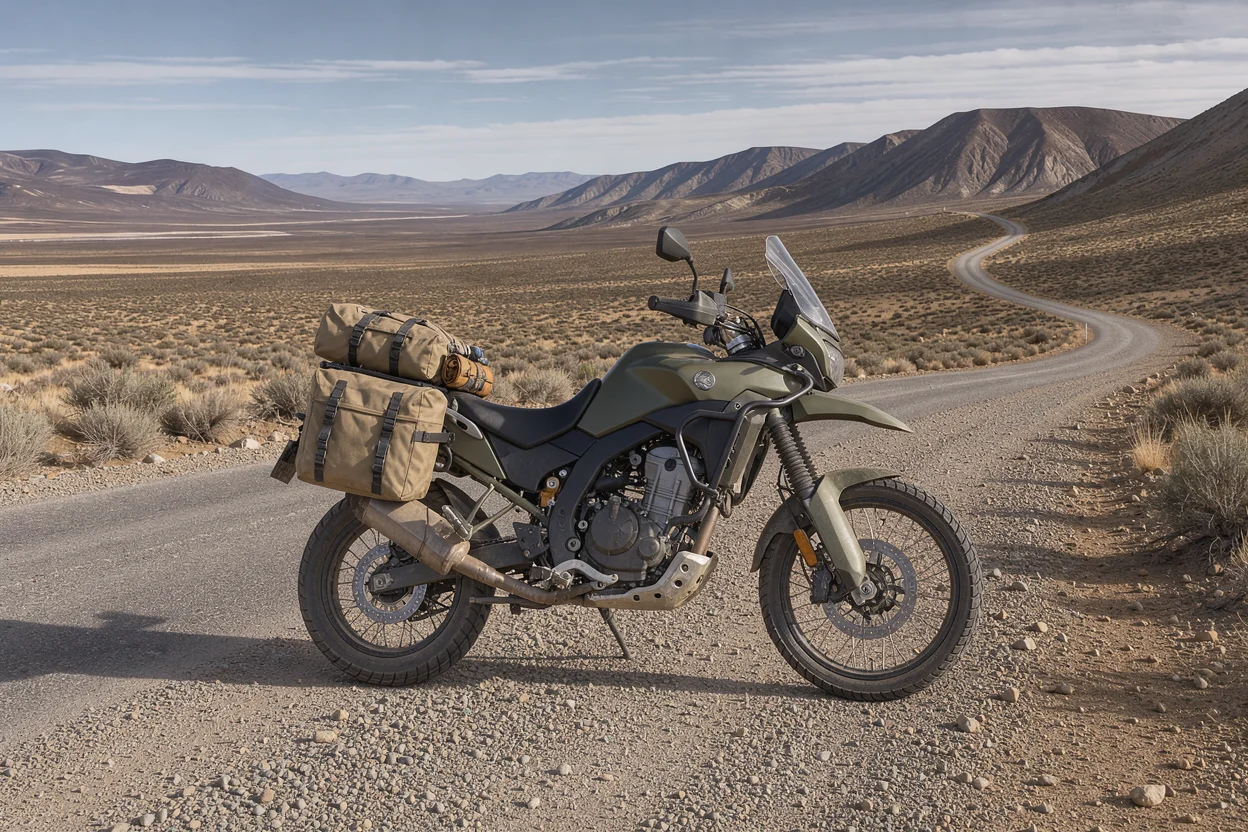
Selecting an adventure motorcycle for long journeys requires balancing physical weight, fuel range, ergonomics, and maintenance access. The ideal choice matches your typical road surface, luggage demands, and personal ability to handle the machine when fully loaded, rather than focusing purely on top tier engine output or marketing imagery.
Key takeaways
- Prioritise real world loaded weight and seat height over peak power to maintain manageable control on low traction surfaces.
- Evaluate standard luggage subframes and payload limits before purchasing to ensure they safely support your touring gear.
- Assess service accessibility and global consumable availability instead of relying solely on complex electronic rider aids.
- Inspect used machines thoroughly for hidden subframe stress, electrical splices, and neglected suspension linkage upkeep.
Understanding Core Compromises: Weight, Displacement, and Comfort
Every adventure motorcycle represents an engineering compromise between highway stability and unpaved manoeuvrability. Heavy, large capacity adventure machines excel at eating up motorway miles in supreme comfort, offering expansive wind protection, generous electrical capacity for heated accessories, and effortless high speed cruising. However, their substantial bulk turns off camber tracks, loose gravel, and slow speed manoeuvring into demanding physical challenges, especially when laden with touring gear.
Conversely, lighter single cylinder or modest parallel twin machines provide exceptional agility on narrow mountain trails, sandy ruts, and corrugated tracks. They are far easier to hoist upright after an inevitable drop in remote terrain and generally consume less fuel. The direct tradeoff is felt during continuous road transit: reduced weather deflection, noticeable engine vibration at sustained high speeds, and tighter physical dimensions that can fatigue taller riders over ten hour saddle stints.
Rather than searching for a nonexistent machine that masters all surfaces without penalty, your choice should reflect the genuine proportion of your route. If your itinerary involves eighty percent dual carriageway and tarmac links to access national parks, a mid to large capacity tourer offers appropriate endurance. If your plans prioritise remote desert tracks or technical forest trails, sacrificing highway pace for reduced curb weight is the safer, more enjoyable strategy.
The Practical Travel Evaluation Framework
To objectively compare machines across brands and eras, prospective buyers should use a structured four pillar assessment framework focusing on Ergonomics, Range, Payload, and Simplicity.
Ergonomic Fit: Assess seated posture, knee flexion, and standing transition. While seated, your arms should maintain a relaxed bend without straining towards the handlebars. When standing on the footpegs, your knees should grip the tank comfortably without requiring an unnatural hunch over the controls. Inadequate standing ergonomics lead to severe upper body fatigue on rough surfaces.
Range and Consumption: Calculate practical mileage per tank rather than advertised capacity. A usable travel range of at least two hundred and fifty miles provides vital reassurance between sparse fuel outposts. Machines with small fuel cells often require cumbersome external jerry cans or aftermarket cell replacements, altering the centre of gravity.
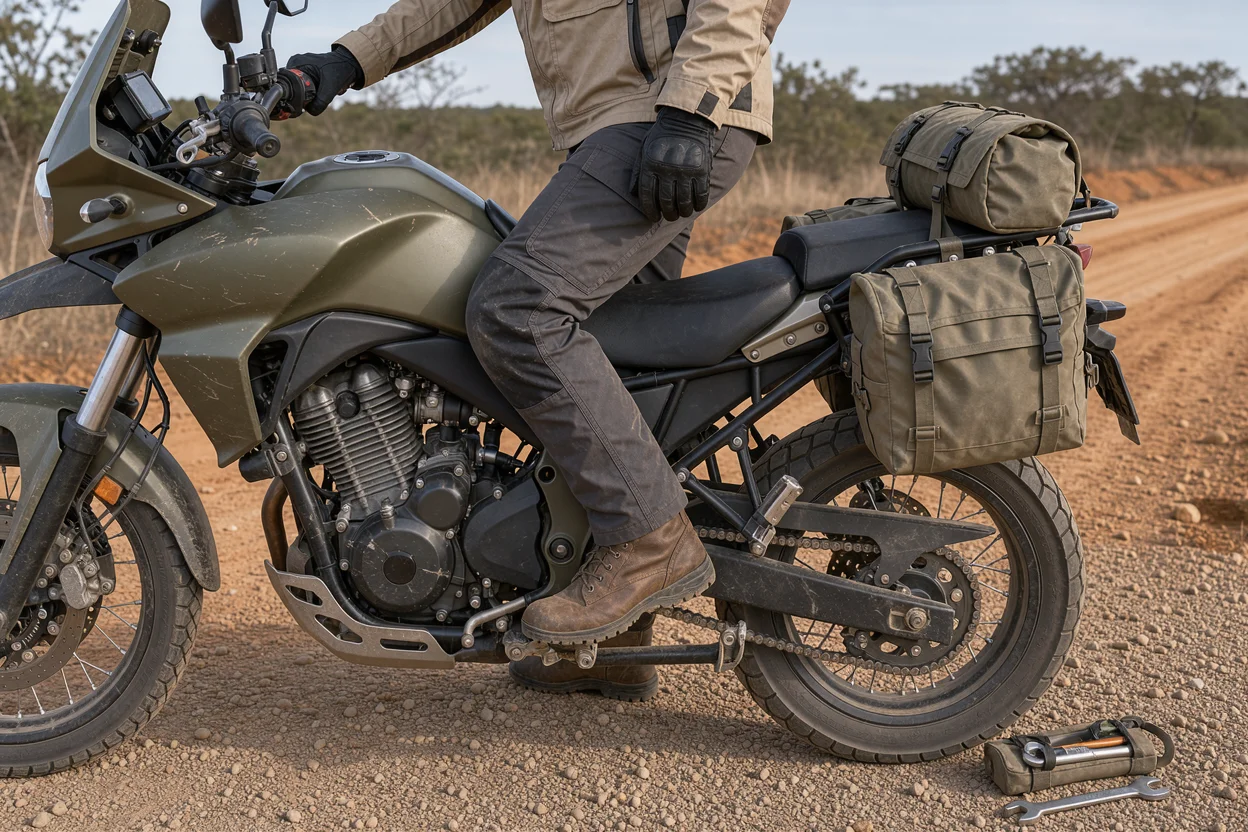
Payload Integrity: Check the manufacturer's gross vehicle weight rating against your planned luggage, protective equipment, and potential pillion passenger. Many dual sport frames feature lightweight aluminium or bolt on subframes that can crack under heavy luggage loads or repetitive rough road vibration.
Simplicity and Servicing: Determine how readily basic maintenance can be carried out. Air filter inspection, oil changes, and chain adjustments should not necessitate removing half the fairings. Highly complex electronic architectures may offer exceptional traction control, but they can prove difficult to diagnose at roadside locations where specialised diagnostic software is unavailable.
Key Questions to Ask Private Sellers and Dealers
When inspecting an adventure motorcycle, standard road bike questions are insufficient. The secondary market contains machines that have suffered heavy off tarmac abuse disguised by fresh plastics. You must probe specifically into the machine's usage and maintenance history.
Ask the seller: 'What modifications have been made to the electrical system?' Adventure riders frequently fit secondary spotlights, navigation cradles, and heated grips. Poorly executed wiring taps without dedicated relays can drain batteries unexpectedly or cause intermittent ignition faults.
Inquire: 'When were the swingarm, headstock, and suspension linkage bearings last cleaned and regreased?' These components endure relentless dust, mud, and pressure washing ingress. A seller who regularly strips and greases chassis pivots demonstrates a level of mechanical sympathy rare in general ownership.
Probe: 'Has the rear shock or front fork valving been altered for specific luggage or rider weights?' Aftermarket suspension upgrades can dramatically improve handling, but if sprung for a heavily loaded two up configuration, the machine may handle poorly and feel uncomfortably harsh under a solo rider.
Finally, ask: 'Has the bike suffered any subframe bending or frame contact during tip overs?' Examine mounting tabs for auxiliary luggage racks; distorted tabs or repainted welds often indicate structural stress from a heavy tumble.
A Hypothetical Decision Example: The Solo Trans Continental Dilemma
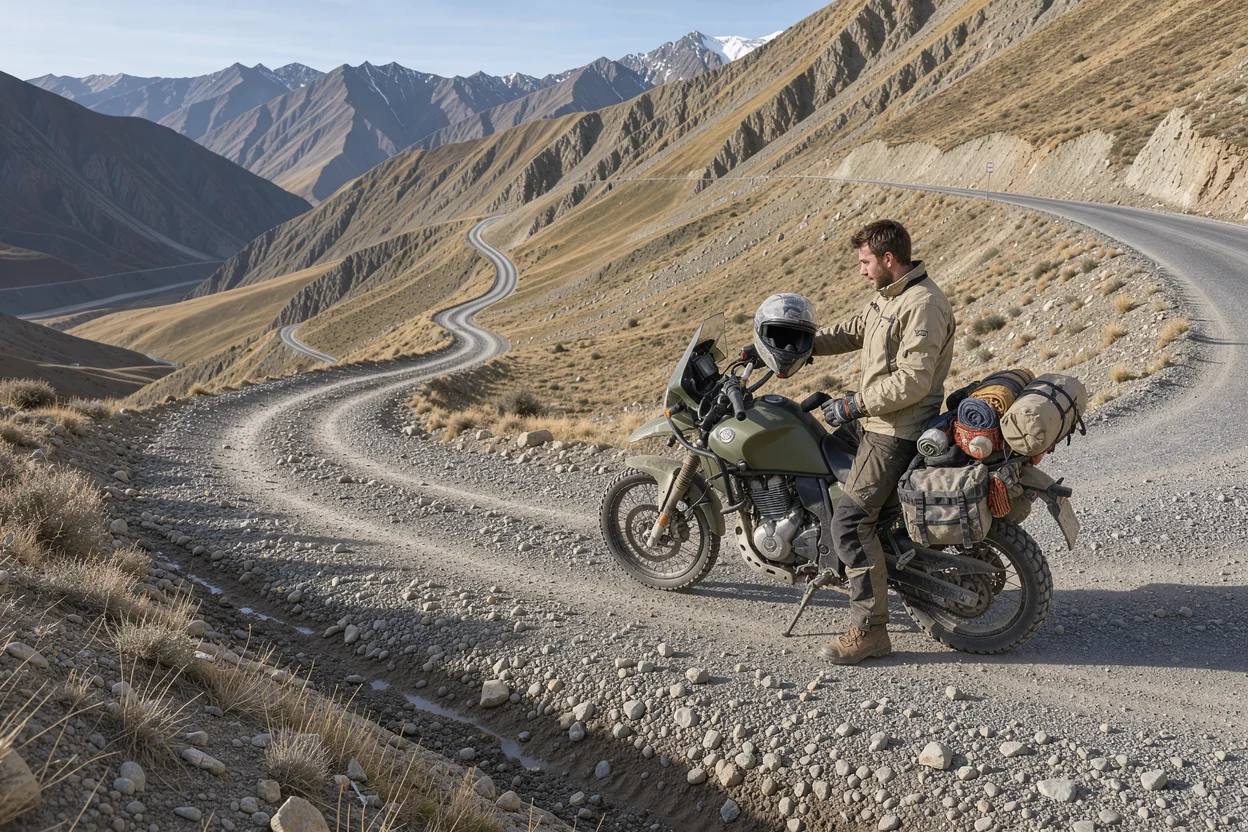
Consider a hypothetical buyer planning an extended six month solo journey traversing mixed European asphalt and Central Asian gravel passes. The rider possesses intermediate off road skills, stands at five feet ten inches, and plans to carry camping kit, tools, and personal belongings weighing thirty kilograms in total.
Option A is a high specification 1200cc twin cylinder adventure tourer. It offers unmatched luggage capacity, cruise control, and effortless motorway pace. However, its wet weight exceeds two hundred and fifty kilograms before luggage. In the event of a stall on a loose gravel hairpin, lifting the motorcycle unassisted presents a significant safety hazard.
Option B is a 650cc single cylinder trail oriented machine. It is exceptionally robust, lightweight, and mechanically simple. Yet, completing two thousand miles of motorway transit to reach the unpaved regions would induce high rider fatigue from vibration, limited wind deflection, and lower cruising speeds.
Option C is a middleweight twin cylinder machine of roughly 700cc to 800cc, weighing around two hundred kilograms wet. It balances sufficient high speed road manners with a manageable mass when navigating rutted mountain tracks. In this hypothetical scenario, Option C represents the most pragmatic compromise, as it does not overburden the rider during technical sections while retaining adequate cruising ability for transit stages.
Spotting Overlooked Costs and Incomplete Documentation
Acquiring an adventure motorcycle often incurs secondary expenses that buyers overlook during initial budgeting. Tyres designed for long distance mixed surface touring feature robust carcasses and specific tread patterns that wear rapidly if subjected to prolonged high speed tarmac riding under heavy loads. Budgeting for quality rubber suited to your real terrain split is essential.
Furthermore, personal ergonomics often demand aftermarket intervention. Standard windscreens frequently produce intrusive helmet buffeting at speed, requiring replacement screens or clip on deflectors. Handlebar risers, lower footpegs, and bespoke seats are common adjustments necessary to make a factory motorcycle truly capable of ten hour riding days.
Review documentation carefully. Cross reference service log stamps with receipts for replacement consumables. If an owner claims regular valve clearance checks were performed, request the specific measurement sheets. Missing service documentation on high revving, modern multi cylinder adventure bikes can foreshadow costly top end maintenance down the road.
Common questions
Is a chain drive or shaft drive preferable for long distance travel?
Shaft drives offer virtually maintenance free operation and keep the rear wheel clean of grease, making them ideal for long tarmac and well graded gravel tours. Chain drives require regular tensioning and lubrication but are substantially lighter, simpler to repair, and allow easy gearing adjustments in remote regions.
How important is tubeless tyre compatibility for adventure touring?
Tubeless tyres allow rapid roadside puncture repairs using simple plug kits without removing the wheel from the machine, saving significant time on road journeys. Tube type wheels, however, are more resilient against severe rim bends on rocky trails, as bent rims on tubeless wheels can immediately lose their air seal.
What seat height should I look for if I am new to unpaved surfaces?
While experienced riders often tolerate tall seats, riders venturing off tarmac benefit from being able to place the balls of both feet firmly on the ground. A manageable seat height builds confidence when coming to unexpected stops on off camber tracks, loose stones, or uneven trail ruts.
Are electronic rider aids necessary for long distance adventure journeys?
Electronic aids like cornering ABS and traction control provide a valuable safety margin on wet or variable tarmac. For off road travel, ensure these systems can be easily switched off or set to dedicated off road modes, as intrusive intervention can prevent necessary momentum on steep loose climbs.