
AI assisted editorial. Published following automated quality checks, not independent fact verification. Confirm factual, safety and legal matters with appropriate professionals.
The short answer
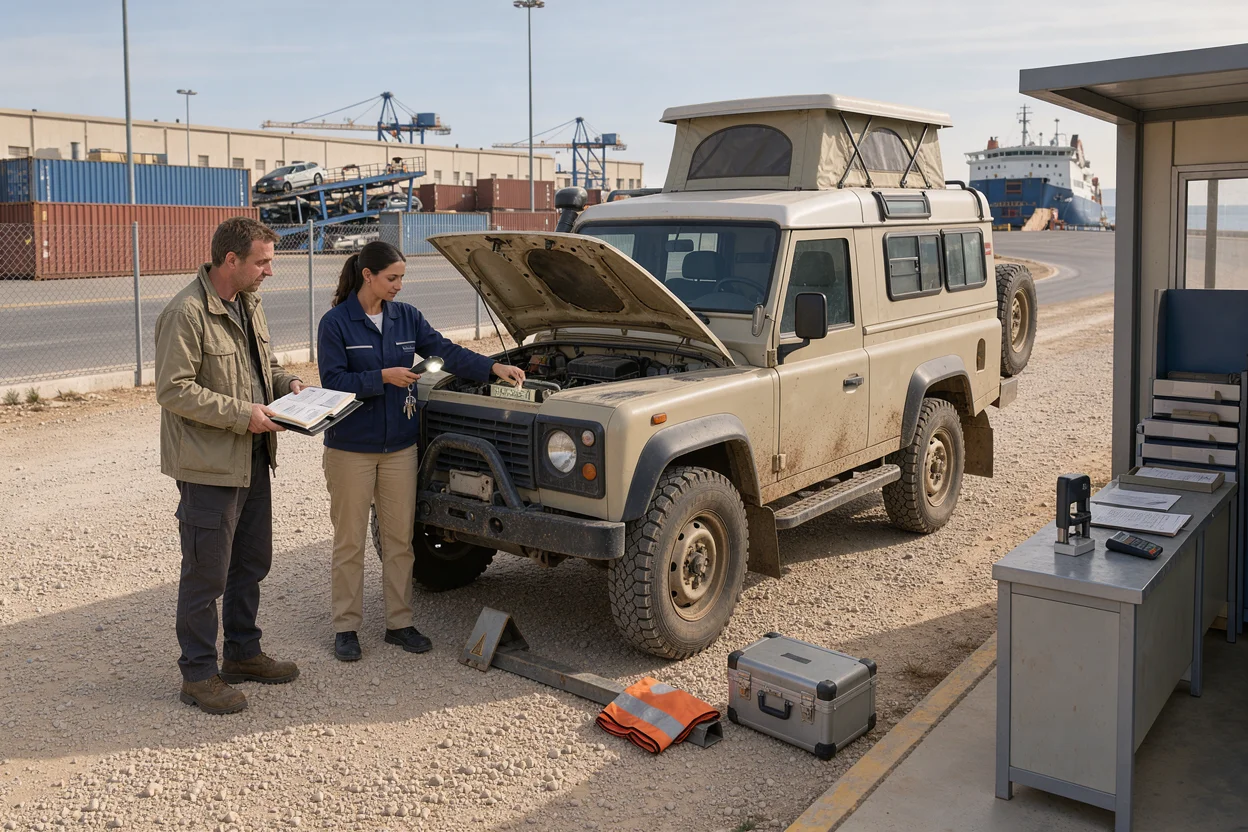
Purchasing an adventure vehicle abroad requires balancing direct purchase savings against administrative hurdles, transfer paperwork, local taxes, and transit logistics. Success relies on rigorous verification of legal ownership documents, clear title trails, export permissions, and realistic budgeting for transitional storage, compliance modifications, and local handling fees.
Key takeaways
- Verify physical title ownership, lien free status, and export entitlement before committing funds to an overseas seller.
- Budget beyond the headline vehicle price to incorporate customs duties, port handling, transitional insurance, and local compliance inspections.
- Use a structured evaluation framework to weigh buying locally in market against importing from a third country.
- Establish precise verification questions for the seller to prevent costly administrative delays at international border control points.
Understanding the Administrative Foundations
Purchasing an overland vehicle outside your home jurisdiction introduces complex administrative requirements that do not exist in domestic sales. An overland rig is both a substantial financial investment and your primary home on wheels, meaning any flaw in its legal identity can bring an expedition to an abrupt halt. The priority must always be establishing clean ownership and legitimate legal standing before addressing mechanical condition or outfitting accessories.
National vehicle registers vary widely in how they issue proof of title, register technical modifications, and release vehicles for cross border transit. In some regions, a registration certificate functions strictly as a permit to operate on public highways, while a distinct title or bill of sale proves legal ownership. Failing to obtain the true instrument of ownership can leave a buyer unable to register the vehicle, cross international frontiers, or obtain comprehensive vehicle insurance.
Furthermore, heavily modified adventure platforms often present documentation discrepancies. Aftermarket camper conversions, chassis alterations, non standard tyre configurations, and auxiliary fuel tanks may need explicit recording on registration certificates depending on national laws. Ensuring that the vehicle's physical specification matches its registered description prevents impoundment or mandatory de modification during official inspections.
Evaluating Total Acquisition Outlays
The initial purchase price negotiated with an international vendor rarely represents the final capital required to place a vehicle into operational service. Prospective buyers frequently underestimate the cumulative impact of non vehicle outlays, which include regional sales taxes, export administrative fees, temporary transit registration plates, and cross border transit insurance.
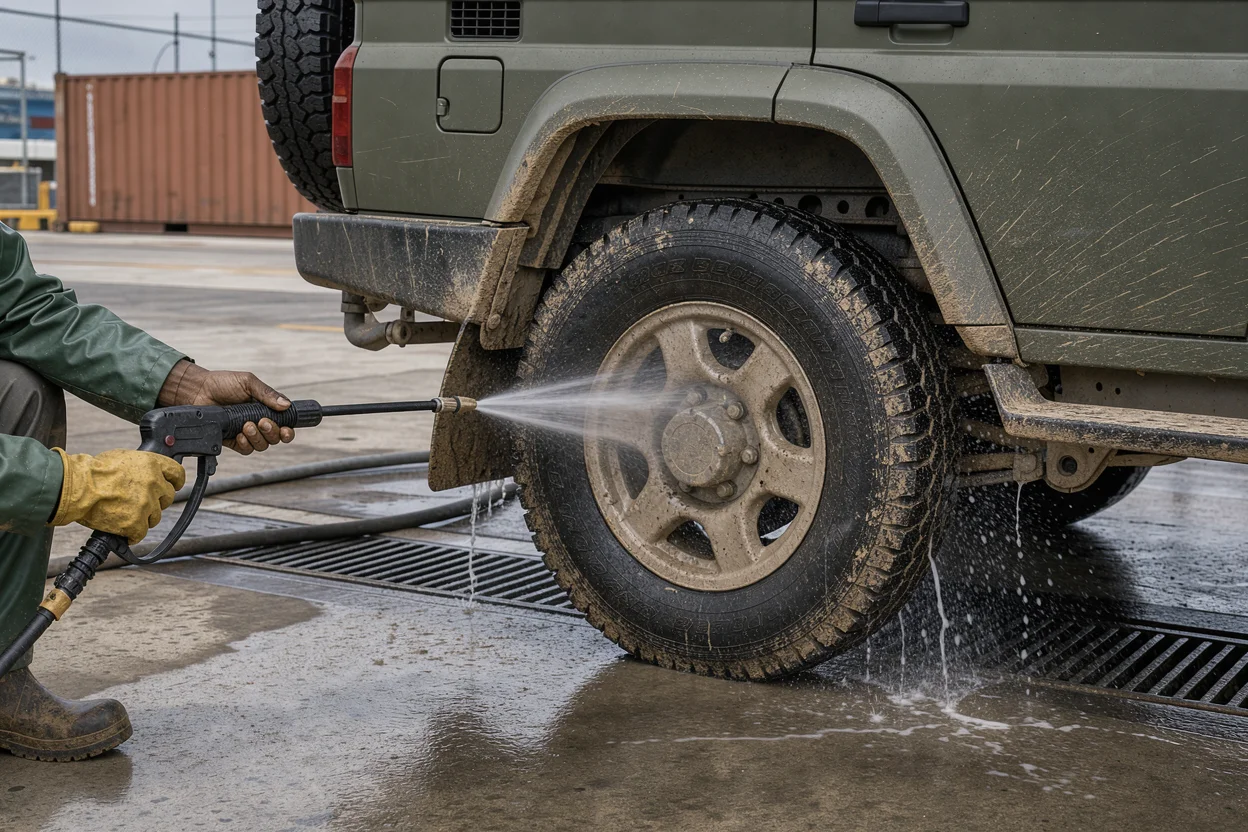
Logistical expenditures must also factor into early budget models. If you intend to operate the vehicle in the territory where it is bought, you must account for local residency or tourist registration hurdles, which often require agent retainers or specialised address services. If instead you plan to transit or repatriate the rig, port fees, maritime freight, customs brokerage, and quarantine cleaning quickly escalate the total landed cost.
Finally, financial conversion and escrow mechanisms introduce costs. Cross border bank transfers, foreign currency exchange spreads, and third party escrow services represent necessary expenditures to secure a transaction safely. Preparing a dedicated contingency allocation of twenty to twenty five percent beyond the purchase price ensures unexpected administrative delays or required mechanical roadworthiness remedies do not stall your overland journey before it starts.
A Framework for Evaluating Overseas Purchase Routes
Navigating an overseas purchase generally involves choosing between two pathways: purchasing a foreign registered vehicle directly within the target region, or purchasing a locally registered vehicle from a resident seller. Both options present distinct advantages and liabilities that buyers should systematically compare.
Under the foreign registered pathway (often known as a traveller to traveller transfer), a buyer purchases a vehicle registered in a third country from an overland traveller whose journey is concluding. The primary benefit is acquiring a pre equipped expedition vehicle already carrying overland gear. The trade off lies in title transfer complexity: many countries forbid the sale of temporarily imported vehicles without paying steep local duties, obliging parties to complete legal transfers via remote consulates or at neutral border posts.
Conversely, the resident registration pathway involves purchasing a locally plated vehicle from a domestic citizen or dealer. The primary benefit is an established local documentation process and clear ownership verification within that country's transport system. However, the trade off includes the complexity of a non resident obtaining local registration, potential restrictions on future long term temporary export, and the frequent need to construct an overland living platform from scratch.
Essential Verification Inquiries for Sellers
To expose administrative omissions early, prospective buyers should put specific, unambiguous questions to international sellers. Ambiguity in correspondence is a warning sign that title transfers could prove problematic once you are physically present at the handover location.
Direct queries should first address legal ownership: Can the seller provide an unbroken chain of ownership documents linking their passport or company name directly to the registration title? Are there outstanding liens, finance contracts, road tolls, or import bonds registered against the vehicle? When was the roadworthiness certificate or technical inspection last renewed, and is it valid across foreign borders?
Inquiries must also explore the vehicle's customs status: Under what customs regime is the vehicle currently operating? If it is abroad on a temporary import permit or carnet de passages, precisely when does that permission expire, and what are the legal stipulations for cancellation or transfer? Can the seller supply official invoices or technical certifications for significant structural modifications, such as gross vehicle weight uprates or roof alterations?
Hypothetical Decision Example: Evaluating an In Region Transfer
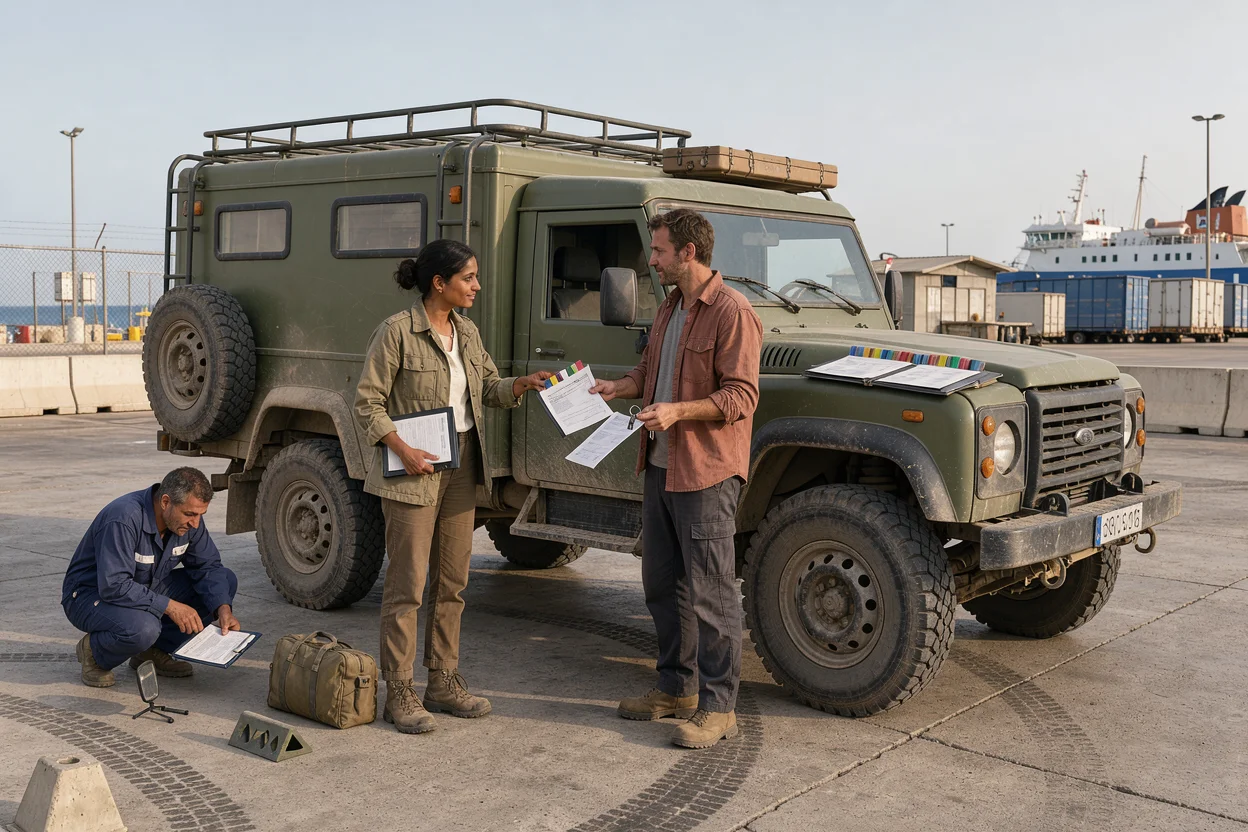
Consider a hypothetical buyer seeking an overland truck for an extended transcontinental journey. The buyer is evaluating two alternatives: Vehicle Alpha, an expedition ready truck registered in Germany but offered for private sale while parked in Chile, versus Vehicle Beta, a standard commercial utility vehicle registered locally in Chile from a domestic fleet operator.
Vehicle Alpha carries an attractive suite of accessories, including an expedition living cabin, dual battery electrical setup, and long range tanks. However, because it is located outside its home country, transferring the German registration legally requires either bilateral powers of attorney, a trip to an overseas consulate, or shipping back to Europe, alongside navigating the expiration of the South American temporary import permit. The administrative risk is high, even though mechanical preparation is complete.
Vehicle Beta requires substantial capital and time to fabricate living quarters and install overland equipment. Yet, its legal identity in the local registry is completely transparent, transferable under straightforward national notary procedures without customs complications. In this scenario, a buyer who prioritises legal security and timeline predictability would select Vehicle Beta, whereas a buyer possessing deep experience with consular vehicle transfers and tight equipment deadlines might accept the documentation burden of Vehicle Alpha.
Common questions
Can a non resident legally register an adventure vehicle abroad?
In several countries non residents can register vehicles using tourist identification or tax numbers, but many jurisdictions prohibit it without legal residency. Alternative legal approaches include forming a local legal entity, using registered agent services, or keeping existing home registration active where international treaties permit.
What is a Carnet de Passages en Douane and do I need one?
A Carnet de Passages en Douane functions as an international customs bond guaranteeing that a temporarily imported vehicle will eventually be exported. It is required in specific regions across Africa, Asia, and the Middle East, requiring a financial deposit based on vehicle valuation before departure.
How can I confirm that an overseas vehicle has no outstanding financial liens?
Verification requires accessing the national or regional registry's vehicle title database, checking both official registration certificates and lien registers. Where online registries are unavailable, buyers should insist on an official clearance certificate issued by the relevant transport authority.
What happens if an overland vehicle's physical modifications do not match its papers?
Mismatches between physical build and registered technical specifications can result in failed export checks, immediate impoundment, fines, or rejected transit insurance claims. Major alterations like chassis extensions, engine swaps, or camper conversions should carry certified engineering documentation.