
AI assisted editorial. Published following automated quality checks, not independent fact verification. Confirm factual, safety and legal matters with appropriate professionals.
The short answer
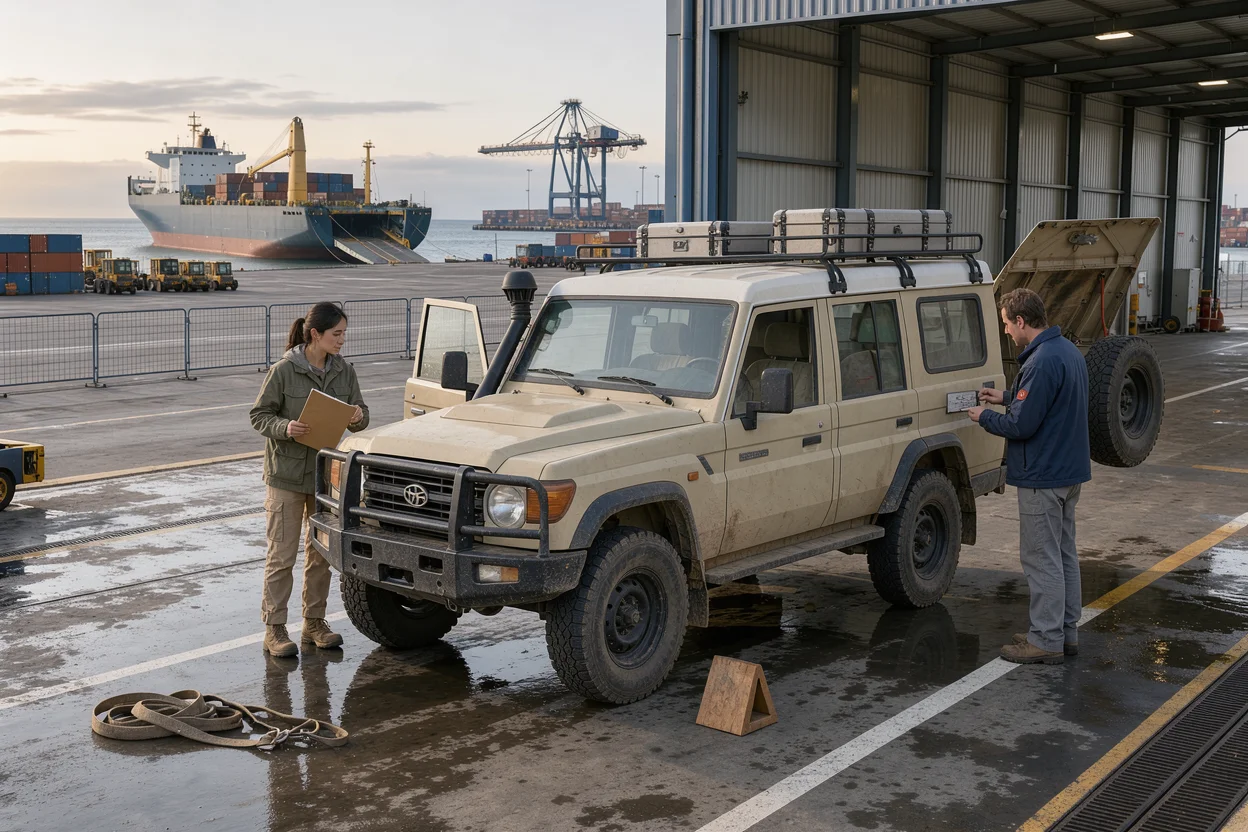
Importing an overland vehicle requires navigating three interconnected phases: export deregulation at the source, international transit logistics, and domestic compliance upon arrival. A successful purchase balances transport risk, regulatory lead times, and total landing costs against the rarity of finding a suitable foreign base vehicle.
Key takeaways
- Verify the vehicle's provenance and deregistration paperwork before committing funds, as missing origin titles can block customs clearance entirely.
- Choose between Roll on/Roll off and dedicated container shipping based on vehicle dimensions, auxiliary gear security, and port handling tolerance.
- Map out destination roadworthiness and emissions compliance early to prevent costly modifications or outright refusal by national registration bodies.
- Budget for variable port terminal fees, customs broker charges, and import duties rather than relying solely on freight carrier estimates.
Deconstructing the International Acquisition Path
Sourcing an adventure platform abroad opens access to configurations, engine choices, and factory equipment rarely sold in domestic markets. However, the operational complexity increases significantly once multiple legal jurisdictions are involved. Buyers often focus primarily on transit quotes, overlooking the statutory barriers that govern vehicle release at origin and legal acceptance at destination.
The complete path involves legal title transfer, export deregistration, physical freight handling, customs clearance, and local compliance inspection. A breakdown in any one stage can lead to compounding storage fees at marine terminals or, in extreme scenarios, the mandatory re export or destruction of the vehicle. Approaching international buying requires treating paperwork with the same rigour as structural condition.
Export Formalities and Ownership Documentation
Before an overland rig can board a cargo vessel, the exporting jurisdiction must verify that the vehicle is free of financial liens, reported thefts, and outstanding administrative encumbrances. This process generates formal deregistration certificates or export titles. Without pristine physical documentation bearing matching chassis numbers, customs authorities will decline export manifest clearance.
Private cross border sales demand extra vigilance regarding seller authority. Ensure the individual or dealership named on the registration document possesses the legal right to sign export declarations. When dealing with bespoke overland builds, verify that any secondary conversions or body alterations are documented on the original title, as discrepancies between visual appearance and paperwork invite administrative impounds.
Evaluating Freight Options: RoRo Versus Containerised Transit
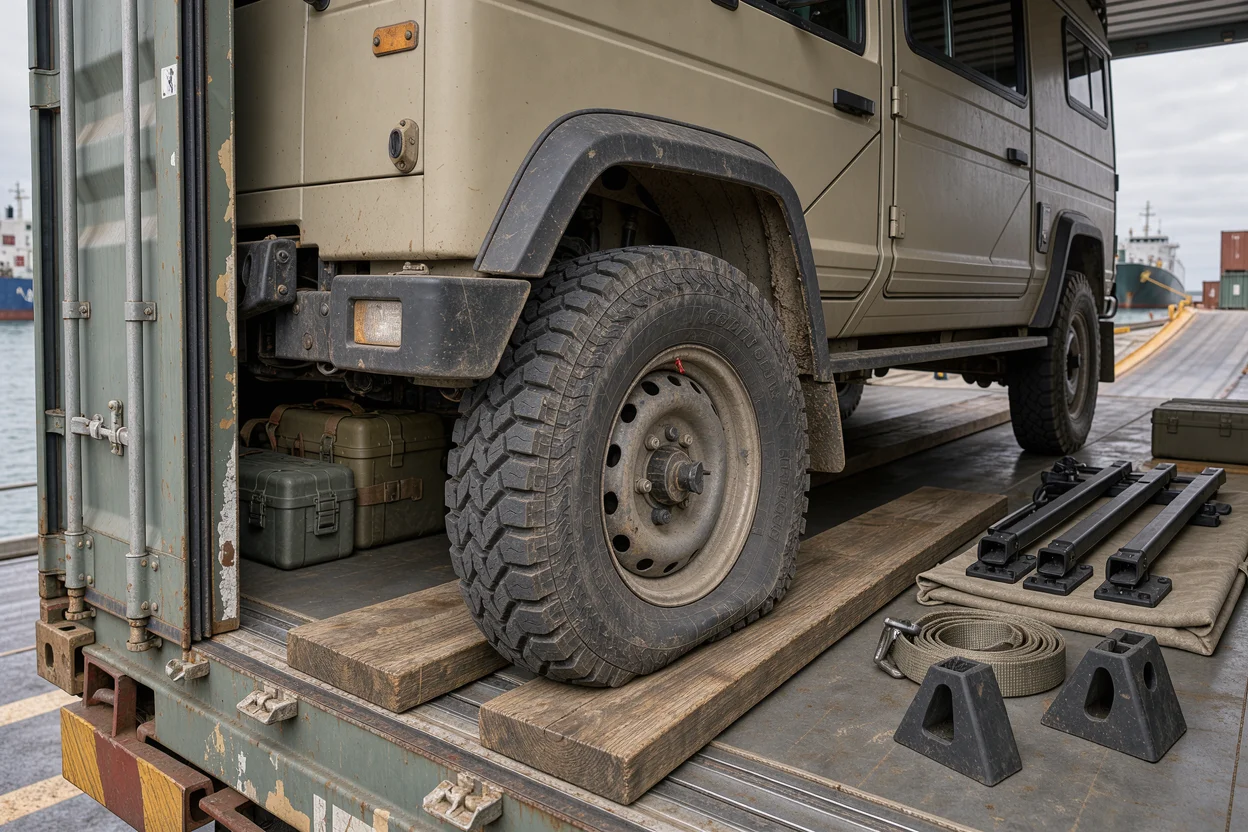
International vehicle freight broadly divides into Roll on/Roll off (RoRo) services and sea container transport. RoRo involves driving the vehicle directly onto specialised multi level vessels. It is frequently the only viable solution for high roof camper conversions, lifted suspension setups, or expedition trucks exceeding standard container dimensions. However, RoRo vessels strictly prohibit loose internal cargo, and vehicles remain vulnerable to pilferage or weather exposure during open terminal staging.
Containerised shipping provides enhanced security, allowing tools, camping equipment, and spares to travel safely inside or alongside the platform. Dedicated dry van containers shield vehicles from marine salt air and port tampering. The primary tradeoff lies in strict dimensional limitations regarding door height, width, and overall length. Loading an expedition platform often requires deflating tyres or removing roof racks, adding labour complexity at both ports.
A Practical Evaluation Framework: Logistics Tradeoff Matrix
To make an informed shipping choice, evaluate each potential acquisition through four distinct criteria: Dimensional Fit, Transit Vulnerability, Administrative Support, and Cost Transparency. A platform that fits standard container limits reduces theft risk and simplifies port booking, while oversized rigs inherently demand RoRo networks and specialised customs handling.
Transit vulnerability accounts for external accessories like awnings, solar panels, and external fuel storage, all of which face elevated handling risks on open RoRo decks. Administrative support reflects whether you handle clearances personally or retain a licensed customs broker. Finally, cost transparency contrasts upfront all inclusive container quotes against RoRo pricing, which often excludes variable wharfage and unmooring charges levied upon arrival.
Destination Compliance and Road Registration Hurdles
Clearing customs does not equate to roadworthiness approval. Every destination country maintains strict frameworks governing safety equipment, lighting orientation, structural integrity, and emissions standards. In many regions, vehicles must meet specific age exemptions before they qualify for private registration without undergoing extensive, cost prohibitive laboratory homologation.
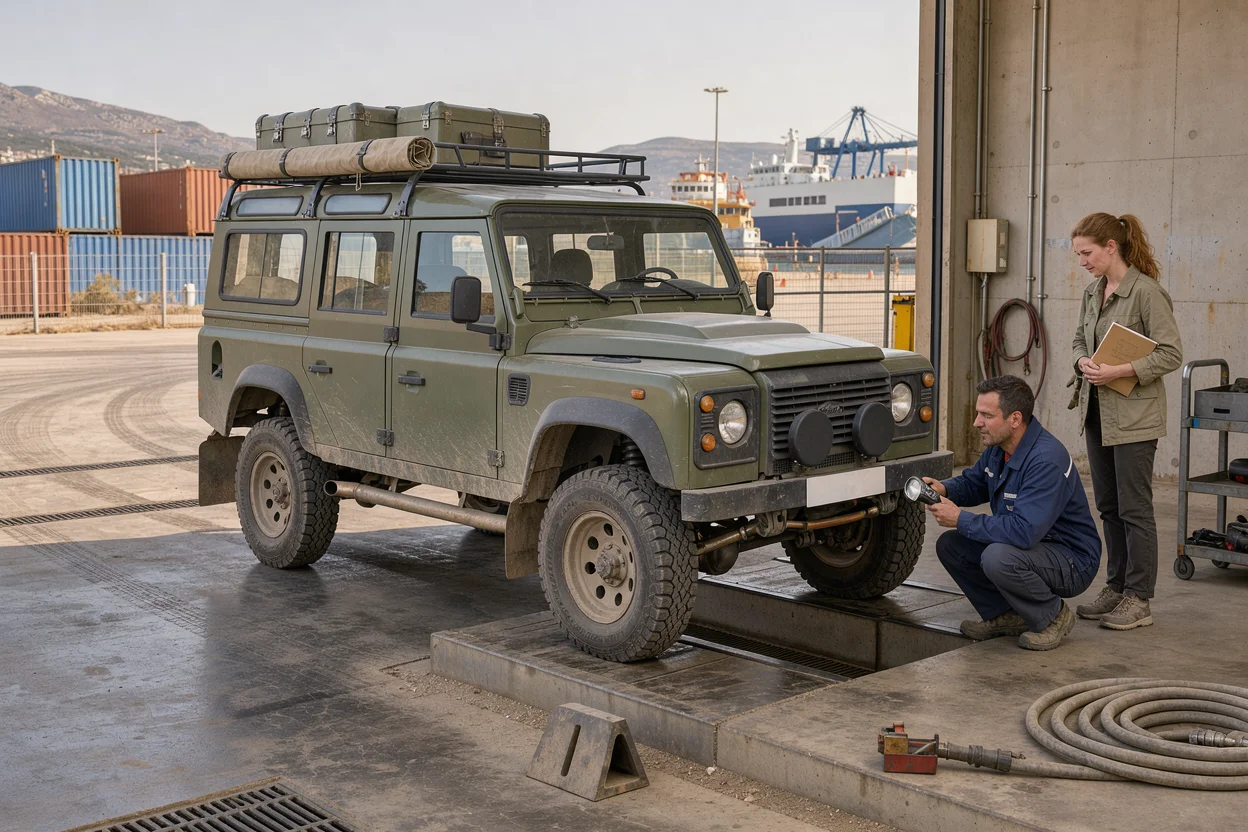
Modifications typical of adventure rigs such as auxiliary lighting, non standard suspension geometry, metal bumpers, and side exhausts can easily fail regional roadworthiness assessments. Prospective owners must research technical criteria in their home jurisdiction before purchase, ensuring any required reversions to factory specifications remain feasible and economically sensible.
Direct Inquiries for Overseas Sellers and Logistics Agents
When communicating with international sellers, pose direct questions: Can you provide clear scans of the national registration certificate showing unencumbered ownership? Are you prepared to complete official export deregistration before receiving final payment? Are all chassis and engine numbers clearly legible and identical to the documentation?
Similarly, address these queries to freight forwarders: Does your quotation encompass destination port terminal handling charges and customs clearance, or only ocean transit? What are the specific cargo restrictions regarding personal effects stored inside the camper? Who manages phytosanitary quarantine wash procedures if required by destination authorities?
Hypothetical Decision Example: Balancing Budget and Risk
Consider a hypothetical buyer evaluating an imported compact camper van versus an oversized expedition platform. The camper van fits neatly into a standard shipping container, enabling secure transport with all camping gear intact, albeit at a higher initial container freight quote. The final registration path is predictable because the van retains its original factory dimensions and running gear.
Conversely, the larger custom truck requires RoRo shipping due to overall height. While maritime passage seems cheaper initially, the buyer must clear external equipment, accept minor cosmetic vulnerability during port moves, and navigate bespoke roadworthiness inspections for aftermarket structural changes. Choosing the containerised van prioritises predictability and equipment safety, while selecting the larger truck requires greater risk tolerance, flexible budgeting, and patience for complex compliance hurdles.
Common questions
Can personal overland equipment remain inside the vehicle during transit?
It depends on the shipping mode. Dedicated container shipping generally allows secured personal effects, provided an itemised customs packing list is supplied. Roll on/Roll off carriers almost universally mandate that passenger cabins and cargo areas remain completely empty of loose personal goods.
What is the role of a customs broker in the import process?
A customs broker acts as your legal liaison with border agencies, classifying the vehicle under correct tariff codes, submitting mandatory import declarations, and calculating applicable duties and taxes. Their assistance minimises processing delays and terminal storage penalties.
Why do some imported overland platforms fail initial road registration?
Failures commonly stem from non compliant lighting orientation, uncertified structural chassis extensions, aftermarket bumper designs, or exhaust emissions that do not satisfy local regulatory rules for the vehicle's manufacturing year.
What happens if a vehicle arrives with chassis numbers that do not match the title?
Customs officials will typically impound the vehicle pending investigation. If discrepancies cannot be formally reconciled through origin government documentation, authorities may reject entry, mandate immediate re export at the importer's expense, or seize the asset.