
AI assisted editorial. Published following automated quality checks, not independent fact verification. Confirm factual, safety and legal matters with appropriate professionals.
The short answer
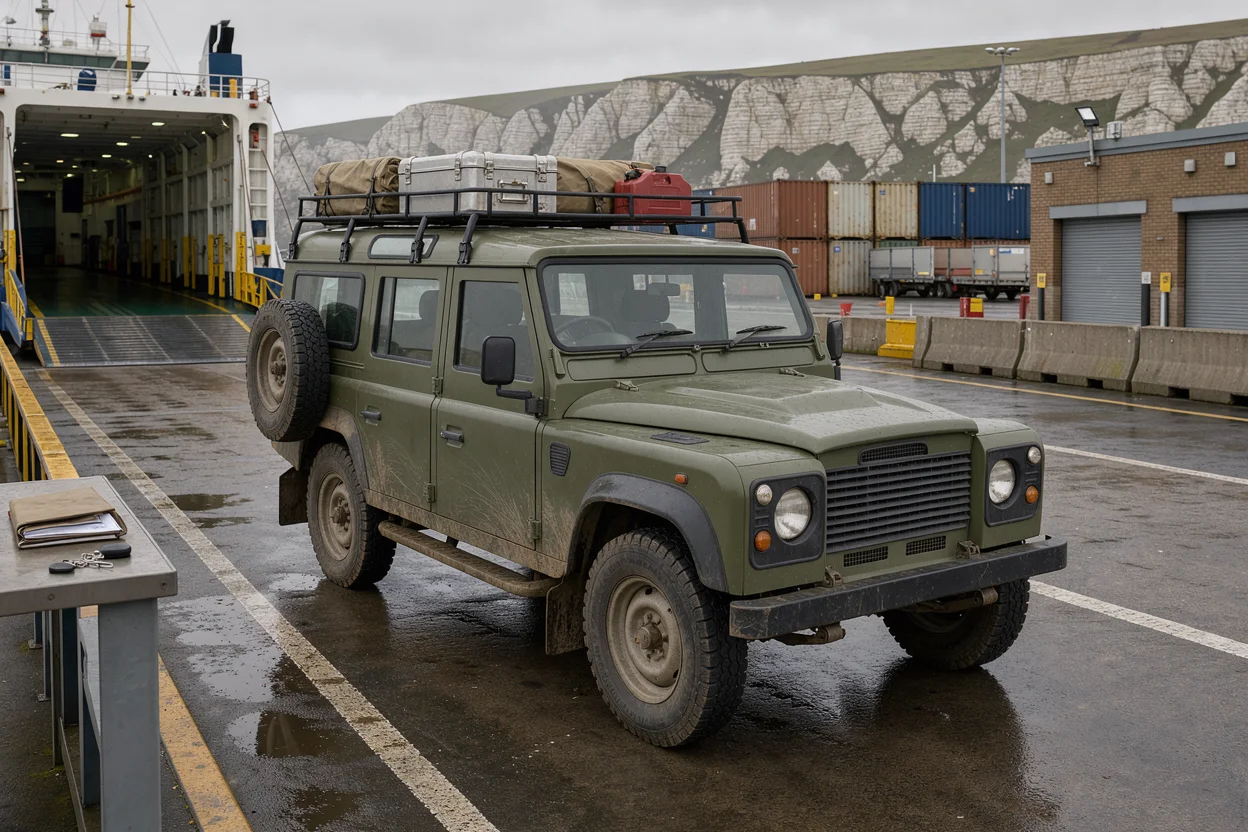
Importing an overland vehicle into the UK requires balancing rare platform availability against shipping complexity, statutory compliance checks, parts availability, and unforeseen landed costs. Buyers should audit vehicle history abroad and verify domestic registration readiness before committing.
Key takeaways
- Factor in indirect landed expenses, including transport logistics, port fees, and modifications, rather than just the overseas purchase price.
- Confirm ongoing domestic parts availability and specialist workshop familiarity before committing to a platform never officially sold in the UK.
- Request detailed provenance, corrosion assessments, and deregistration paperwork from the seller before arranging international transit.
- Assess whether steering orientation and domestic lighting standards require major conversion work to pass British roadworthiness tests.
The Core Trade Offs of Sourcing Abroad
Sourcing an expedition vehicle from overseas is frequently driven by the desire for specific mechanical configurations or superior chassis preservation. Arid environments often yield vehicles with significantly less structural corrosion than those subjected to decades of wet British winters and salted road networks. Furthermore, certain heavy duty commercial variants, pop top conversions, and naturally aspirated diesel platforms were simply never marketed directly within the United Kingdom.
However, pursuing a vehicle overseas introduces substantial administrative overhead and risk. Buying at a distance inherently limits the depth of pre purchase physical inspections, relying instead on photographs, remote assessors, and vendor goodwill. Buyers exchange the immediate availability and consumer protections of the domestic market for complex international logistics, unpredictable transit durations, and the challenge of navigating foreign export procedures alongside domestic entry approvals.
Practical Comparison Framework: Domestic Purchase vs Direct Import
To decide whether importing represents genuine value, prospective buyers should systematically evaluate candidates against a structured set of operational criteria rather than focusing purely on the base purchase price.
First, assess Chassis and Body Condition. Domestic vehicles often demand immediate remedial rust prevention or structural welding, whereas vehicles from dry regions frequently preserve factory metalwork, saving considerable restoration effort.
Second, consider Compliance and Certification Friction. A vehicle already registered in the UK has demonstrated conformity with domestic standards. An imported vehicle requires independent verification of lighting, speedometers, and mechanical integrity, which can involve testing delays and physical modification costs.
Third, compare Ongoing Support and Parts Logistics. Mainstream domestic models enjoy readily available off the shelf spares and broad mechanic familiarity. Rare or grey market imports may require ordering service items from international distributors, leading to prolonged downtime during maintenance periods.
Finally, review Total Landed Cost Visibility. Domestic transactions have clear, fixed transaction totals. Importing introduces variable charges such as ocean freight, marine insurance, customs clearing fees, port handling charges, and potential currency exchange fluctuations between deposit and final clearance.
Essential Questions to Ask Overseas Sellers
Before transferring funds or entering formal commitments, clarify the legal standing and mechanical reality of the vehicle by asking focused, non negotiable questions.
Request full clarity on registration status: 'Do you possess the original, unencumbered registration document and certificate of title in your name, and can it be officially stamped for export?' Missing or duplicate titles can halt the vehicle at either border.
Probe maintenance history and provenance: 'Is there verifiable documentation tracing ownership, continuous maintenance, and any engine or chassis replacements?' Non standard chassis numbers or undocumented engine swaps complicate UK registration substantially.
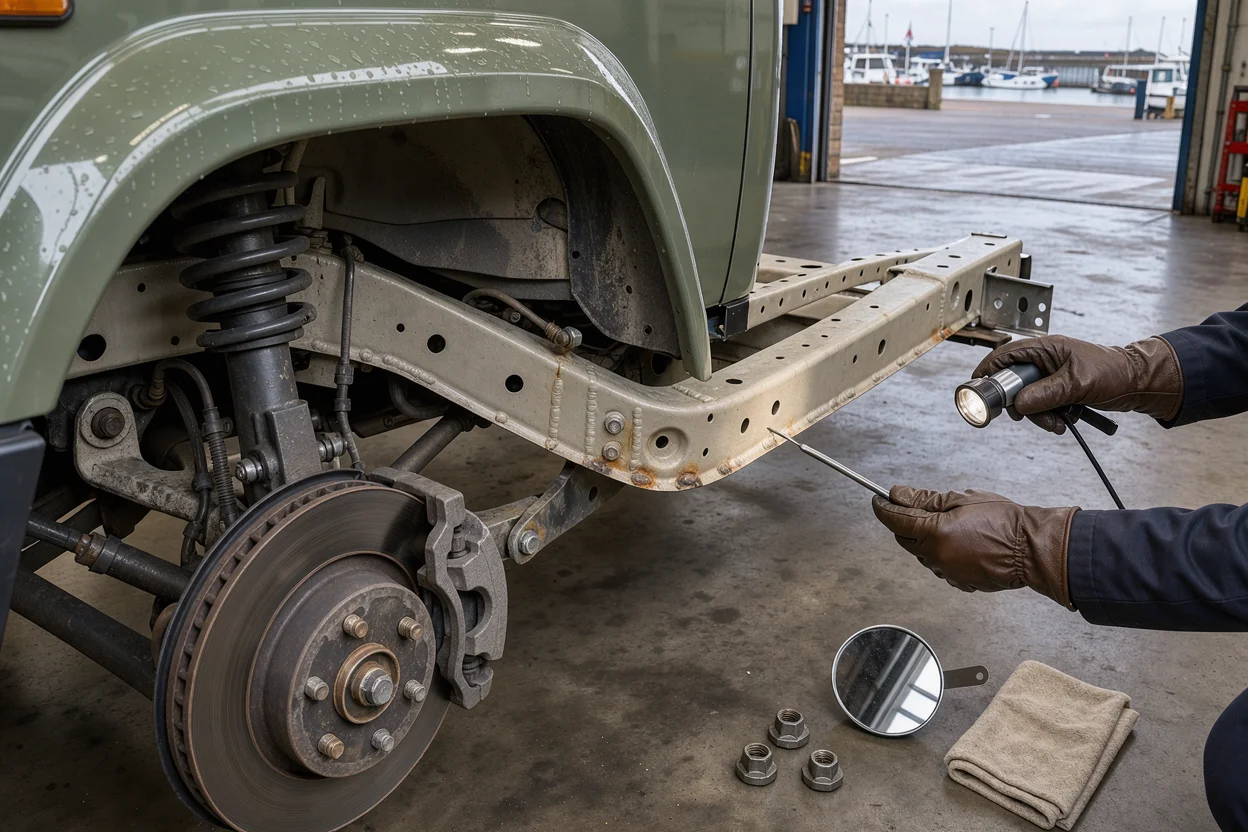
Query condition under critical scrutiny: 'Can you provide close up, high resolution photographs and video footage of the underside, outriggers, suspension mounts, and lower sill seams taken in natural lighting?' General beauty shots rarely show hidden chassis wear.
Address modifications directly: 'Are all fitted overland accessories, such as auxiliary fuel tanks, suspension lifts, and non standard bumpers, documented and road legal in the origin country?' Non standard equipment may require inspection or removal prior to UK road approval.
Technical and Practical Considerations for British Use
A successful import must integrate cleanly into daily road use and greenlaning environments in Britain. Steering orientation is a primary operational factor. While left hand drive vehicles can be registered and driven in the UK, they present practical compromises during overtaking on single carriageway roads, negotiating toll booths, and managing visibility at multi lane roundabouts.
Compliance modifications are typically necessary before obtaining an initial roadworthiness certificate. Headlamps engineered for driving on the right side of the road cast light upward into oncoming traffic and must be re aimed or completely replaced with left hand traffic units. Speedometers must display miles per hour, either via dual markings or certified overlays, and rear fog lights must be correctly wired to the driver's offside.
Weight classification also demands scrutiny. Large expedition vehicles originating from markets with different licensing boundaries can blur the line between standard passenger vehicle categories and heavy goods classifications. Prospective owners must confirm that the vehicle's gross vehicle weight rating fits within their existing driving licence entitlements.

Hypothetical Decision Example: Balancing Condition Against Convenience
Consider a hypothetical buyer seeking a classic 4x4 platform for European touring. The buyer discovers two distinct paths: a domestically available vehicle showing typical underbody corrosion and patchy service records, or an identical variant located in southern Europe boasting a completely original, dry chassis and dry climate body panels.
The domestic option carries a transparent purchase cost and can be driven home immediately, but budgeting for professional chassis rust removal, welding, and preventative treatment quickly erodes its apparent price advantage. Conversely, the foreign vehicle commands an attractive initial sale figure, but requires shipping arrangements, transit insurance, port handling charges, headlamp conversions, and an administrative approval process.
In this scenario, if the buyer possesses mechanical skills to handle lighting conversions and is willing to manage administrative paperwork, the imported vehicle represents the stronger structural foundation for long term ownership. However, if the buyer requires an immediate travel ready vehicle and cannot absorb the uncertainty of import timelines, the domestic option even with known cosmetic flaws proves the lower friction solution.
Common questions
Can an imported expedition vehicle be insured easily in the UK?
Yes, but options may be more restricted. Mainstream insurers often avoid vehicles not officially sold in the UK or those still awaiting domestic registration. Specialist 4x4 and classic import brokers typically provide cover using the chassis number while UK registration is finalised.
How does steering orientation affect driving an imported vehicle in the UK?
Left hand drive vehicles are legal to drive in the UK but require extra care. Visibility when overtaking on single lane roads is reduced, and using multi lane roundabouts or automated toll barriers alone can be less convenient without passenger assistance.
What happens if original vehicle documentation is missing from the origin country?
Missing foreign registration documents, titles, or proof of ownership can prevent clearance through customs and stall domestic registration indefinitely. Never purchase an import without verifying that the seller holds the original, valid title ready for export.
Should a pre purchase inspection always be completed abroad?
Yes. Commissioning an independent local assessor or specialist vehicle inspector prior to completing payment provides vital verification of chassis integrity, mechanical health, and confirmation that the physical chassis number matches official paperwork.