
AI assisted editorial. Published following automated quality checks, not independent fact verification. Confirm factual, safety and legal matters with appropriate professionals.
The short answer
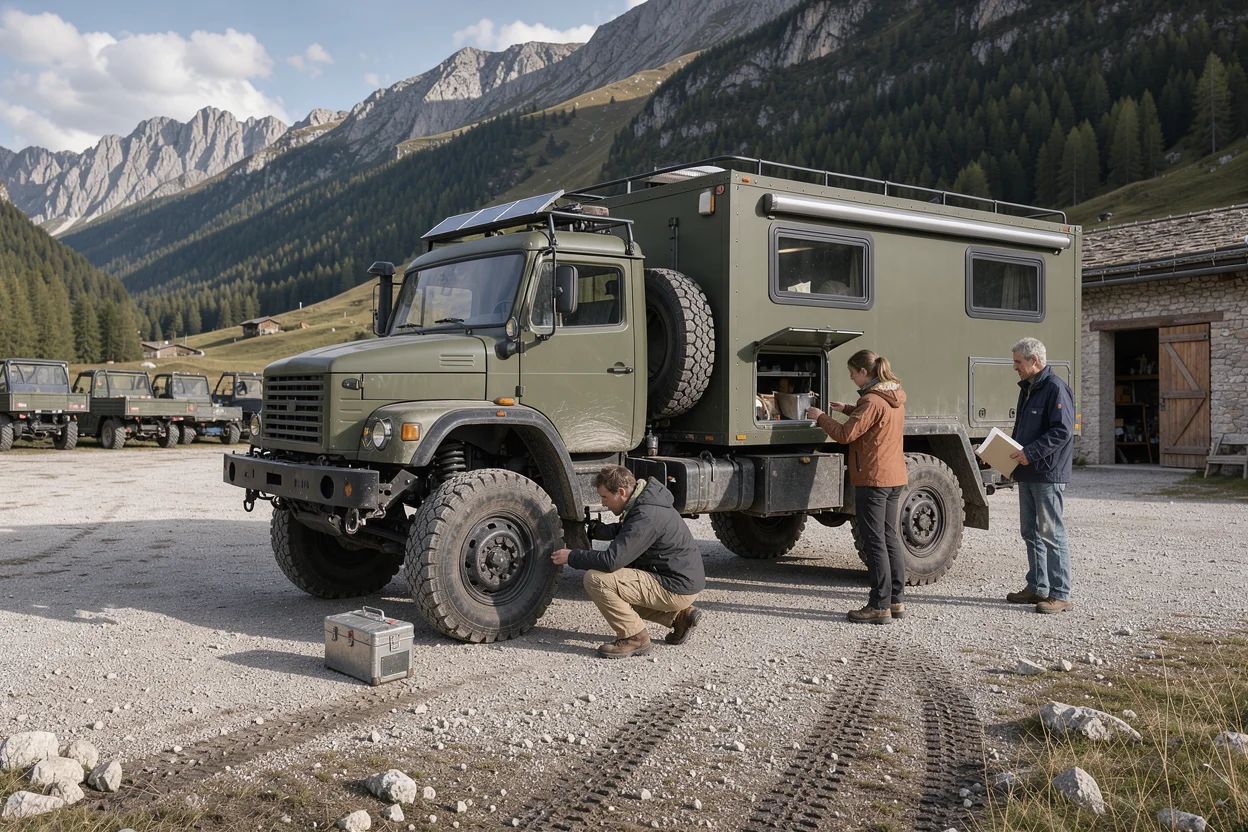
Buying an expedition vehicle in Europe requires balancing habitation comfort against platform mobility, alongside verifying registration paperwork, emission categorisations, and maintenance histories. A structured assessment framework helps buyers navigate complex cross border transactions and avoid costly post purchase surprises.
Key takeaways
- Prioritise gross vehicle weight early, as weight thresholds directly dictate driving licence validity, toll rates, and national road restrictions.
- Evaluate the mechanical chassis independently from the camper conversion, ensuring neither system masks deficiencies in the other.
- Request full conversion paperwork, electrical diagrams, and inspection records before arranging international travel or providing deposits.
- Account for administrative transit steps, export registration plates, and cross border homologation challenges prior to completing the sale.
Understanding Platform Tradeoffs: Light Commercials Versus Heavy Trucks
Europe offers an extensive marketplace for specialised adventure transport, ranging from compact all wheel drive panel vans to robust, medium duty commercial chassis conversions. Choosing between these platforms involves fundamental tradeoffs that dictate day to day usability. Light commercial conversions, typically categorised under standard passenger car driving thresholds, allow greater freedom of movement. They can navigate narrow alpine passes, tight rural village centres, and standard parking facilities without incurring elevated toll rates or commercial vehicle routing restrictions.
Conversely, heavier expedition trucks built on commercial freight chassis deliver superior load capacities, expanded water storage, and the structural durability necessary for extended off grid habitation. However, exceeding standard weight thresholds introduces significant operational friction within Europe. Drivers must hold appropriate heavy vehicle licences, adhere to statutory weekend driving bans in certain countries, accept mandatory electronic toll collection devices, and navigate around structural vehicle height or weight limits on regional bridges.
When browsing European classifieds, prospective owners must therefore be realistic regarding their intended travel style. If your itineraries focus on remote exploration with extensive self sufficiency, the compromises of a heavier platform may prove worthwhile. If your travel involves frequent city transits, rapid motorway transit across borders, and spontaneous route changes, a light vehicle remains far simpler to operate and maintain.
Evaluating Habitation Systems Against Mechanical Soundness
A common trap when viewing expedition builds is becoming captivated by modern interior furnishings while overlooking mechanical wear. High end joinery, lithium battery banks, and bespoke composite subframes can easily obscure a neglected driveline, failing transfer box, or severe chassis corrosion. A balanced evaluation always separates the vehicle into two distinct entities: the base automotive chassis and the specialised living module.
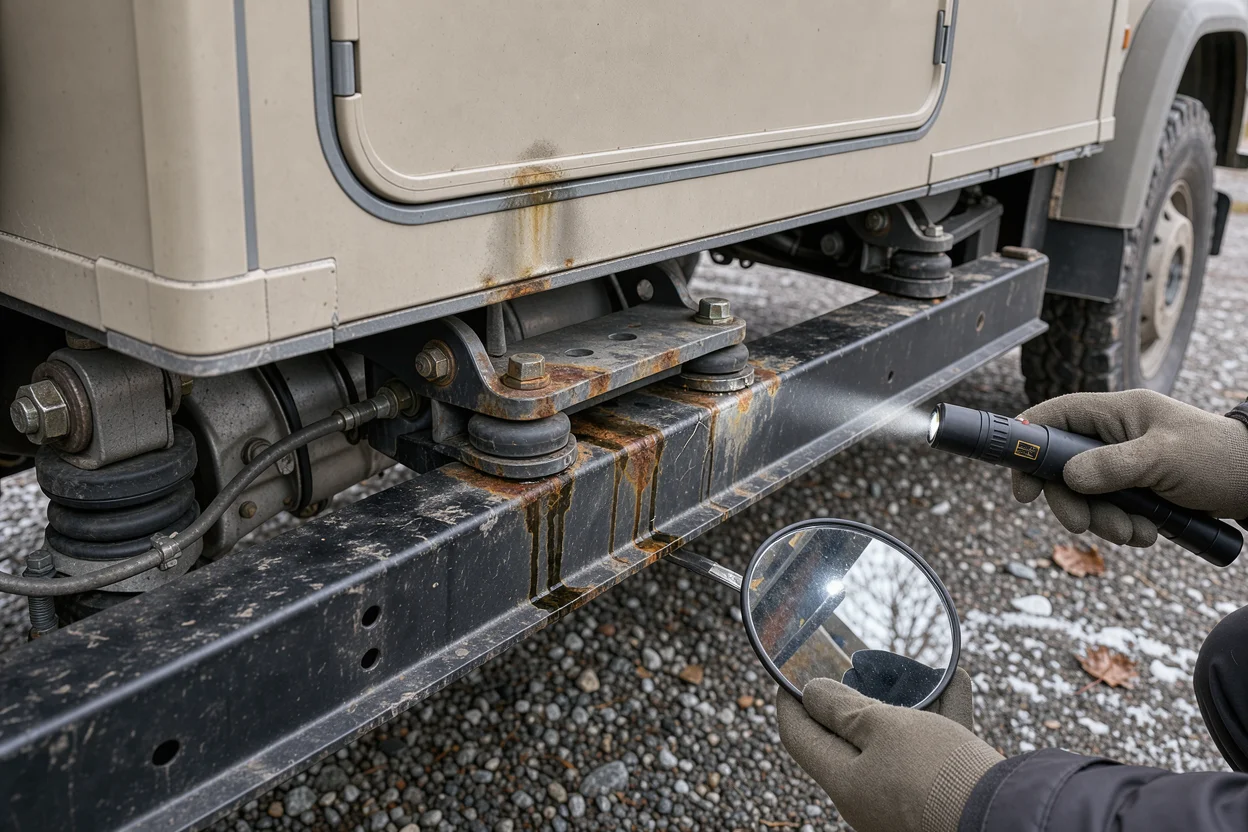
For the base vehicle, focus on driveline service history, fluid leaks, chassis rail alignment, and the availability of replacement parts across your target travel regions. Many older European commercial platforms have known reputations for longevity, yet discovering replacement brake components or specialised hub seals in remote regions can cause substantial delays. Rust inspection is equally critical, particularly on platforms operated in northern European countries where road salt accelerates underbody degradation.
Regarding the habitation unit, structural integrity must take precedence over aesthetic finishes. Inspect the interface between the subframe and the chassis rails, which must accommodate chassis torsional twist without transmitting undue stress to the camper box. Look closely for signs of water ingress around roof seams, window cutouts, and service hatches. Water damage within sandwich panel composite walls can lead to structural delamination that is exceptionally difficult and expensive to rectify.
A Practical Comparison Framework for Vehicle Assessment
To compare diverse vehicles objectively across different European countries, buyers benefit from scoring prospects against a consistent evaluation framework rather than relying on intuitive impressions. This framework balances four core criteria: operational feasibility, regulatory compliance, habitation autonomy, and mechanical maintainability.
Operational feasibility considers vehicle dimensions, turning circle, tyre availability, and fuel range. A platform that cannot access ordinary service lanes or requires specialised commercial refuelling lanes will shape your travel rhythm. Regulatory compliance evaluates registration classifications, verified unladen versus gross mass, and engine emissions certification, which governs access to urban low emission corridors across Western Europe.
Habitation autonomy focuses on off grid capabilities, including fresh water capacity, grey water management, battery reserves, auxiliary heating reliability, and thermal insulation ratings for varied seasons. Mechanical maintainability examines the simplicity of the engine management system, diagnostics accessibility, subframe mounting health, and the physical space available around the engine bay for roadside repairs.
Key Inquiries to Put to European Sellers
Direct communication with sellers should establish objective facts before committing to long journeys for physical inspections. Begin by clarifying the vehicle legal classification on its registration documents. Inquire whether the vehicle is registered as a specialised motor caravan or still recorded as a commercial goods vehicle, as reclassifying a commercial vehicle post purchase can involve bureaucratic hurdles in your home country.
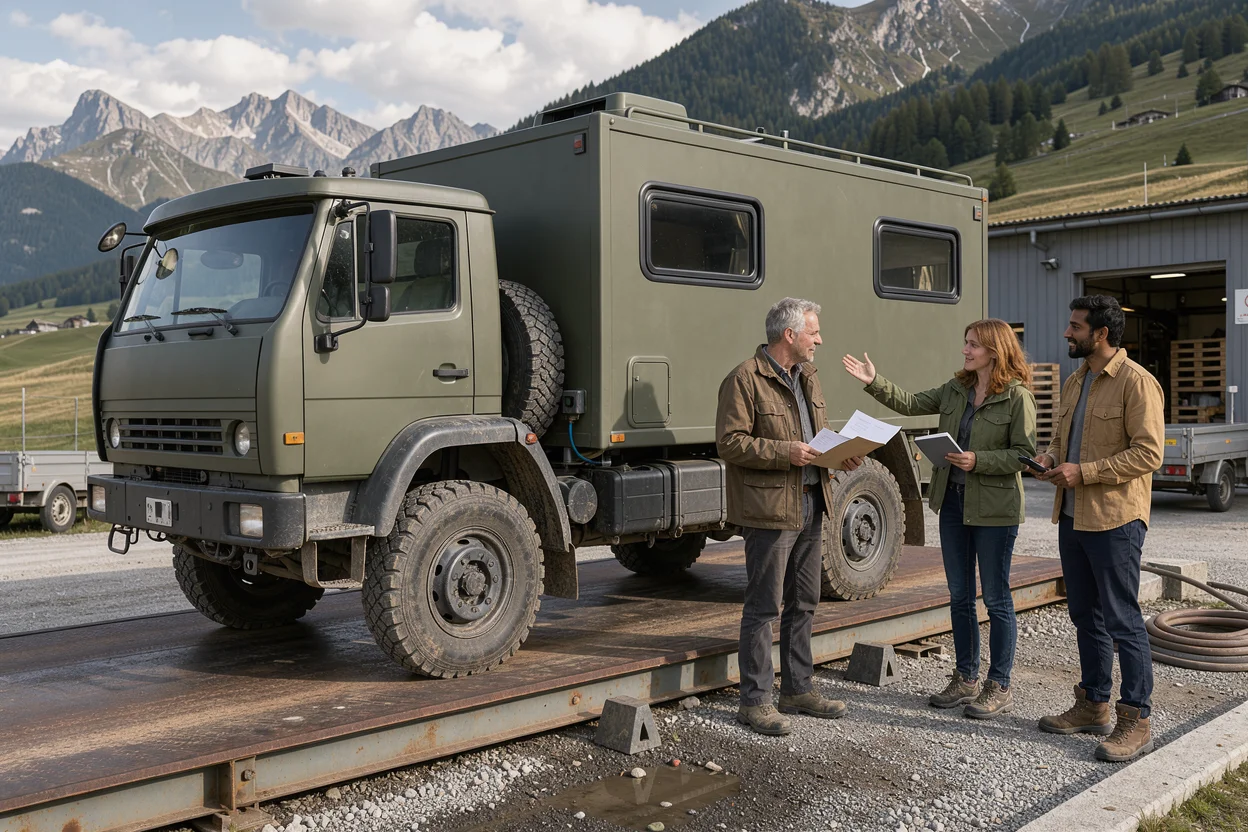
Request the exact weighed mass of the vehicle in its current completed state, including the habitation box, interior equipment, and fluid reserves. Many conversions sit dangerously close to their maximum allowable gross weight before personal luggage, passengers, and provisions are added. Ask the seller to provide a recent weighbridge ticket if one is available.
Inquire thoroughly about the installation history of the habitation services. Was the electrical system installed by a certified professional, and does a comprehensive wiring diagram accompany the vehicle? Are the auxiliary heating and gas appliances certified according to relevant regional standards? A seller who can readily produce installation schematics, service manuals, and modification approval certificates generally demonstrates responsible ownership.
Hypothetical Decision Example: Evaluating Practical Tradeoffs
Consider a hypothetical scenario where an overland traveller must choose between two prospective expedition vehicles advertised in Central Europe: Option A, an older, all wheel drive commercial panel van with a professionally built interior; and Option B, an ex military medium duty truck converted into a rugged expedition camper.
In this hypothetical scenario, Option A weighs under the typical passenger car threshold, possesses a common engine with widespread parts availability, and fits into standard parking bays. However, it offers limited interior headroom, restricted storage for extended winter expeditions, and limited payload capacity once passenger gear is loaded.
Option B offers generous living dimensions, substantial water storage, and robust cross country capability over unpaved tracks. Nevertheless, it carries a gross weight requiring a heavy goods licence, consumes considerably more fuel, incurs premium tolls across European motorways, and cannot enter many restricted urban areas due to historic emissions standards.
Applying our evaluation framework reveals the decisive factor: the buyer intended itinerary. If the travel plan entails extensive touring across mainland Europe with frequent town stops and narrow coastal roads, Option A represents the practical choice despite tighter living quarters. If the plan prioritises months of sustained off grid living in remote regions, the increased administrative and operational burdens of Option B become acceptable tradeoffs.
Navigating Administrative Verification and Cross Border Transit
Purchasing an expedition vehicle across borders introduces administrative complexities that demand rigorous due diligence. Verify that the chassis number on the frame matches all supporting ownership documentation, conversion plates, and technical data sheets exactly. Discrepancies between documentation and vehicle stampings can lead to severe border delays or outright confiscation by authorities.
Ensure you understand the requirements for transit registration and export plates in the seller country. Moving an unregistered vehicle without valid third party liability insurance across European borders is illegal and exposes the buyer to massive financial liability. Some nations offer temporary export plates with short term insurance specifically for non resident buyers, but these often require advance appointments and specific vehicle test certificates.
Finally, investigate the homologation and import standards applied by your destination country before signing a contract. A vehicle that is fully road legal in one European jurisdiction may not automatically satisfy the technical, emissions, or lighting criteria of another without expensive modifications. Securing copies of the original technical inspection reports and conversion approvals will significantly streamline the eventual registration process.
Common questions
How does gross vehicle weight affect cross border travel in Europe?
Gross vehicle weight determines required driver licence categories, toll payment structures, and access to roads with weight restrictions. Vehicles exceeding standard passenger thresholds face commercial motorway charges, periodic road bans in certain nations, and strict speed limits.
What documentation should I ask to see before travelling to inspect a vehicle?
Ask for the current national registration document, the latest periodic roadworthiness certificate, conversion approval papers, weighbridge receipts, and detailed wiring or plumbing schematics for the living cabin.
Why is the registration category of an expedition vehicle important?
The official registration status dictates taxation, insurance classification, roadworthiness testing frequencies, and driving restrictions. A platform registered as a motor caravan enjoys different regulatory treatment compared to one recorded as a commercial cargo vehicle.
What should I look for when inspecting the connection between the chassis and the camper box?
Inspect the subframe mountings to confirm they allow proper torsional movement without binding or transferring chassis flex directly to the living box. Check mounting bolts, dampening elements, and brackets for signs of stress, fatigue cracks, or corrosion.