
AI assisted editorial. Published following automated quality checks, not independent fact verification. Confirm factual, safety and legal matters with appropriate professionals.
The short answer
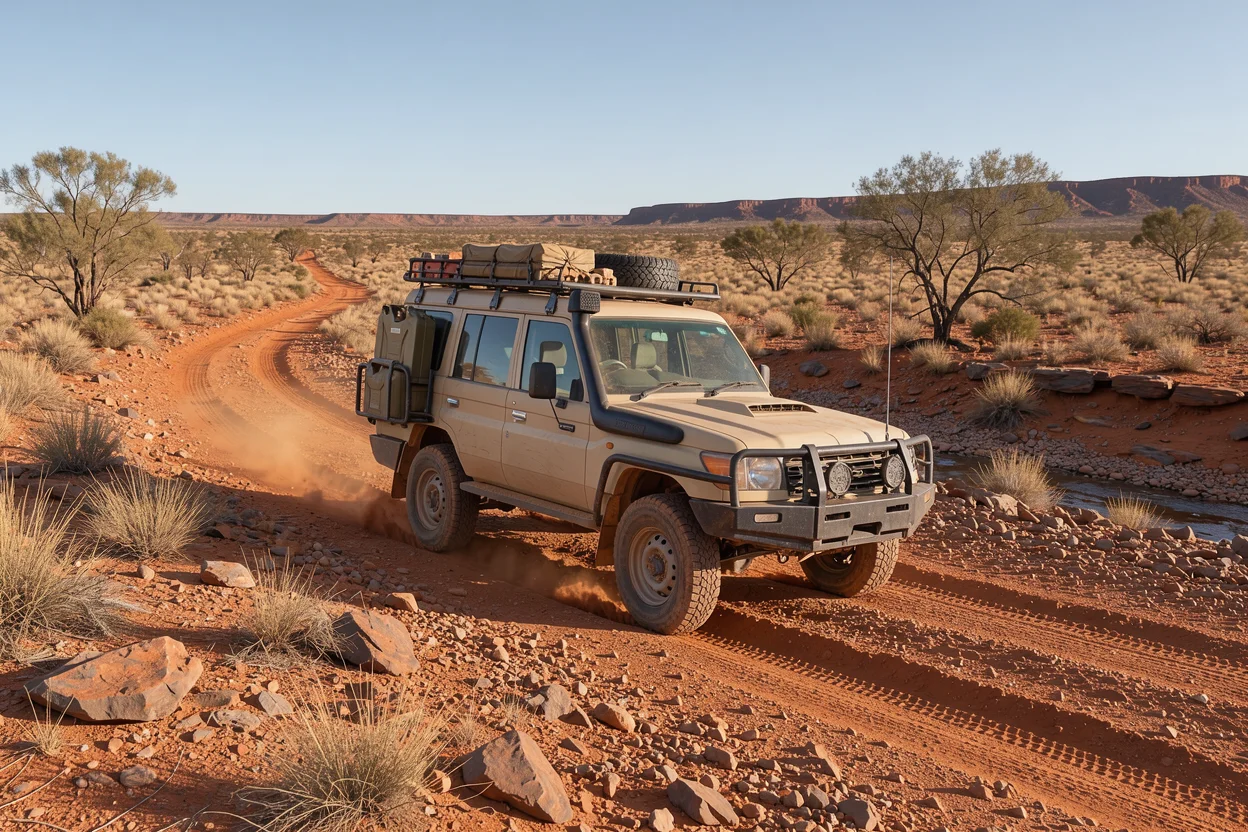
Vehicle range for remote travel is determined not by ideal highway figures, but by worst case fuel consumption across demanding terrain, extra payload, and necessary safety margins. Rather than aiming for arbitrary distances, drivers must calculate consumption based on off pavement conditions, route availability, and the tradeoffs between extra tank capacity and vehicle weight limits.
Key takeaways
- Base fuel planning on worst case off tarmac consumption rather than standard factory ratings.
- Always carry a dedicated buffer margin to account for unexpected detours, navigation errors, or blocked routes.
- Balance the volume of added fuel against gross vehicle weight ratings and axle load distribution.
- Prioritise fuel quality and filtration considerations in isolated locations where supplies may be unverified.
Moving Beyond Factory Fuel Economy
When planning long distance or remote overland journeys, prospective buyers often consult standard manufacturer fuel economy ratings to estimate travel limits. However, published consumption figures assume smooth road surfaces, moderate speeds, and an unladen vehicle. In genuine remote travel, real world consumption can increase drastically due to soft sand, prolonged low range gearing, steep gradients, roof mounted equipment, and heavy camping kit.
Operating an engine under continuous load off pavement often doubles baseline fuel burn. If an unladen vehicle achieves acceptable economy on motorways, that same platform might consume substantially more fuel when traversing continuous corrugations or crawling over rocky tracks. Therefore, the starting point for calculating necessary range must be a realistic appraisal of high load consumption rather than published laboratory figures.
Calculating Practical Range and Safe Margins
A reliable travel range calculation combines three elements: the maximum distance between verified fuel points, an allowance for severe terrain consumption, and a contingency reserve. In remote areas, relying on a fuel station to be open, staffed, and stocked is a common pitfall. Delivery delays, power cuts, or contaminated storage can turn a planned replenishment stop into an unusable waypoint.
A sensible baseline involves establishing the longest possible gap between dependable supply points along your route and adding a safety margin of at least twenty to thirty percent. This reserve provides peace of mind if a track is washed out, fallen trees force a lengthy backtracking manoeuvre, or prolonged low speed driving consumes fuel faster than anticipated. Running out of fuel in remote areas presents acute logistical and safety challenges.
Tradeoffs: Built in Capacity vs External Storage
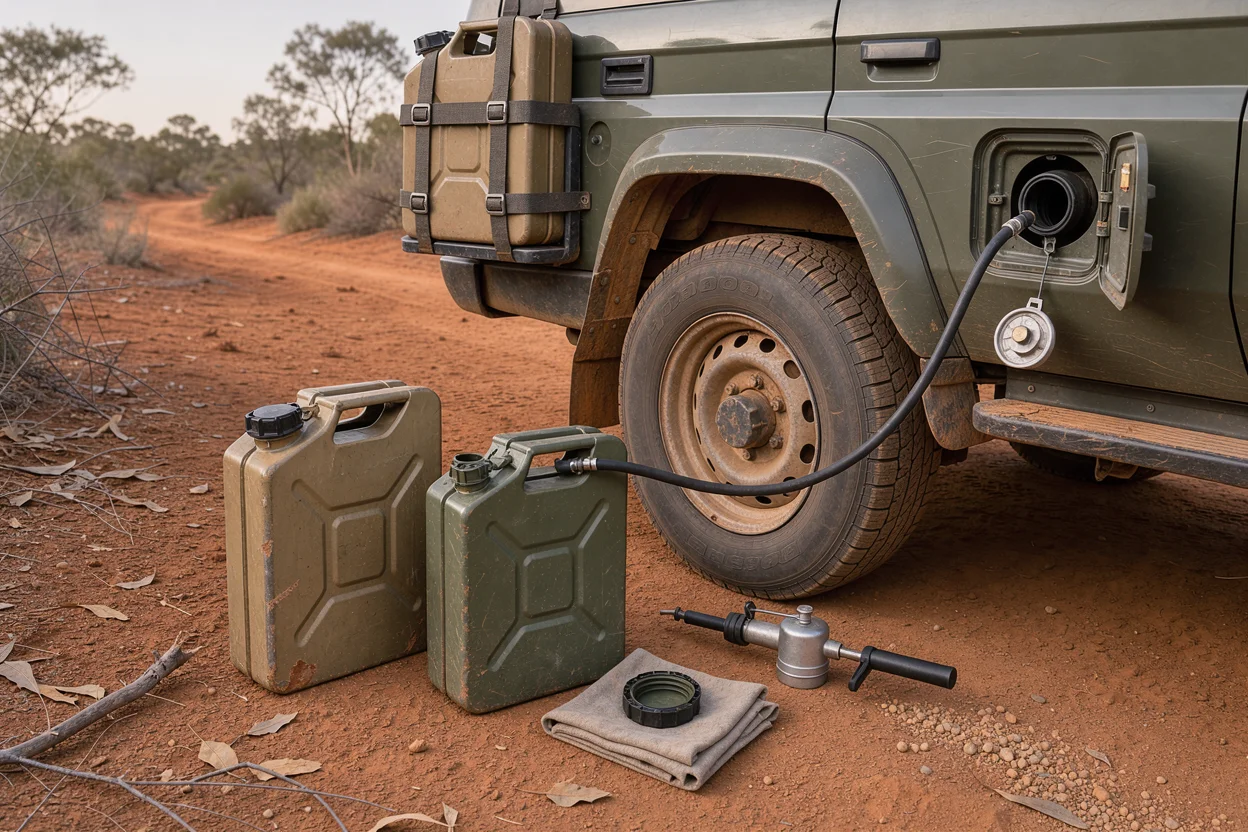
Carrying extra fuel is not without substantial mechanical compromises. Fuel is heavy, weighing roughly 0.75 to 0.85 kilograms per litre depending on whether it is petrol or diesel. Installing a large replacement or auxiliary fuel tank places that weight low in the chassis, which helps preserve vehicle stability, but it permanently consumes payload allowance and may require moving spares or exhaust components.
Conversely, carrying portable fuel cans offers modularity, allowing you to carry surplus fuel only when a specific itinerary demands it. However, cans mounted externally on roof racks raise the vehicle centre of gravity, increasing body roll on uneven tracks and elevating the risk of vehicle rollover. Rear bumper carriers keep weight lower than roof racks but place heavy leverage behind the rear axle, altering suspension geometry and handling.
Practical Range Planning Framework
To decide how much capacity your setup requires, use a practical assessment framework evaluating three key factors: infrastructure density, terrain severity, and payload tolerance. High density regions with frequent supply points require little more than standard factory tanks and modest planning. Intermediate routes with intermittent stations call for minor supplementary storage.
For truly isolated expeditions, you must calculate the total track distance, apply your heavy load consumption rate, and add reserve fuel before verifying that the total combined weight of fuel, water, passengers, and gear stays within the manufacturer gross vehicle weight rating (GVWR). If adding sufficient fuel overloads your chassis, the route must be altered or gear stripped back, because an overloaded vehicle suffers increased mechanical stress and accelerated tyre wear.
Hypothetical Decision Example
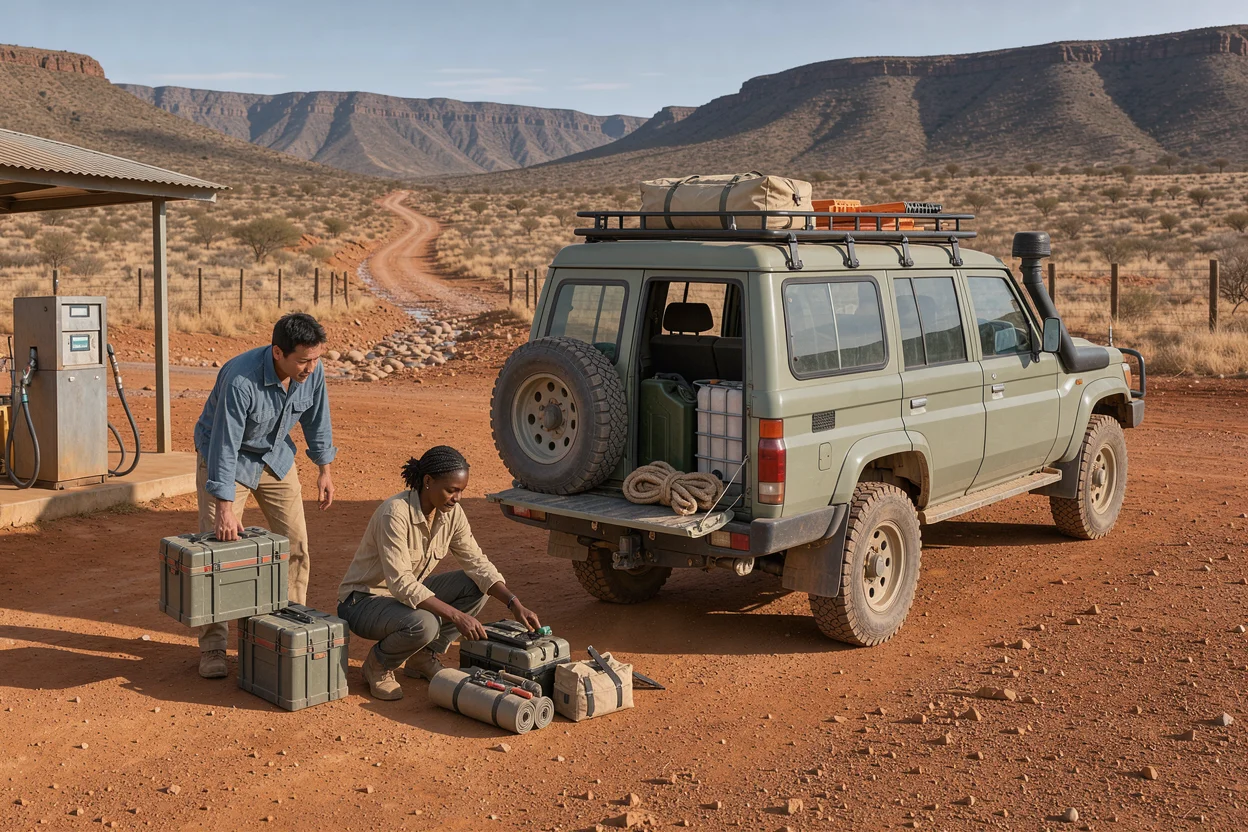
Consider a hypothetical traveller choosing between fitting an expensive 140 litre long range replacement tank or using their standard 80 litre tank augmented by two 20 litre cans. The traveller plans mostly weekend trips within two hours of regional towns, with one fortnight long desert journey scheduled per year.
In this scenario, permanently carrying the hardware and weight of an enlarged replacement tank penalises daily handling and fuel economy all year. The more balanced choice is to maintain the standard tank for regular use and temporarily secure two certified cans in a balanced position over the axles only during the extended desert expedition. This avoids permanent payload penalties while adequately meeting the range demands of the remote trip.
Questions to Ask Sellers and Upfitters
When purchasing a vehicle or evaluating aftermarket fuel systems, prepare specific questions for the seller or workshop. Inquire directly about the certified capacity and material of any auxiliary tanks, and ask whether the installation alters ground clearance or departure angles. Ensure you ask whether fuel transfer is automatic or manual, and how the vehicle instrument cluster monitors the reserve.
You should also ask whether the fuel filtration system has been upgraded to cope with variable fuel quality often found in remote dispensers. Enquire about venting systems to prevent pressure buildup in extreme heat, and confirm whether the vehicle suspension has been rated or upgraded to support the added static weight of full fuel loads.
Common questions
Does carrying extra fuel void vehicle warranty or insurance?
Modifications like aftermarket fuel tanks must comply with local road regulations and vehicle engineering standards. While professionally installed and certified tanks rarely void a broader warranty, unapproved installations or carrying loose fuel containers inside passenger cabins can affect insurance claims.
How does terrain type change real world fuel consumption?
Driving on soft sand, deep mud, or steep rocky tracks requires lower gears, higher engine revolutions, and reduced tyre pressures, which substantially increases rolling resistance. In severe conditions, fuel consumption can easily increase by 50 to 100 percent compared to standard highway driving.
What is the best way to maintain fuel quality during remote travel?
Use primary fuel pre filters with water separators to trap sediment and moisture common in remote storage tanks. Additionally, keep your vehicle tanks as full as practical in humid climates to reduce overnight condensation within the tank walls.