
AI assisted editorial. Published following automated quality checks, not independent fact verification. Confirm factual, safety and legal matters with appropriate professionals.
The short answer
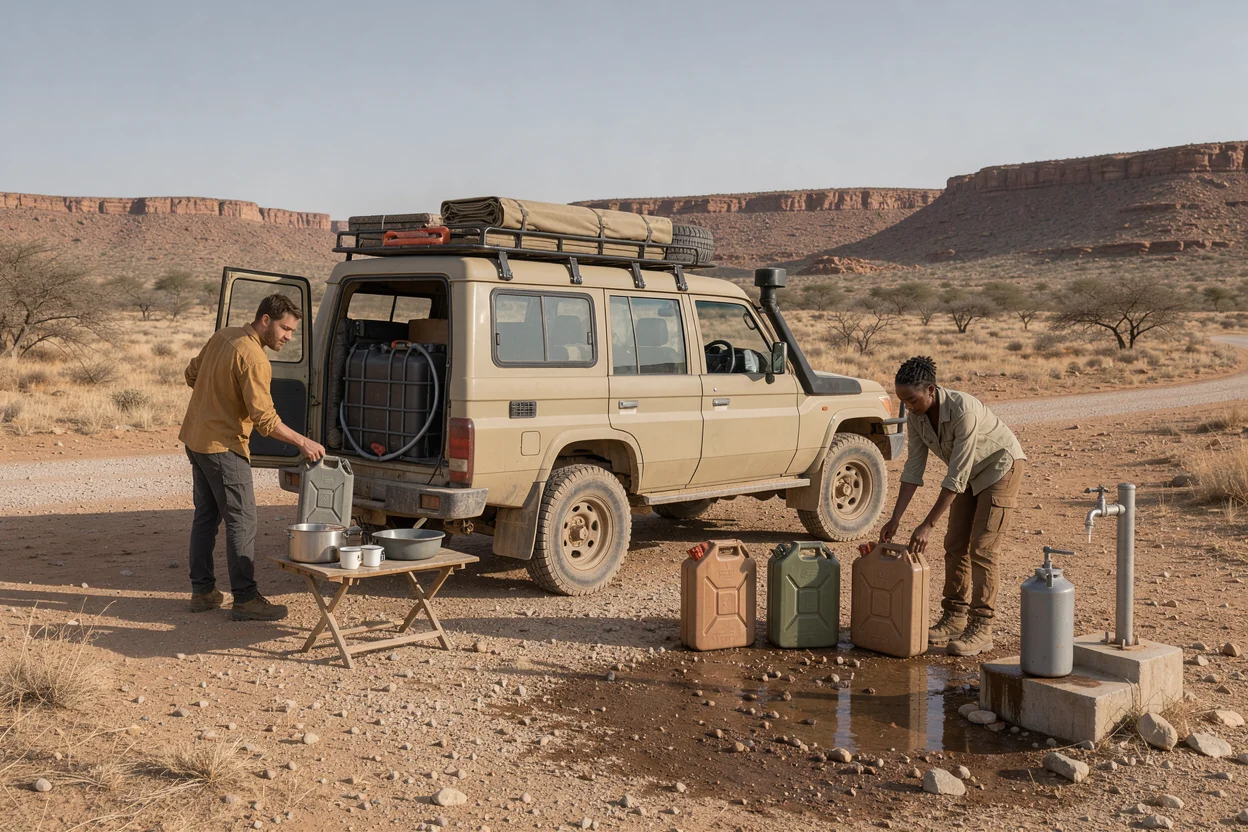
Determining fresh water volume requires balancing basic consumption (drinking, cooking, washing) against chassis payload limits. While daily needs typically range from three to twenty litres per person depending on hygiene expectations and climate, total capacity must respect vehicle gross weight and refill accessibility.
Key takeaways
- Water weighs precisely one kilogram per litre, making excessive capacity a primary threat to gross vehicle mass limits and dynamic stability.
- Distinguish non negotiable metabolic hydration from discretionary hygiene to establish true minimum survival thresholds versus comfort demands.
- Modular storage arrangements provide vital redundancy against leaks or contamination compared to single large capacity tanks.
- Refill frequency, local water availability, and filtration capability often reduce the actual volume required onboard.
Deconstructing Daily Consumption Categories
Accurate water planning begins by breaking usage down into functional categories rather than estimating an arbitrary lump sum. Human consumption is divided between baseline hydration, food preparation, dishwashing, and personal hygiene. Each of these demands carries distinct quality requirements and flexibility during extended journeys.
Metabolic hydration is strictly non negotiable. While moderate climates may require two to three litres per person daily for physiological health, hot desert conditions or sustained physical exertion can easily elevate that figure to five litres or more. Neglecting baseline physiological demand impairs driving concentration, physical recovery, and general endurance.
Culinary and cleaning demands introduce substantial variability. Boiling pasta, rehydrating dried provisions, and brewing warm beverages draw steady quantities from your potable reserves. Meanwhile, wash up water often exceeds cooking volumes unless strict conservation habits, such as scraping plates and using spray misters, are applied.
Personal hygiene represents the largest discretionary variable in any overland build. A wet flannel or sponge wash consumes well under two litres of water, whereas a pressurised onboard shower running at four to eight litres per minute can drain a moderate water tank in a matter of minutes. Deciding between sponge washes and full showers dictates your overall storage envelope.
The Direct Penalty: Payload, Weight Distribution, and Dynamics
In overland vehicle preparation, every resource carries an operational cost, but water is particularly demanding because of its density. One litre of fresh water weighs precisely one kilogram, excluding the structural weight of the reservoir, mounting brackets, pipework, and delivery hardware. Storing one hundred litres of water consumes one tenth of a metric tonne from your available payload.
Exceeding Gross Vehicle Mass (GVM) limits compromises suspension longevity, increases braking distances, and places severe strain on driveline components over rough corrugations. Consequently, carrying excessive reserves 'just in case' can paradoxically increase the risk of mechanical breakdown in remote terrain.
Placement is equally vital. Tanks positioned high within a camper shell or vehicle interior raise the centre of gravity, amplifying body roll and instability on steep off camber tracks. Furthermore, partially empty tanks suffer from fluid slosh, creating dynamic weight shifts during sudden braking or rapid directional changes unless internal baffles are installed.
Practical Comparison Framework: Storage Approaches
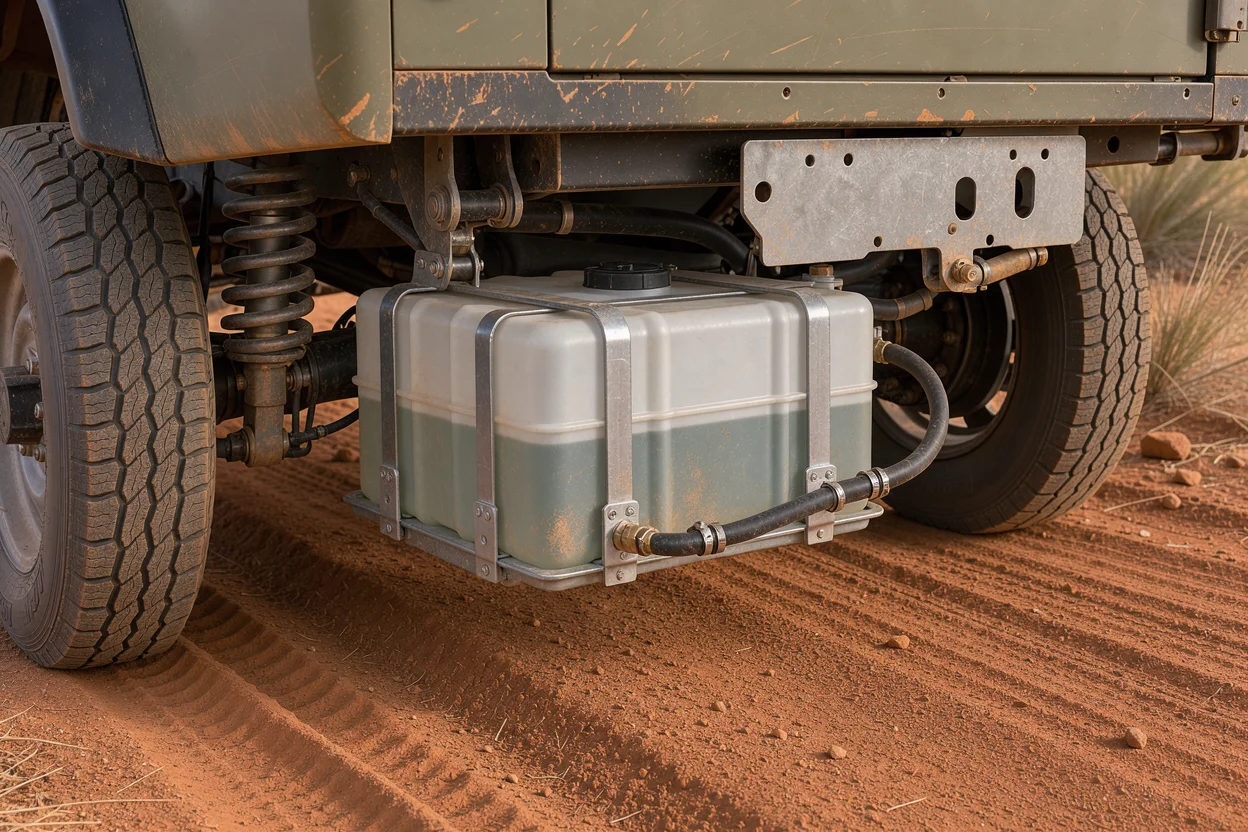
Overland travellers generally adopt one of three storage frameworks: portable containers, integrated fixed tanks, or modular hybrid arrangements. Selecting the correct system depends on vehicle chassis type, space availability, and touring style.
Portable canisters, such as standard twenty litre jerry cans, offer exceptional flexibility and inherent redundancy. If a seam fails or an inlet becomes contaminated, the loss is isolated to a fraction of your supply. Furthermore, individual containers can be carried to remote public taps, streams, or village wells without moving the base vehicle, though securing them firmly inside the cabin or on exterior brackets requires disciplined packing.
Integrated fixed tanks maximise underutilised chassis voids or interior floor cavities, lowering the overall centre of gravity while freeing up interior living space. They pair naturally with pressurised 12V delivery pumps and continuous filtration circuits. However, fixed installations complicate winter draining, require specialised inspection ports for sanitisation, and leave you vulnerable if a single puncture drains the entire reservoir.
Modular hybrid setups split storage into two distinct circuits: a permanently installed primary tank for washing and general utility, supplemented by dedicated portable containers for purified drinking water. This framework prevents cross contamination, simplifies filling at secondary water sources, and retains fallback options if the primary mechanical pump fails.
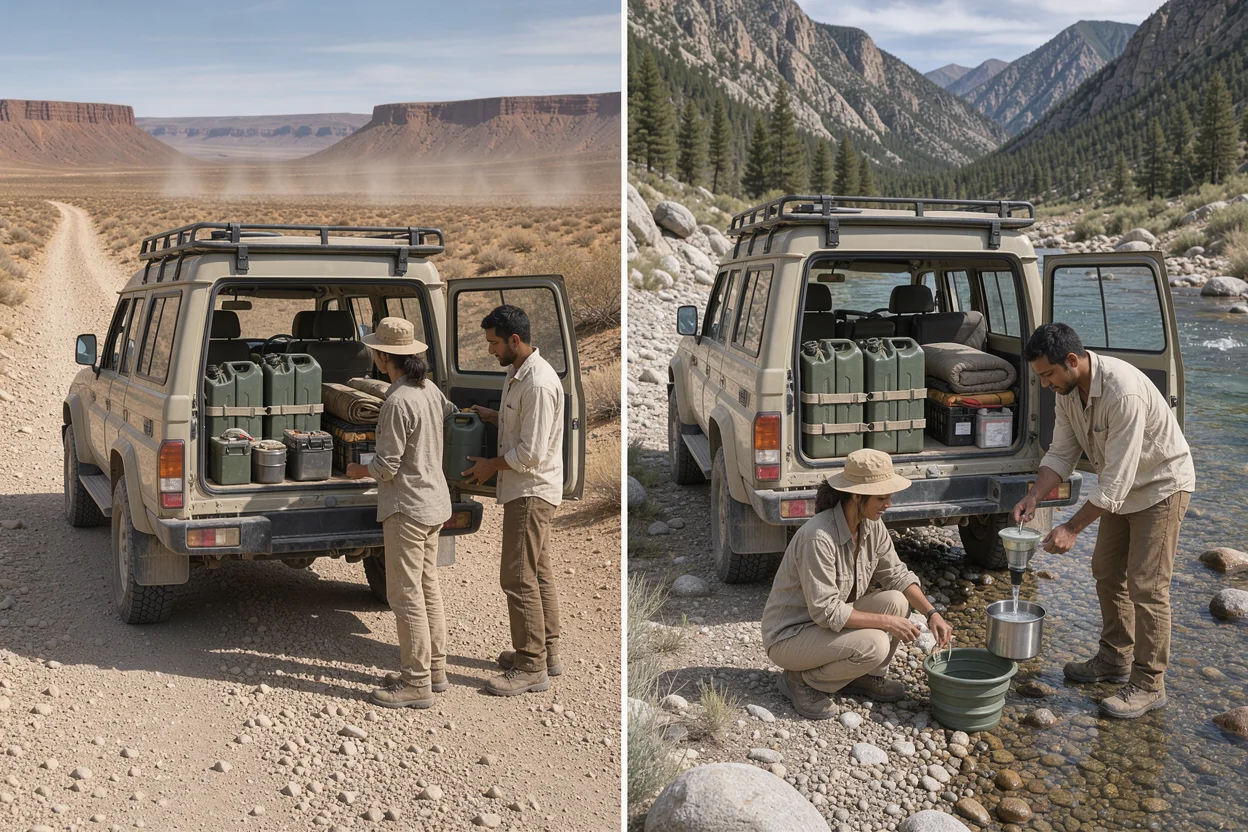
Hypothetical Scenario: Arid Desert versus Temperate Mountain Touring
Hypothetical Scenario: Consider a two person crew travelling in an overland prepared vehicle over a four day duration without access to service stations or commercial campsites.
In a hot desert environment, natural water sources are non existent, and high ambient temperatures increase basic physiological requirements. The crew budgets five litres per person per day for drinking and cooking, establishing a non negotiable minimum of forty litres. Adding a modest four litres total per day for minimal sponge hygiene and dish cleaning increases the baseline to fifty six litres. Including a prudent safety margin of twenty litres for mechanical delays or extreme heat brings the required load to seventy six litres (76 kg of payload).
By contrast, in a temperate mountain environment with consistent river access, the operational calculus changes completely. The baseline drinking requirement drops to roughly three litres per person per day (twenty four litres total). Because surface water can be collected, clarified, and filtered for cooking and washing, the vehicle only needs to carry forty litres of onboard storage, saving over thirty kilograms of dynamic vehicle weight while maintaining comfortable self sufficiency.
Essential Questions for Vehicle Outfitters and Fabricators
When purchasing a converted vehicle, ordering custom water tanks, or evaluating aftermarket water hardware, asking precise questions helps avoid dangerous omissions.
Inquire specifically about internal baffling: 'Are internal vertical baffles fitted to prevent fluid slosh, and how are they structurally anchored inside the tank?' Tanks lacking internal subdivision can induce severe lateral sway during emergency braking manoeuvres.
Clarify materials and maintenance: 'Is the tank material certified food grade polyethylene or marine grade stainless steel, and is there a low point gravity drain for complete winterisation?' Remaining residual water in un drained tanks can freeze and split fittings during sub zero journeys.
Evaluate pump integration: 'Can the water pump be isolated with a manual switch, and does the plumbing system include a non return valve and inline pre filter?' Pumps that run dry due to unseen line airlocks can burn out rapidly in remote conditions.
Common questions
How do I calculate my personal baseline water requirement before an expedition?
Track your household consumption over a typical weekend using measuring jugs or containers. Record the exact volumes used for drinking, hot beverages, basic food preparation, washing utensils, and sponge cleaning to establish an authentic baseline tailored to your culinary and personal habits.
Can I use surface water to reduce the amount of fresh water I need to carry?
Yes, drawing from rivers or lakes for dishwashing, vehicle cleaning, and hygiene significantly reduces onboard storage needs. However, you must carry reliable clarification and filtration equipment if you intend to treat ambient surface sources for potable consumption.
Why is a dual tank configuration preferred over a single large reservoir?
Dual tanks provide mechanical redundancy against punctures, split seams, or biological contamination. If one reservoir is compromised, half of your water supply remains intact, avoiding an immediate emergency in remote locations.
How does ambient temperature influence onboard water capacity planning?
Extreme heat accelerates dehydration and increases daily intake demands substantially, whereas freezing climates restrict tank placement to heated interior spaces and require reliable low point drainage to prevent cracked tanks and split pipework.