
AI assisted editorial. Published following automated quality checks, not independent fact verification. Confirm factual, safety and legal matters with appropriate professionals.
The short answer
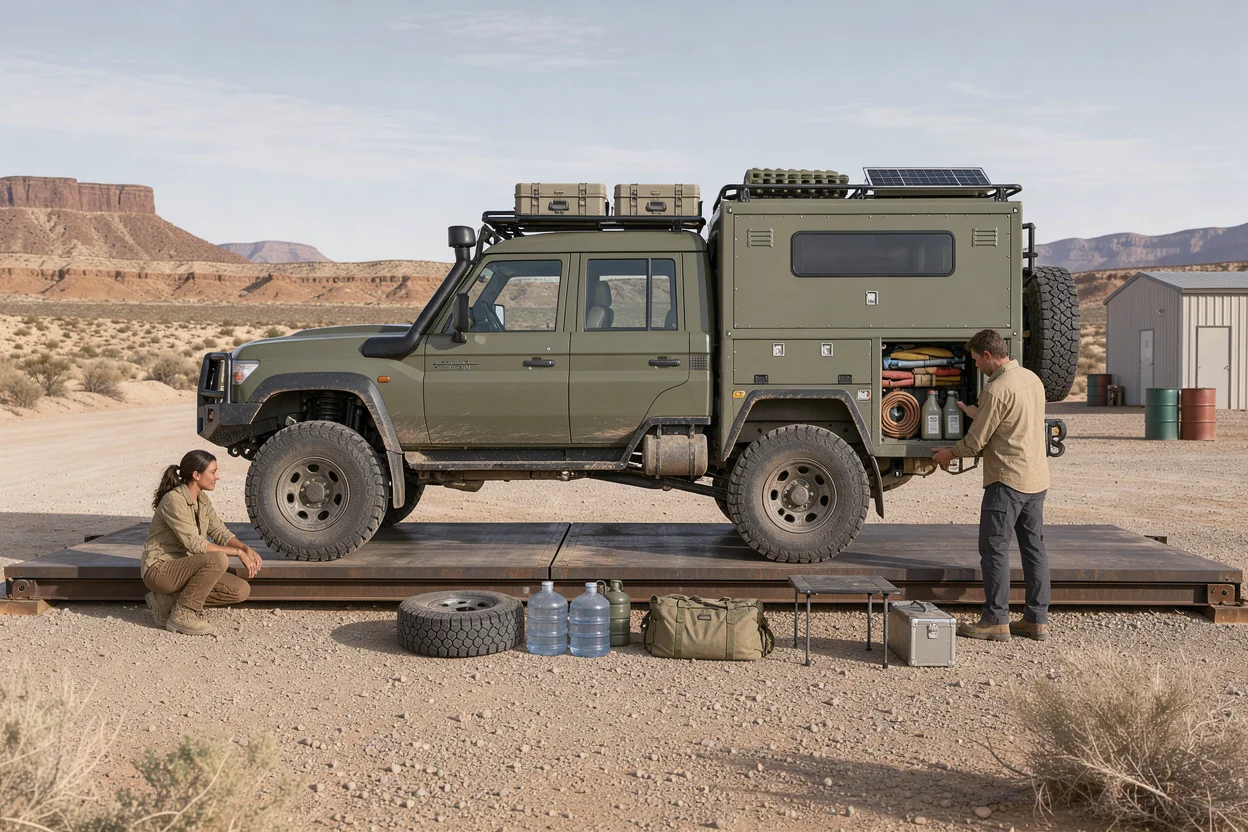
Gross vehicle weight rating represents the maximum certified operating mass of a vehicle, while payload is the capacity remaining once unladen mass is deducted. Expedition equipment, fluids, and passengers rapidly consume this allowance. Evaluating these figures early ensures an overland build remains mechanically dependable, balanced, and legally compliant throughout extended travels.
Key takeaways
- Gross Vehicle Weight dictates the absolute upper operating ceiling for your vehicle, encompassing all hardware, fluids, and occupants.
- Payload margins deplete faster than expected once permanent protection hardware, winches, auxiliary batteries, and roof setups are fitted.
- Pre modified overland rigs often operate near certified weight thresholds, leaving negligible allowance for water, fuel, and provisions.
- Requesting a certified weighbridge certificate provides objective clarity that brochure specifications and seller estimates cannot match.
The Core Metrics: Understanding Mass and Margin
When embarking on an expedition build, understanding mass ratings is the single most vital technical starting point. Gross Vehicle Weight (GVW), often termed Gross Vehicle Mass (GVM), represents the certified maximum total mass that a vehicle can legally and safely sustain when fully laden. Kerb weight, in contrast, normally accounts for an empty vehicle with baseline fluids and a standard fuel load, although definitions can vary marginally across manufacturers.
The operational payload is simply the difference between these two numbers. While a brochure might advertise a generous payload figure, this baseline metric reflects an unadorned factory platform. The moment accessories, tools, recovery gear, and living systems are fitted, that initial figure shrinks significantly. Prospective buyers often mistakenly assume payload relates only to cargo carried in the boot or on a roof rack, forgetting that every bolted on component permanently erodes this working allowance.
Failing to account for these distinctions can lead to persistent mechanical fatigue, altered handling profiles, and potential compliance liabilities. An overloaded expedition rig experiences accelerated wear across braking systems, wheel bearings, suspension bushings, and driveline components, turning long distance travel into an exercise in premature component replacement.
The Cascading Impact of Vehicle Loading
Weight rarely behaves as an isolated consideration; it has a compounding effect on virtually every overland system. Adding heavy accessories such as steel protection bars, auxiliary batteries, full length roof racks, and larger tyres alters the centre of gravity and shifts axle loading. When mass increases, braking distances extend, low speed manoeuvrability decreases, and dynamic body control through corners or emergency avoidance situations degrades noticeably.
Furthermore, structural and thermal stresses rise sharply when a vehicle operates perpetually at or near its maximum certified mass. Cooling packages must dissipate more heat under load, transmissions cycle through gears more frequently to maintain forward momentum on gradients, and chassis sections experience elevated cyclic strain over corrugated or uneven surfaces.
There is also an efficiency tradeoff to balance. While extra fuel tanks and multi battery setups expand independent dwell time, the continuous penalty in fuel economy and chassis wear may shorten the practical lifecycle of the vehicle. Approaching an expedition build requires treating weight as an finite operational budget where every kilogram allocated to comfort or protection reduces margin elsewhere.
Practical Comparison Framework: Heavy Armour vs Minimalist Packaging
To make informed purchasing decisions, buyers can weigh their travel style against two broad structural philosophies: heavy protection configurations versus lightweight, minimalist packaging. Evaluating these archetypes helps clarify how payload capacity is consumed before departure.
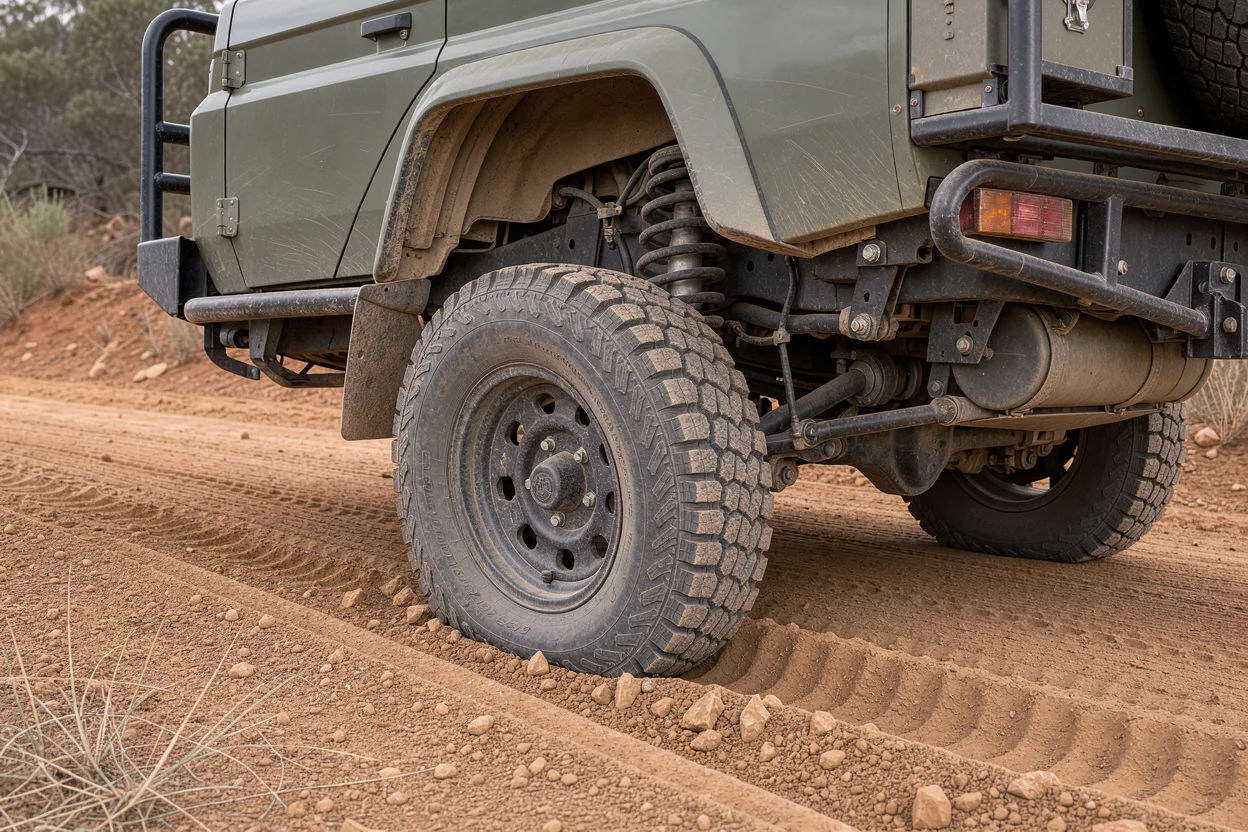
Heavy protection builds prioritise passive durability and comprehensive self sufficiency. They typically incorporate steel front and rear bumpers, high capacity winches, extensive underbody shielding, integrated drawer systems, and hard sided rooftop tents. The principal advantage is resilience against harsh trail impacts and enhanced recovery capability. However, the operational tradeoff is severe: these builds often exhaust sixty to eighty percent of available payload before passengers, fresh water, fuel, and provisions are even loaded.
Minimalist expedition builds prioritise agility, component longevity, and mechanical reserve. By utilising lightweight composite drawer units, aluminium skid plates, fabric ground tents or soft shell rooftop variants, and modular water storage, these setups preserve a substantial portion of the original payload margin. The limitation is that they require disciplined packing, accept greater risk of trail induced cosmetic damage, and offer less permanent onboard convenience.
Key Inquiries to Put to Sellers of Modified Vehicles
When purchasing a second hand expedition vehicle, prospective buyers are frequently confronted with extensive lists of premium aftermarket modifications without any corresponding documentation of the vehicle's actual mass. Asking targeted questions helps reveal whether a build remains within viable engineering limits.
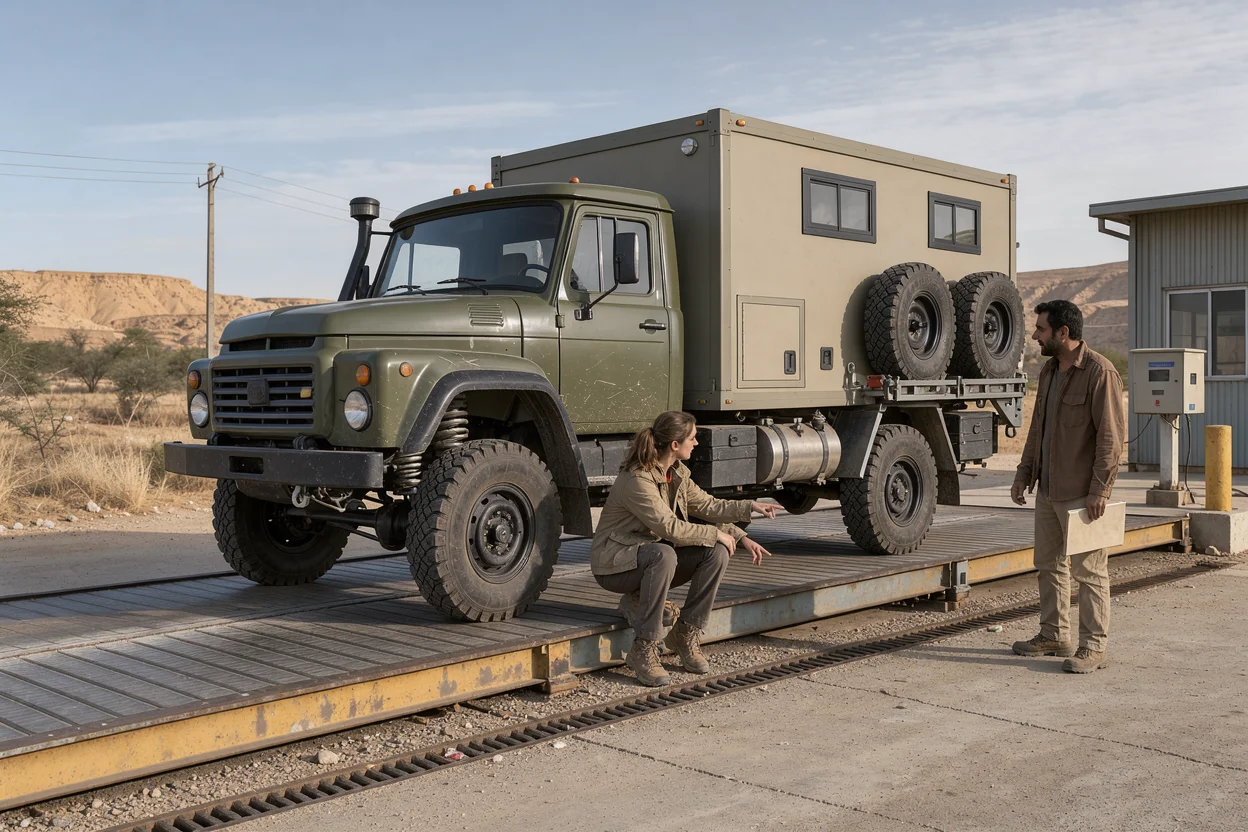
First, ask the seller whether the vehicle has ever been weighed on a certified public weighbridge in its current configuration with full fuel and fluid tanks. A weighbridge slip provides an objective baseline that eliminates reliance on guesswork or brochure mathematics.
Second, inquire specifically about axle weight distributions. Many expedition builds suffer from an excessive rear axle bias due to overhung spare wheels, drawer units, water tanks, and heavy bumper assemblies. Determine whether the modifications maintain individual front and rear axle ratings.
Third, clarify whether the suspension system has been appropriately matched or officially re certified to match the static load. You should ask: 'Were the spring rates and damper valving upgraded specifically to support this resting weight, or is the chassis riding on standard suspension that is permanently compressed under load?'
Hypothetical Decision Example: Balancing Base Rig Selection
Consider a hypothetical prospective buyer evaluating a popular mid sized turbo diesel 4x4 wagon configured for extended remote travel. The vehicle possesses a factory kerb weight of approximately 2,150 kg and a maximum Gross Vehicle Weight of 2,950 kg, providing a theoretical factory payload capacity of 800 kg.
The current owner has fitted a steel bullbar, electric winch, dual battery system, steel side steps, full underbody armour, a dual rear wheel carrier, a roof rack, and a hard shell rooftop tent. Cumulatively, these permanently fitted accessories add approximately 420 kg of unladen mass to the chassis, reducing the remaining usable payload to roughly 380 kg.
In this hypothetical scenario, the buyer intends to travel with a partner (160 kg combined), carry 60 litres of auxiliary fresh water (60 kg), add 40 litres of reserve diesel (approximately 34 kg), pack camping supplies, cooking gear, and recovery equipment (70 kg), and travel with personal luggage and provisions (60 kg). The planned live load totals 384 kg, which immediately pushes the total vehicle weight past the 2,950 kg ceiling.
This dilemma demonstrates the vital importance of real world calculations. Rather than proceeding blindly, the hypothetical buyer must decide whether to remove secondary hardware (such as heavy steel underbody plates or the second spare wheel), upgrade the vehicle's certified suspension platform via an approved compliance path where legally permitted, or select a lighter base vehicle with a higher initial payload ceiling.
Common questions
What is the difference between Gross Vehicle Weight and Gross Train Weight?
Gross Vehicle Weight (GVW) is the maximum permissible total mass of the vehicle itself when fully laden. Gross Train Weight (GTW) is the maximum combined mass allowed for both the fully loaded vehicle and any attached trailer or caravan combined.
Can installing upgraded suspension increase a vehicle's legal payload limit?
Upgraded springs and dampers improve load support and handling under weight, but they do not automatically increase legal payload ratings. In many jurisdictions, an official re certification or engineered Gross Vehicle Mass upgrade process is strictly required to modify the vehicle's legal rating plate.
How does excessive weight affect off road traction and recovery?
Increased weight causes tyres to sink deeper into soft terrain such as sand and mud, raising rolling resistance and ground pressure. Furthermore, extracting an overladen vehicle places significantly higher strain on recovery points, winches, kinetic ropes, and surrounding chassis mountings.
Why do individual axle weight ratings matter if total weight is under GVW?
A vehicle can remain below its overall Gross Vehicle Weight limit while simultaneously exceeding the maximum certified limit for a single axle. Heavy rear accessories, such as swing out spare carriers and internal drawer systems, often overload the rear axle while unweighting the front steering axle.