AI assisted editorial. Published following automated quality checks, not independent fact verification. Confirm factual, safety and legal matters with appropriate professionals.
The short answer
Planning a vehicle based adventure platform requires balancing trail capability with everyday camp routines. This commercial introduction to Adrenalin Industries and their AWOL JD project outlines how prospective overland travellers can refine custom chassis preferences, evaluate long distance living requirements, and ask constructive questions before initiating a bespoke overland truck build.
Key takeaways
- Distinguish between visual aspirations and functional habits by listing daily chores such as cooking, sleeping, and gear access.
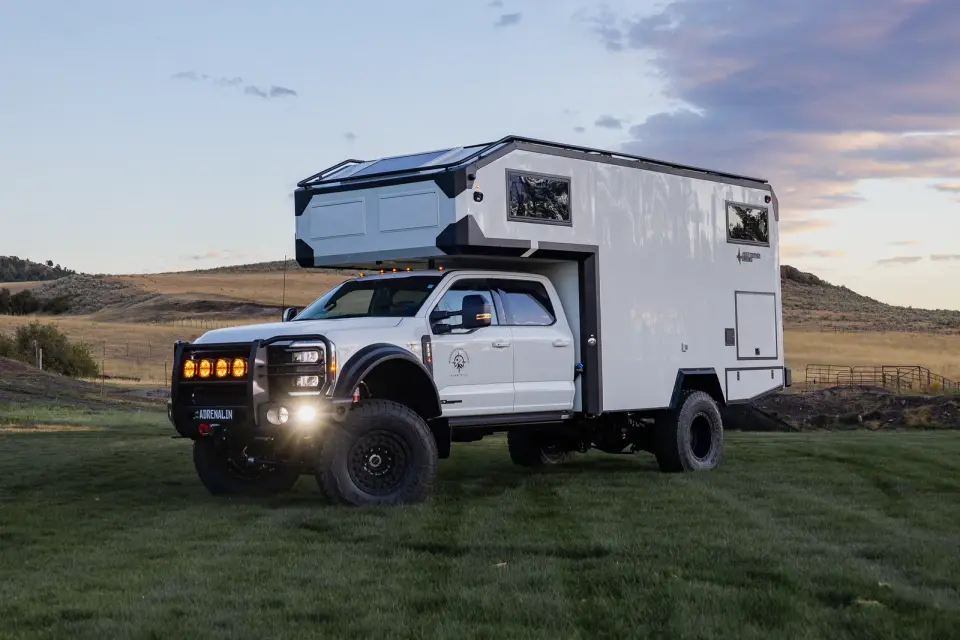
- According to builder information dated 5 November 2026, the AWOL JD is an Adrenalin AWOL build configured on a Ford F550 platform.
- Evaluate heavy chassis camper conversions against your intended remote routes, turning clearance, and resupply frequency.
- Prepare detailed operational questions for bespoke fabricators regarding service access, living climate, and payload margins.
Translating Expedition Dreams into Road Life Priorities
When an overlander begins sketching out a future rig, it is tempting to focus on striking silhouettes, heavy duty recovery gear, and expansive auxiliary lighting. However, long term life on the road is fundamentally defined by quieter, daily moments. Making morning tea in gale force winds, drying wet hiking clothes without steaming up the sleeping quarters, and accessing dry food stores without rearranging luggage are the routines that determine whether an extended journey feels sustainable or exhausting.
Rather than treating a build project as an exercise in ticking off every conceivable accessory, experienced expedition travellers approach their wish list through the lens of lived habits. Before initiating conversations with a workshop, it pays to observe how you actually spend your time at camp and behind the wheel. Establishing your genuine non negotiables such as standing room, interior dining space during inclement weather, or rapid camp setup after dark transforms a vague collection of aspirations into an actionable brief.
Introducing Adrenalin Industries and the AWOL JD
In the bespoke expedition vehicle sector, builders often showcase their capabilities through named flagship builds that demonstrate how specific platforms can be configured for remote backcountry travel. Adrenalin Industries (also referred to within overland circles as Adrenalin Find) produces custom, multi season overland platforms tailored to extended vehicle based exploration.
As part of this commercial introduction, prospective buyers can look to project showcases like the AWOL JD to understand layout styles and vehicle scales. According to official builder descriptions provided by Adrenalin Industries and checked on 5 November 2026, the AWOL JD is identified as a 2025 Adrenalin AWOL project constructed on a Ford F550 chassis.
Because this spotlight serves as a commercial partner overview rather than an independent road test or technical review, these platform details are presented as dated builder records rather than independently verified performance benchmarks. For travellers planning a future build, looking at a completed chassis like this provides a tangible starting point for assessing the merits and compromises of medium duty commercial truck foundations.
A Practical Comparison Framework for Expedition Foundations
Selecting an overlanding base vehicle involves balancing competing travel philosophies. When reviewing platform options like the heavy chassis foundation seen on the AWOL JD alongside lighter utility vehicles, travellers can apply three core criteria to evaluate their personal trade offs.
First, assess Trail Agility versus Living Volume. A commercial chassis cab provides substantial payload allowance and generous habitation dimensions, enabling interior showers, extensive battery banks, and permanent bedding. Conversely, a larger physical footprint limits your ability to navigate overgrown woodland byways, narrow village streets, or soft sand shelves where gross vehicle mass demands cautious tyre management.
Second, consider Self Contained Habitation versus Lightweight Field Camp. Enclosed, hard sided composite bodies offer predictable thermal insulation and secure staging in sub zero or wildlife dense regions. The compromise lies in mass and driving dynamics; heavier rigs require conservative approach speeds and robust brake systems compared with modular pickup trucks or pop top campers.
Third, compare Global Servicing Logistics versus Domestic Parts Availability. Commercial domestic truck platforms often benefit from widespread regional service networks and substantial towing capacities, but their physical size and fuel specifications may require thorough route validation if your itineraries cross remote international borders where infrastructure differs.
Questions to Put to an Expedition Truck Fabricator
A productive builder consultation is grounded in clear operational inquiries. Instead of asking whether a vehicle can traverse a given trail, focus on maintenance, structural longevity, and camp ergonomics using targeted questions.
Ask how the living quarters isolate chassis flex over uneven ground, and what type of subframe mounting system is utilised to protect the camper shell. Inquire about weight distribution: what is the calculated axle loading when fresh water, fuel, and storage lockers are filled to capacity?
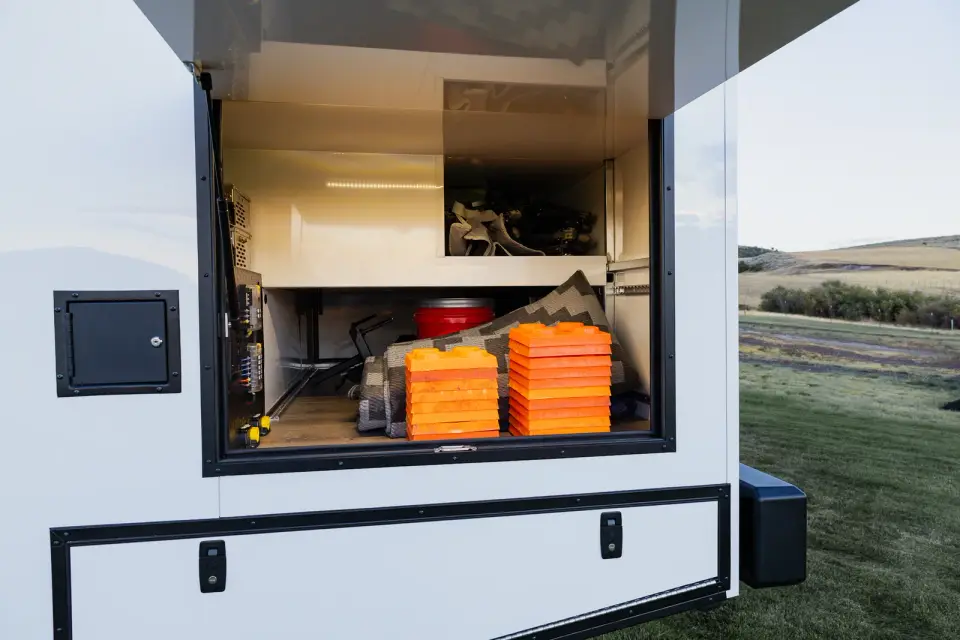
Discuss access points for routine vehicle servicing. Can fuel filters, fluid dipsticks, and auxiliary fuse blocks be inspected without dismantling primary cabinetry or offloading heavy storage bins? Understanding how a builder designs for routine maintenance prevents minor mechanical tasks from becoming day long camp headaches.
Finally, explore environmental resilience. How is internal condensation managed during shoulder season travel, and what steps are taken to insulate exterior storage compartments against dust ingress on corrugated washboard tracks?
Hypothetical Decision Example: Evaluating Overland Profiles
Consider this clearly labelled hypothetical decision example: Sarah and Marcus are planning a two year overland journey that alternates between high altitude mountain passes and extended remote desert stays. They must decide between commissioning an integrated medium duty truck camper, akin to the platform scale of the AWOL JD on an F550 base, or building out a smaller four wheel drive dual cab ute with an aluminium canopy.
In this hypothetical scenario, their travel habits involve working remotely from the vehicle three days a week, regardless of outdoor temperatures or insect activity. They also carry outdoor sports equipment and require substantial off grid water capacity for week long bush camps away from organised campsites.
When evaluating their options, Sarah and Marcus recognise that while a smaller dual cab ute discounts superior turning circles and lower shipping costs across maritime borders, it forces them to live primarily outdoors beneath an awning. In cold rain or high winds, working on laptops becomes uncomfortable. For their specific lifestyle requirement of an all weather mobile office and high payload margin, prioritising the larger chassis volume and hard sided living space of a medium duty truck conversion aligns better with their daily reality on the road.
Common questions
How does a commercial builder introduction differ from an independent vehicle test?
A commercial introduction outlines a fabricator's background, design ethos, and model lines using supplied details without conducting independent testing, workshop verification, or long term durability trials. It helps buyers structure their build preferences rather than verifying performance claims.
Why is chassis payload margin critical when planning a long distance overland build?
Payload determines how much weight you can safely carry, including auxiliary fuel, water, recovery gear, interior living modules, and passengers. Exceeding gross vehicle mass compromises vehicle handling, increases mechanical stress on axles and suspension, and can invalidate roadside cover.
What information should you prepare before contacting a bespoke overland builder?
Prepare a summary of your intended travel regions, seasonal climate expectations, average trip length, sleeping arrangements, and essential gear. Focusing on how you live at camp helps builders recommend appropriate subframes, chassis foundations, and interior layouts.
References
Talk to Adrenalin Industries about your adventure
Ask the builder about the specific vehicle, current configuration, price and availability. Mention Overland Finds when enquiring so they can identify the referral.
Enquire about AWOL JD (opens in a new tab)Commercial partner feature: Overland Finds earns a commission on qualifying sales it refers to Adrenalin Industries. This is not an independent review or a claim of hands on testing. Mention Overland Finds when enquiring so the builder can identify the referral; commission eligibility depends on the agreed referral terms.