
AI assisted editorial. Published following automated quality checks, not independent fact verification. Confirm factual, safety and legal matters with appropriate professionals.
The short answer
Auxiliary lighting and aftermarket hardware support trail navigation, camp illumination, and vehicle recovery during remote travel. When considering brands like Nilight, matching beam profiles, electrical demand, and hardware resistance to your specific route demands ensures your vehicle remains reliable without overcomplicating your setup.
Key takeaways
- Match lighting patterns directly to your travel style, using broad flood profiles for camp work and focused spot beams for slow trail spotting.
- Calculate your rig's continuous electrical capacity before adding auxiliary light bars, pods, or switched accessories.
- Assess bracket thickness, corrosion resistance, and moisture ingress protection against the typical weather of your destination.
- Ask suppliers detailed questions about harness inclusion, switchgear compatibility, and replacement hardware availability.
The Overland Context for Auxiliary Lights and Rig Accessories
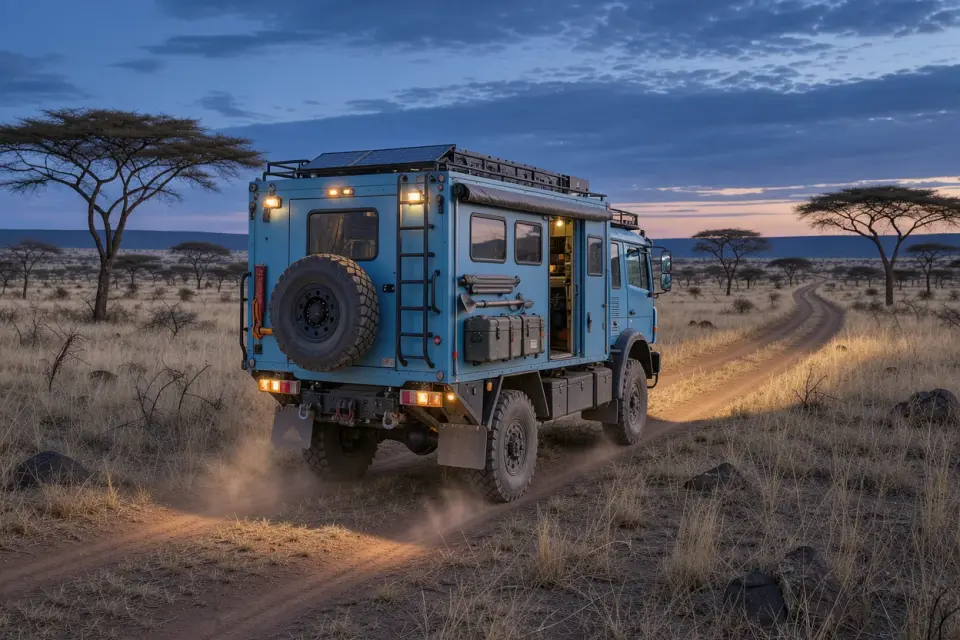
Vehicle dependent travel demands equipment that performs reliably far beyond the reach of roadside assistance. Off pavement navigation frequently requires arriving at remote camp pitches after sunset, picking paths through rutted tracks, or managing roadside repairs in complete darkness. Standard automotive high beams are engineered for paved highways with reflective road signs; they often lack the breadth or immediate foreground coverage required to detect track washouts, overhanging branches, or ditch edges at low speeds.
Equipping a 4x4 or camper with auxiliary lighting and exterior hardware is therefore less about aesthetic styling and more about situational awareness and safety. Auxiliary units such as light bars, ditch lights, and scene lighting provide distinct illumination patterns that reduce driver fatigue on long night drives. However, adding auxiliary parts also introduces weight, aerodynamic drag, and additional points of failure into your vehicle's 12 volt system.
Choosing parts in this category requires balancing the utility of enhanced illumination against the practical demands of life on the road. An overland build should prioritise clean installation, manageable power draw, and mechanical resilience over raw lumen counts or excessively complex lighting arrangements that place undue strain on your alternator and starter battery.
Considering Nilight for Vehicle Based Adventure Travel
In the aftermarket off road sector, Nilight, LED Lights & Off Road Accessories · US discounts a wide selection of LED light bars, driving lights, and accessories for off road vehicles. For self supported travellers and overlanders, understanding where this brand fits into an adventure build requires looking past broad catalogue claims and focusing on your exact travel conditions.
The brand's catalogue covers typical overlanding needs, from compact pod lights suited for A pillar ditch mounts to larger roof mounted or bumper mounted bars designed to throw light ahead on open gravel tracks. They also provide supporting hardware such as wiring harnesses, rocker switches, and mounting brackets, which can simplify the process of outfitting a general touring rig.
Because partner provided descriptions focus on off road utility and accessibility, buyers must exercise their own diligence regarding real world application. For instance, an entry level light bar may serve well for occasional weekend green laning or setting up a family camp in dry climates, whereas prolonged overland expeditions across harsh, salt laden coastal routes or corrugated desert tracks may demand upgraded mounting hardware, custom sealing, or vibration dampeners regardless of the brand chosen.
Practical Comparison Framework for Overland Accessories
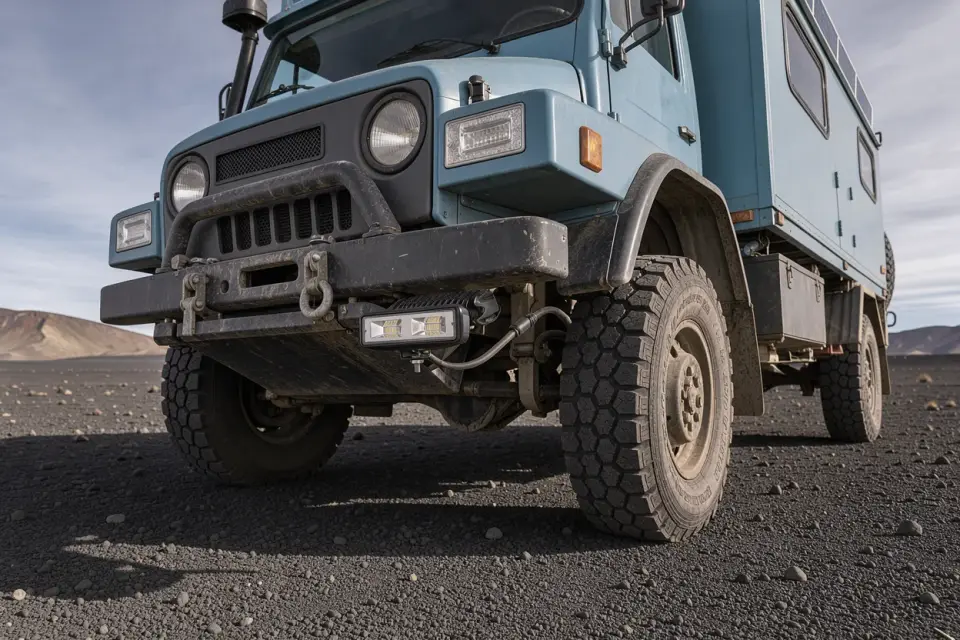
When evaluating parts and accessories for your travel rig, use a structured comparison framework rather than comparing headline output figures alone. First, evaluate environmental ingress protection and chassis construction. Overland vehicles encounter continuous vibration, heavy rain, dust storms, and stream crossings. Check whether the housing uses extruded aluminium, how the front lens is sealed, and whether breathing valves are integrated to prevent internal condensation during rapid temperature swings.
Second, examine beam pattern utility. Driving down an unpaved forest track requires wide flood optics to monitor track shoulders for wildlife and obstacles, whereas open desert tracks benefit from narrow spot beams that project forward. Combination light bars offer a hybrid solution, but dedicated smaller pods positioned strategically around the vehicle often provide more adaptable illumination for camp tasks and tight manoeuvring.
Third, consider the electrical architecture and mounting integration. Any accessory added to an overland vehicle must integrate cleanly with your auxiliary fuse block or power management system. Assess whether the supplied wiring harness uses appropriate wire gauges, sealed automotive grade connectors, and adequate relay ratings for the continuous draw of the unit, minimising the risk of voltage drop or thermal failure in remote locations.
Hypothetical Decision Example: Remote Expedition vs Weekend Touring
Consider a hypothetical decision between two different overland travellers outfitting a mid sized 4x4. The first traveller, Alex, is preparing for a three month self contained journey across rough desert terrain, involving sustained high speed corrugations and remote wilderness camping. The second traveller, Sam, uses their vehicle for occasional weekend trips to established wild camping spots, predominantly driving on paved roads with short gravel access tracks.
In this scenario, Sam decides to install an affordable Nilight bumper light bar and a pair of ditch lights. Because Sam's vehicle experiences moderate use and lower vibration cycles, this setup provides ample auxiliary lighting for pitch arrivals and occasional unlit backroads without requiring extensive structural reinforcement or expensive custom brackets. The trade off is acceptable: moderate investment for intermittent, practical lighting needs.
Conversely, for Alex's extended desert expedition, standard brackets and entry level wiring harnesses may present durability risks under relentless corrugations. If Alex chooses components from the same catalogue, they must factor in custom rubber isolators, heavy duty stainless steel fasteners, thread locking compound, and sealed waterproof connectors to withstand the mechanical punishment of continuous off pavement travel. This example illustrates how trip duration, terrain severity, and maintenance access dictate equipment selection.
Questions to Clarify with Sellers Before Purchasing
Before purchasing off road lights or accessories for an adventure rig, engaging the retailer or manufacturer with precise questions can prevent costly compatibility issues on the trail. Inquire about the exact ingress protection rating and whether the internal seals are serviceable or replaceable if water ingress occurs during deep wades.
Ask about the physical dimensions and mounting bolt patterns, confirming whether the bracketry allows for clearance around roof racks, winches, or front vehicle sensors. For modern overland rigs equipped with advanced driver assistance systems (ADAS), poorly positioned accessories can obscure radar units or front cameras, causing dashboard warning faults.
Finally, clarify the electrical specifications under continuous running conditions. Ask what the true current draw is at standard vehicle operating voltages (around 13.8 volts), whether the kit includes an inline fuse and relay, and whether the wiring sheath is rated for engine bay heat exposure. Clarifying these factors upfront ensures your new accessories contribute to a safer, more reliable expedition vehicle.
Common questions
What beam pattern is most practical for overland camp setups?
Flood and scene beam patterns are the most practical for camp areas. Unlike focused spot beams that create intense glare in a narrow line, flood patterns disperse light evenly across a broad, close range area, making it easier to pitch tents, cook, and unpack gear without blinding fellow travellers.
Can auxiliary light bars drain an overland auxiliary battery system quickly?
Yes, high output light bars can draw significant amperage. While modern LED units are more efficient than halogen lamps, running multiple lights alongside a 12V fridge and camp accessories while the engine is off can rapidly deplete your auxiliary battery if continuous draw is not monitored.
How do corrugations and rough tracks affect aftermarket off road lights?
Prolonged travel over washboard or corrugated tracks subjects lighting units to intense vibration. This can loosen mounting bolts, stress mounting tabs, and crack solder joints inside the light housing. Using thread locker, lock washers, and rubber isolation dampeners helps mitigate vibration fatigue.
Are roof mounted light bars better than bumper mounted lights for touring?
Each position has distinct trade offs. Roof mounted lights offer greater distance and clear terrain obstacles, but they can create distracting glare across the bonnet and increase wind noise. Bumper mounted lights sit below driver eye level, reducing hood glare in dust or fog, but offer lower perspective over crests.
Partner discounts in this guide
Overland Finds may earn a commission from qualifying purchases made by customers through this link, at no additional cost to you. This does not imply independent product testing or endorsement. Confirm current terms and availability with the partner.

Nilight, LED Lights & Off Road Accessories · US
Nilight specialises in high performance automotive lighting and off road accessories, including LED light bars, auxiliary driving lights, wiring harnesses, battery chargers, solar panels and 12V electrical products. Designed for durability and reliability, Nilight products help equip 4x4s, expedition vehicles and off road adventures.
- Valid in
- US
- Discount
- LED lights, light bars and off road accessories for 4x4 and overland vehicles.