
AI assisted editorial. Published following automated quality checks, not independent fact verification. Confirm factual, safety and legal matters with appropriate professionals.
The short answer
Selecting dependable vehicle cooling parts requires matching engine specifications, assessing construction materials, and confirming exact fitment before committing to a purchase. This buyer guide explores cooling hardware essentials, provides an objective evaluation framework, and introduces commercial supplier ISOTIGER as a source for radiators and replacement engine cooling components.
Key takeaways
- Verify part numbers against your vehicle chassis and engine codes rather than relying solely on model year or trim level.
- Decide between original equipment equivalent designs and heavy duty configurations based on your payload and anticipated operating climate.
- Partner supplier ISOTIGER · France lists radiators and engine cooling components for cars, lorries, and agricultural machinery.
- Establish clear shipping, transit damage policies, and returns procedures with overseas or specialist suppliers prior to ordering.
Understanding the Demands on Vehicle Cooling Systems
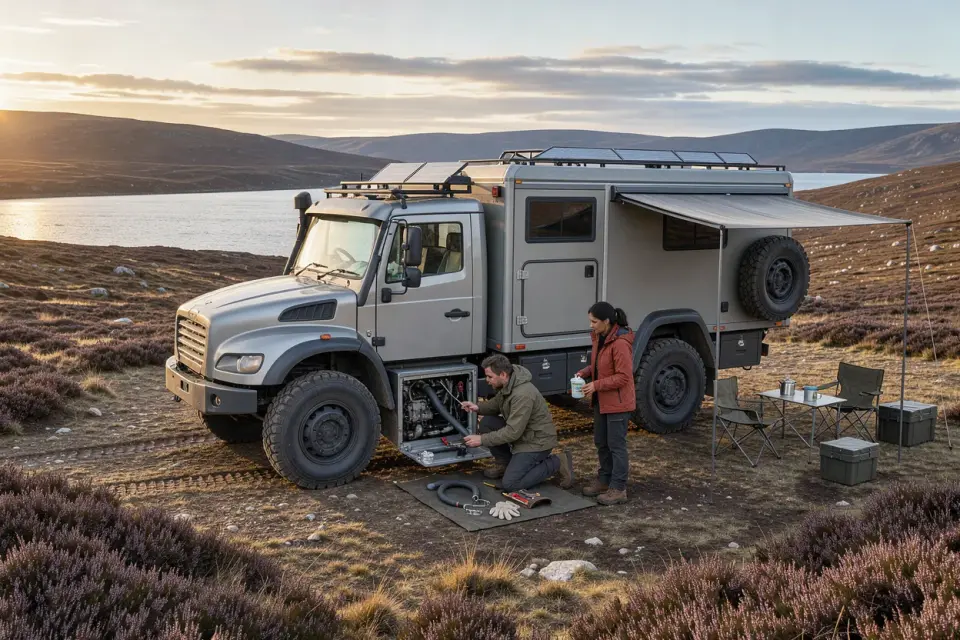
Overland travel frequently places atypical strain on vehicle cooling systems. While motorway cruising allows a steady stream of ambient airflow across the radiator core, remote trails, soft sand, and sustained hill climbs often demand high engine output at exceptionally low road speeds. Under these low speed conditions, the cooling package encompassing the radiator, water pump, thermostat, auxiliary fans, and coolant expansion vessels must work at maximum capacity without the benefit of natural ram air.
A cooling system degraded by internal silt, external fin damage, or stress cracks in aged plastic end tanks can quickly lead to elevated operating temperatures. In remote destinations, cooling failure poses a serious risk to engine longevity and route progression. Preventative replacement or planned overhauls of ageing components prior to remote itineraries remain a cornerstone of sensible vehicle preparation.
Sourcing the correct replacement parts requires balancing original equipment manufacturer standards against aftermarket alternatives. The goal is not necessarily to re engineer the entire cooling loop, but to ensure that replacement cores, couplings, and heat exchangers offer dependable thermal exchange, exact dimensions for mounting brackets, and robust long term durability under constant vibration.
Sourcing Hardware with Partner Supplier ISOTIGER
When planning repairs or refreshing the engine bay, identifying parts suppliers with comprehensive catalogues across multiple vehicle classes can streamline the procurement process. Commercial partner ISOTIGER · France is an established European distributor in this space. According to partner provided details, ISOTIGER discounts radiators, engine cooling components, and spare parts intended for passenger cars, commercial lorries, agricultural machinery, and industrial equipment.
For overland travellers and vehicle builders, a distributor catering to commercial and heavy machinery sectors can be helpful when maintaining utility focused 4x4s, expedition trucks, or fleet derived platforms. Agricultural and commercial supply chains often stock components engineered to handle sustained duty cycles, which aligns well with the heavy, fully laden nature of long range touring rigs.
Because ISOTIGER operates from France, prospective buyers based across the UK and continental Europe must evaluate cross border delivery timelines and regional import protocols. As with any distributor, customers should distinguish partner product descriptions from verified operational performance on specific modified overlanding platforms, verifying component specifications directly before placing an order.
A Practical Comparison Framework for Cooling Components
To select the most appropriate replacement radiator or cooling spare, prospective buyers should assess options across three primary criteria: core construction, fitment fidelity, and logistical support.
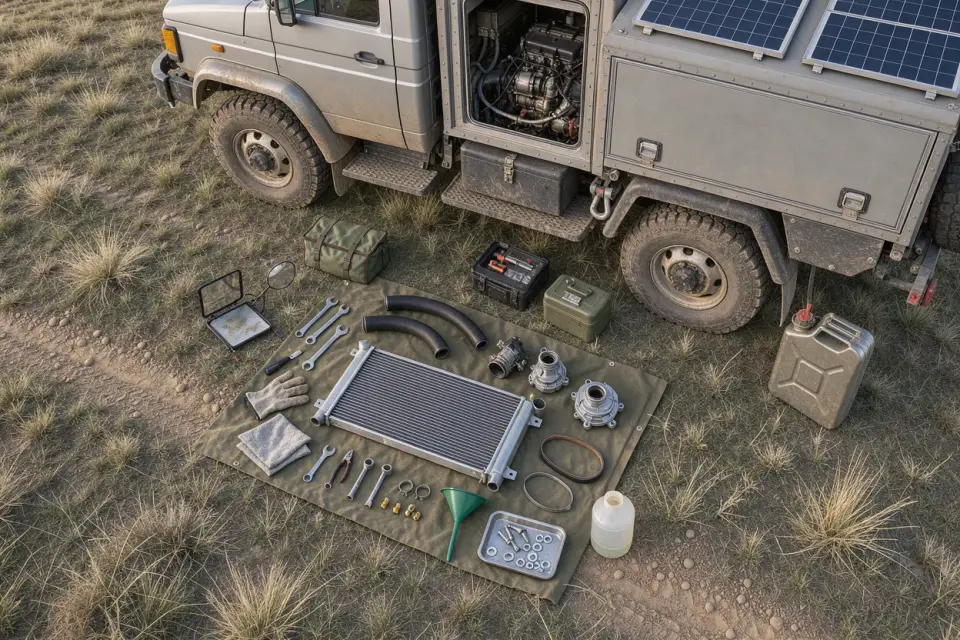
Core construction usually splits between traditional composite designs featuring aluminium cores crimped to reinforced plastic end tanks and all welded aluminium units. Composite units are often identical to factory equipment, offering cost effective, direct fit replacement with predictable thermal behaviour. However, plastic tanks can become brittle over years of thermal cycling. All welded aluminium assemblies eliminate crimped plastic seams, offering resilience against fatigue and pressure spikes, though they typically carry a higher initial investment and must be carefully checked for quality welds.
Fitment fidelity addresses how precisely the component integrates with existing vehicle fixtures. An ideal replacement matches factory mounting brackets, transmission oil cooler fittings, fan shroud tabs, and hose spigots without requiring modifications or strained hoses. Modifying mounting brackets in the field introduces vibration stress points that can induce fatigue cracks.
Logistical support evaluates the supplier's packaging standards, transit insurance, and warranty processing. Large heat exchangers are delicate items with fragile cooling fins that can easily be punctured or warped in transit if not secured correctly in rigid structural packaging.
Questions to Ask Parts Suppliers Before Purchasing
Engaging directly with customer service or technical sales teams before ordering helps prevent frustrating fitment mismatches and transit delays. Always ask suppliers to cross reference your specific Vehicle Identification Number (VIN) or original equipment part number against their catalogue, especially if your vehicle has variations between manual and automatic gearboxes or air conditioning packages.
Inquire about the origin and testing standards of the core. Useful questions include asking whether the unit undergoes factory pressure testing prior to dispatch and whether the internal transmission oil cooler (if integrated into the lower tank) matches original pipe flare angles and thread pitches.
Clarify shipping procedures and return terms. Ask what level of protective packaging is used, how physical transit damage must be documented upon courier delivery, and who bears the return shipping costs if a component exhibits manufacturing flaws or dimension discrepancies.

Hypothetical Decision Example: Sourcing for an Expedition 4x4
Consider a hypothetical overland traveller preparing a fifteen year old diesel utility wagon for a two month summer journey across southern Europe. The vehicle's existing radiator retains its original factory plastic aluminium construction. While not leaking, the plastic tanks have discoloured, and minor scale build up is evident inside the filler neck.
The traveller faces two viable options: source a premium all aluminium bespoke radiator from a specialist motorsport fabrication workshop, or source a standard commercial replacement radiator from a multi sector parts supplier such as ISOTIGER.
In this hypothetical scenario, the bespoke aluminium unit would offer maximum structural resilience against extreme corrugated roads, but at significant financial cost and with a six week build lead time. Conversely, a quality commercial replacement matching original equipment dimensions provides reliable thermal performance at an accessible budget, with standard catalogue delivery.
Weighing preferences, the owner chooses the commercial replacement route because the vehicle's engine remains at factory boost levels and the scheduled departure date is only three weeks away. The saved funds are redirected into fresh coolant, new silicone hoses, and a replacement thermostat, illustrating how practical budget allocation and delivery speed often take precedence over extreme custom engineering.
Common questions
What is the primary difference between all aluminium and composite radiators?
Composite radiators combine an aluminium core with crimped plastic end tanks, mimicking standard original equipment at lower cost. All aluminium radiators replace crimped plastic with fully welded aluminium tanks, removing plastic seams that may degrade over extended thermal cycles.
Can I fit a radiator designed for a manual vehicle into an automatic?
Not without modification. Automatic vehicles often incorporate an internal transmission fluid cooling circuit within the lower radiator tank. A radiator built exclusively for a manual gearbox lacks these fluid ports and heat exchanger loops, rendering it unsuitable for factory automatic drivetrains.
What information should I provide when ordering cooling parts from ISOTIGER?
Supply your vehicle registration, Vehicle Identification Number (VIN), engine code, transmission type, and whether air conditioning is fitted. Confirming original equipment part numbers stamped on your existing unit ensures accurate cross referencing against supplier catalogues.
How should cooling components be inspected upon arrival?
Immediately open the packaging to check for crushed cooling fins, bent mounting pins, cracked plastic tanks, or stripped threads. Report any transit damage or manufacturing imperfections to the distributor before attempting installation.
Partner discounts in this guide
Overland Finds may earn a commission from qualifying purchases made by customers in France through this link, at no additional cost to you. This does not imply independent product testing or endorsement. Confirm current terms and availability with the partner.

ISOTIGER · France
Find radiators, engine cooling components and spare parts for cars, trucks, agricultural machinery and industrial equipment from ISOTIGER.
- Valid in
- France
- Discount
- France offer · Shop radiators and spare parts