
AI assisted editorial. Published following automated quality checks, not independent fact verification. Confirm factual, safety and legal matters with appropriate professionals.
The short answer
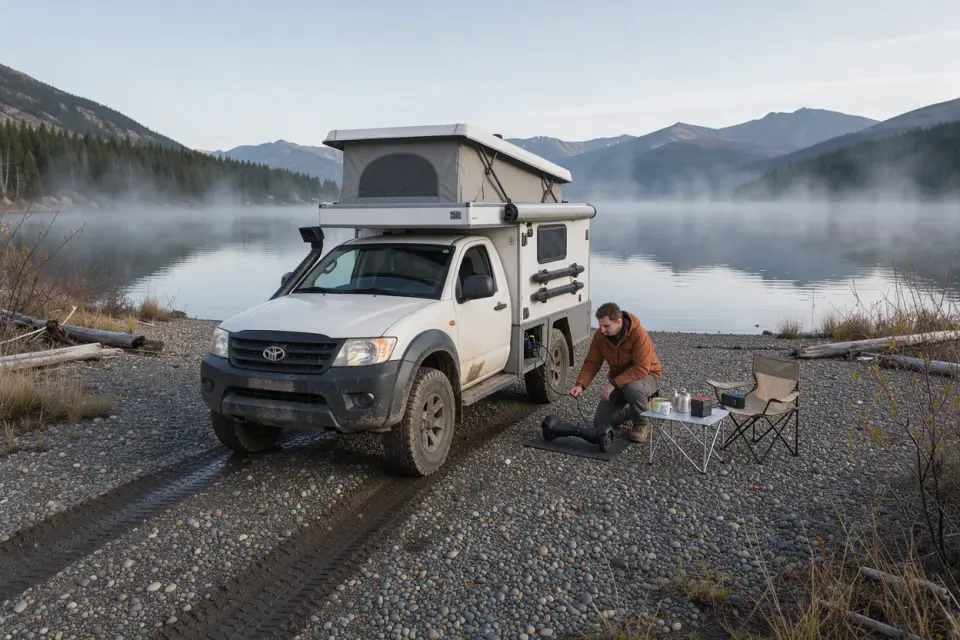
Bringing compact electric transport on overland adventures discounts a flexible way to explore towns and campsites without packing up your primary vehicle. This guide examines how sports and outdoor mobility gear from partner iHoverboard · UK fits into vehicle based travel routines, balancing auxiliary power demands, storage limits, and terrain suitability.
Key takeaways
- Assess your vehicle auxiliary power capacity before committing to high capacity battery chargers on the road.
- Prioritise folded dimensions and secure transit mounting to prevent loose gear hazards in the vehicle cabin.
- Match tyre diameter and build geometry to real camp terrain rather than smooth showroom surfaces.
- Verify local land access rules, as public highway and off road trail regulations for micro mobility differ widely by country.
Micro Mobility and Last Mile Transport in Overland Travel
Setting up camp on an overland trip often involves securing awnings, levelling tyres, and deploying rooftop accommodation. Once your basecamp is established, breaking it down merely to fetch supplies from a village shop or inspect an access track down the road is inconvenient. This friction has led many vehicle based travellers to explore micro mobility devices within the broader sports and outdoor equipment category.
Compact personal mobility tools, including electric scooters, folding e bikes, and hoverboards, provide low impact ground transport that preserves vehicle autonomy. They allow travellers to leave the heavy expedition 4x4 or campervan securely parked while running quick errands, scouting narrow walking paths, or facilitating casual recreation around designated holiday parks. However, integrating motorised outdoor toys into an overlanding setup requires balancing cargo space, payload limits, and electrical power generation.
Evaluating Sports and Outdoor Rideables: Practical Comparison Framework
Not all leisure mobility gear withstands the vibration, dust, and unpredictable surfaces encountered on long distance road trips. When evaluating equipment, overlanders should balance three competing operational compromises.
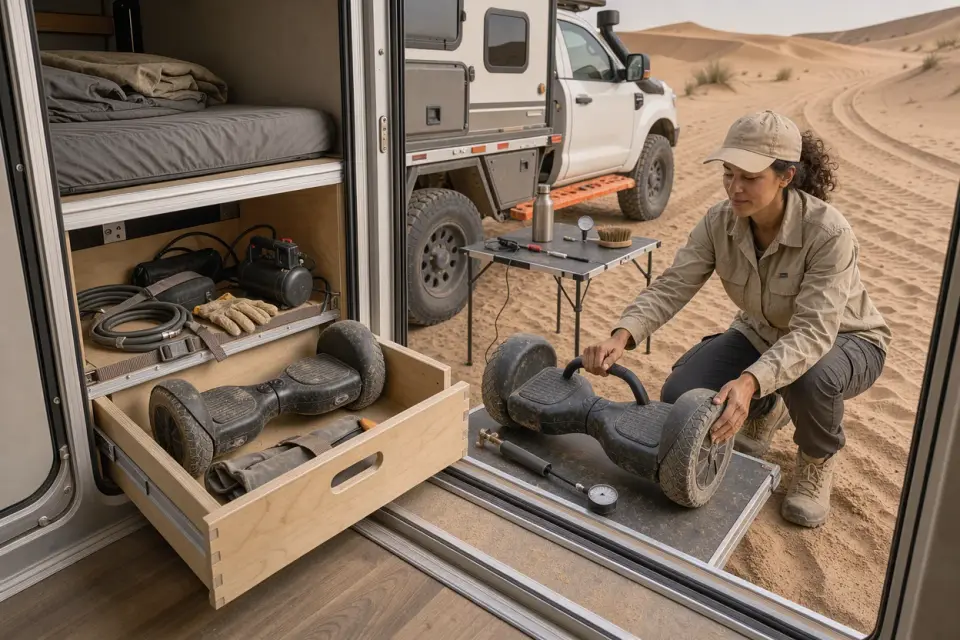
First, assess the packability versus terrain tolerance trade off. Compact devices with small solid tyres pack neatly into drawer systems or under bed platforms, but they struggle on gravel tracks, grass pitches, and corrugated soil. Larger pneumatic tyres navigate rough terrain more comfortably but claim substantial boot space or require exterior racks.
Second, weigh onboard battery capacity against your auxiliary 12V or solar electrical budget. Higher capacity batteries extend leisure range from camp, yet their mains voltage charging bricks draw considerable power through an inverter, potentially straining house batteries during cloudy stretches.
Third, consider chassis durability and ingress protection. Leisure transport used outdoors around camp must endure moisture, mud, and dust. Selecting units with enclosed wiring harnesses, sealed charging ports, and robust folding hinges prevents mechanical breakdown far from home.
Partner Profile: iHoverboard UK and Camp Transport Considerations
According to partner descriptions provided for this brief, iHoverboard · UK by iHoverboard discounts a range of self balancing hoverboards, electric scooters, e bikes, and riding accessories, focusing on fun, convenient, and affordable electric mobility solutions for children, adults, and outdoor enthusiasts. These items are produced primarily for general leisure and recreation rather than bespoke off road overland expeditions.
For overlanders, the relevance of the iHoverboard catalogue lies in secondary camp utility and recreational downtime. An electric scooter or compact folding e bike can serve as practical runabouts on tarmac access roads, established campsite lanes, and paved greenways. Self balancing hoverboards and accessories can provide active entertainment for families spending extended rest days at holiday parks.
Because these products are retail leisure items rather than specialised overland hardware, travellers must exercise sensible judgement regarding environmental exposure. Storing them inside a weatherproof canopy or dry luggage box during transit preserves sensitive electronics from road grime and rainwater.
Questions to Ask Retailers Before Purchasing
Before investing in micro mobility products for life on the road, contact the seller or manufacturer with targeted questions to ensure compatibility with your vehicle setup.
What are the precise folded dimensions and total weights of the chassis and battery combined? Knowing exact measurements allows you to verify whether the unit fits inside your storage boxes, beneath a rock and roll bed, or on an exterior bike rack without exceeding vehicle axle ratings.
What are the input power specifications for the battery charger? You need to know the watt hour rating, charging voltage, and input wattage to calculate whether your portable power station or onboard leisure battery inverter can safely handle the charging load.
What level of ingress protection does the unit carry against water splashes and fine dust? Vehicle travel frequently involves damp grass, dirt tracks, and unexpected showers, so clarification on weather resistance helps determine where you can ride and store the machine.
Are replacement tyres, inner tubes, and charging bricks readily available as standalone spares? Carrying basic spare parts on extended journeys ensures a single puncture does not sideline your camp transport.

Hypothetical Decision Example: Choosing Transport for a Campervan Tour
Consider a hypothetical travelling couple planning a three month campervan tour across Britain and continental Europe. Their vehicle has limited internal floor space, a 200Ah lithium leisure battery, and an exterior bike carrier. They want transport to explore small villages without navigating narrow cobbled streets in their tall campervan.
Option A is a pair of compact electric scooters from a retailer like iHoverboard. These fold flat, stow neatly under the rear bed compartment, and draw modest recharging power from the van inverter during midday solar peaks. While their smaller wheels limit use to paved paths, they remain protected from weather inside the van during transit.
Option B is two full sized e bikes mounted on the rear carrier. They tackle dirt tracks and steep gradients with ease, but they add substantial overhang, add weight to the rear door hinges, require heavy duty weather covers, and consume twice as much solar energy to recharge.
In this hypothetical scenario, the couple chooses Option A. By accepting the terrain limitation of staying on paved town roads and campsite lanes, they preserve payload, protect their equipment from road spray, and maintain a manageable electrical footprint.
Common questions
Can I charge an electric scooter or e bike using my campervan leisure battery?
Yes, provided your system includes a pure sine wave inverter capable of delivering the charger's required wattage. Always calculate the watt hour draw against your battery bank's usable capacity to avoid draining essential living systems like refrigeration.
Are electric scooters and hoverboards legal to ride everywhere on overland trips?
No. Regulations vary significantly across countries, local councils, and private estates. For example, private land permissions differ from public highway rules in the UK and Europe. Always check local legislation before riding.
How should personal electric mobility devices be secured during vehicle transit?
Store them low down in the vehicle, anchored with rated tie down straps to fixed cargo points. Heavy unsecured metal items can become hazardous projectiles during sudden braking or rough off road driving.
Partner discounts in this guide
Overland Finds may earn a commission from qualifying purchases made by customers in the UK through this link, at no additional cost to you. This does not imply independent product testing or endorsement. Confirm current terms and availability with the partner.

iHoverboard · UK
iHoverboard discounts a range of self balancing hoverboards, electric scooters, e bikes and riding accessories. The brand focuses on fun, convenient and affordable electric mobility solutions for children, adults and outdoor enthusiasts.
- Valid in
- UK
- Discount
- UK offer · Explore hoverboards, electric scooters and e bikes