
AI assisted editorial. Published following automated quality checks, not independent fact verification. Confirm factual, safety and legal matters with appropriate professionals.
The short answer
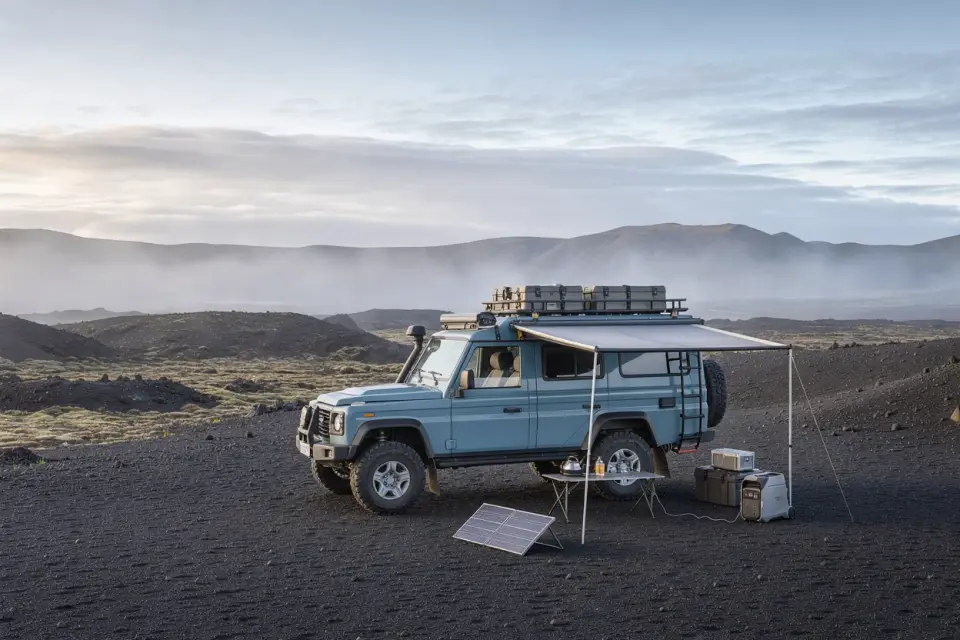
Selecting a portable power station and solar setup requires balancing battery capacity, inverter output, and recharge flexibility against space and payload limits. Brand ecosystems like EcoFlow UK offer modular off grid power solutions, but buyers must evaluate continuous draw, physical dimensions, and realistic solar replenishment before committing.
Key takeaways
- Audit everyday electrical loads in watt hours rather than relying on peak wattage ratings alone.
- Assess vehicle payload and storage footprint carefully, as higher battery capacity directly increases overall weight.
- Review solar input limits and charge controller compatibility to match panels with your power station's voltage specifications.
- Distinguish between commercial partner descriptions and your own verified off grid energy requirements.
Understanding Off Grid Power Needs for Vehicle Travel
Equipping an overland vehicle or camper with auxiliary electricity used to require bespoke wiring, standalone leisure batteries, split charge relays, and individual inverters. In recent years, integrated portable power stations and folding solar arrays have changed this landscape significantly. These self contained units bundle lithium battery storage, an alternating current inverter, direct current outputs, and a solar charge controller into a single transportable chassis.
Before browsing brand ranges, the first step is calculating your actual daily energy budget. This means determining which appliances you plan to run and for how long each day. A 12 volt compression fridge, camp illumination, navigation devices, cameras, and laptops represent common moderate draws. Heating elements such as electric kettles, induction hobs, or travel hairdryers require substantial continuous wattage that quickly drains moderate batteries.
Energy is typically measured in watt hours for capacity and watts for running output. Sizing a system solely around an appliance's surge rating can lead to purchasing an oversized, heavy unit that compromises your vehicle payload. Conversely, underestimating baseline continuous loads like refrigeration will leave you without power when stationary in camp for multiple days.
The Partner Landscape: Evaluating EcoFlow UK Offerings
A prominent example in the off grid energy sector is our commercial partner, EcoFlow UK, marketed by EcoFlow. According to partner provided materials, their catalogue features portable power stations, solar generators, portable solar panels, and home battery systems intended to keep fridges, laptops, and outdoor gear running off grid. These commercially supplied descriptions showcase a modular approach to vehicle and outdoor electrical management.
When considering gear from partner brands like EcoFlow, it is helpful to look past marketing claims and examine how specific product tiers integrate into your vehicle layout. Many modern integrated systems are designed to bridge the gap between weekend touring and domestic backup. While versatility is an advantage, vehicle based travellers should evaluate whether handle placements, port orientations, and cooling vents match their specific boot drawers or cargo slides.
Additionally, ecosystem integration is a defining trait of established brands. Many manufacturers offer companion smartphone applications for monitoring state of charge, proprietary fast charging protocols, and optional expansion batteries. Buyers should assess whether these features add genuine convenience for their style of travel or represent unnecessary complexity for a simple camping setup.
Practical Comparison Framework for Portable Power
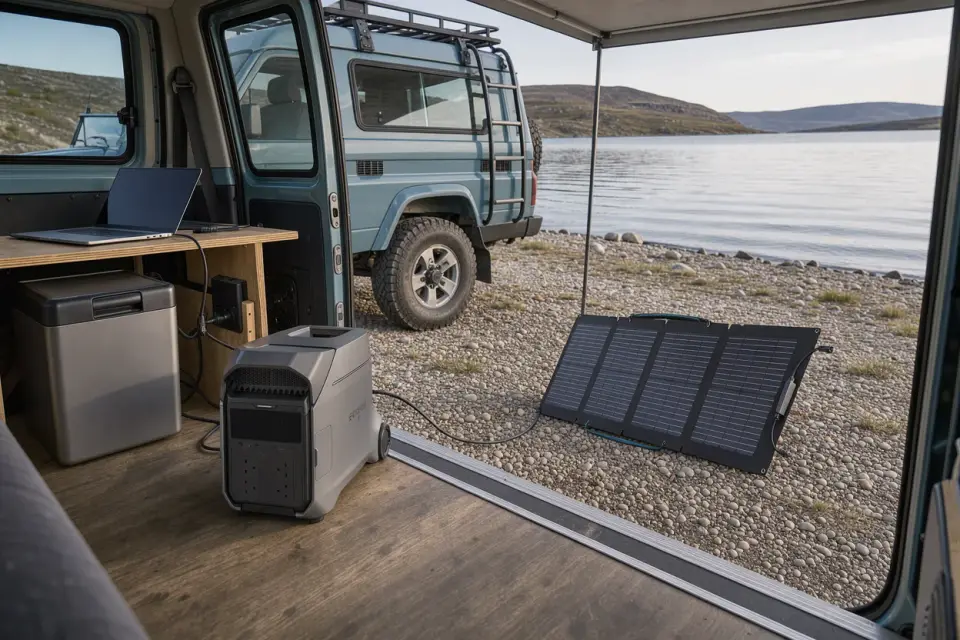
To make an objective decision between different models and manufacturers, use a structured comparison framework built around four primary pillars: storage capacity, inverter capability, input flexibility, and form factor.
Pillar One: Battery Capacity and Chemistry. Look at usable watt hours alongside cell chemistry. Modern lithium iron phosphate cells offer thousands of charge cycles and improved thermal stability compared with older chemistries, though they can carry a slight weight penalty.
Pillar Two: Continuous Inverter Output versus Pure Surge. Verify that the continuous inverter wattage comfortably covers your highest single draw, and check that the unit produces a pure sine wave output to protect sensitive electronic devices.
Pillar Three: Replenishment Channels. An off grid station is only as dependable as its ability to recharge. Compare direct current vehicle alternator charging limits, mains alternating current recharge speeds, and solar photovoltaic input tolerances. A station with an adaptable solar charge controller allows you to use third party panels rather than locking you into proprietary solar connectors.
Pillar Four: Portability and Ergonomics. Review the exterior dimensions, total weight, and thermal ventilation pathways. A unit that is too awkward to lift easily in and out of a packed vehicle cargo area will quickly become a nuisance on the trail.
Key Questions to Ask Retailers and Manufacturers
When consulting an equipment specialist or retailer, asking targeted questions will help avoid costly mismatches between your gear and your electrical expectations.
First, ask: What is the maximum continuous solar input voltage and current that this internal charge controller accepts? Exceeding voltage limits can damage the unit, while low voltage ceilings may prevent you from wiring multiple solar panels together in series.
Second, ask: Does the power station support true pass through charging without accelerating battery cell degradation? Running an essential camp fridge while simultaneous solar input tops up the battery is critical for multi day basecamp stops.
Third, enquire about cold weather behaviour: What are the low temperature charging cut offs for this battery chemistry? Most lithium batteries cannot safely accept a charge below freezing, meaning winter vehicle expeditions require either internal cell heaters or storage within a heated cabin.
Finally, clarify serviceability and warranty coverage: How is customer warranty support handled within the United Kingdom, and are internal cooling fans or inverter components replaceable if an issue arises after extensive washboard road vibration?
Hypothetical Decision Example: Weekend Cruiser vs Extended Explorer
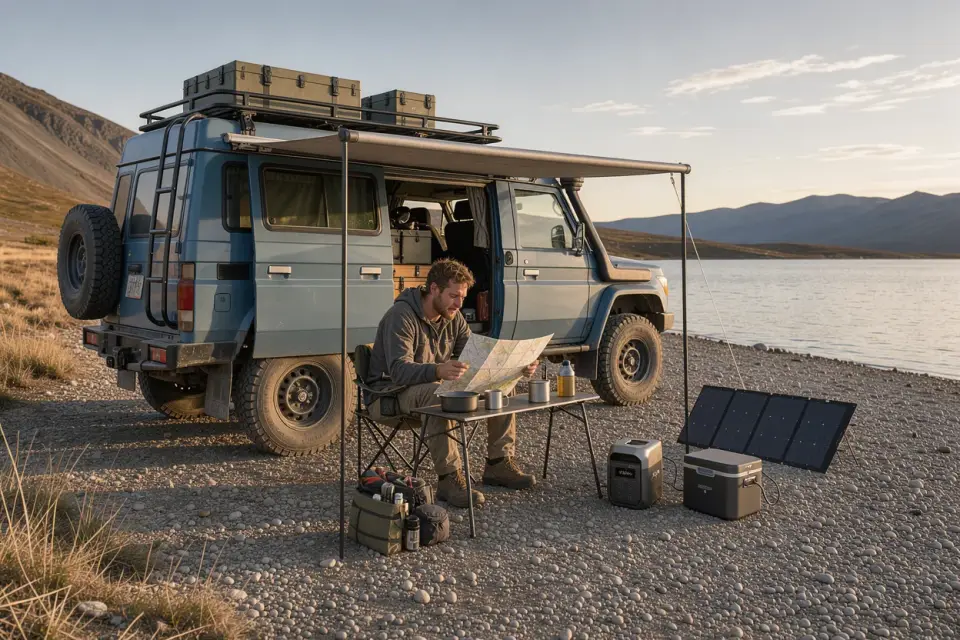
To demonstrate how priorities shift based on travel style, consider this clearly labelled hypothetical decision example comparing two different vehicle setups.
Scenario A involves a weekend traveller who primarily stays at official campsites with occasional single night wild camps. Their loads consist of a smartphone, a headtorch, and a low draw 12V coolbox. For this individual, a compact, lower capacity power station that prioritises rapid mains recharging at home and a lightweight footprint is the pragmatic choice. Investing in extensive solar panel arrays or bulky expansion batteries would simply waste vehicle boot space.
Scenario B features an independent overlander spending two weeks touring remote tracks with no access to mains grid power. Their daily equipment includes a continuous 12V compressor fridge freezer, photographic equipment, and water pump systems. This user must prioritise high cyclic capacity, robust maximum solar input to capitalise on brief sunny spells, and an inverter capable of handling sudden spikes. For Scenario B, investing in a larger system with expandable storage from a provider like EcoFlow UK becomes a justifiable allocation of both space and budget.
Common questions
Can portable power stations run standard 230V household appliances?
Yes, provided the appliance's continuous running wattage and initial start up surge do not exceed the power station's rated inverter capacity. Low draw devices like laptop chargers and cameras run easily, whereas high draw heating appliances demand large inverters that drain smaller units rapidly.
How does ambient temperature affect portable lithium power stations?
Extreme cold temporarily reduces usable capacity and prevents safe charging below freezing unless self heating circuits are present. High heat can trigger thermal protection shut offs, requiring users to position units in shaded, well ventilated areas within their vehicles.
Do I have to purchase solar panels from the same brand as my power station?
Generally, no. As long as third party solar panels match the power station's open circuit voltage, amperage limits, and connector types, you can use generic or existing portable panels with most integrated stations.
What is the difference between continuous wattage and peak surge wattage?
Continuous wattage is the electrical load an inverter can sustain indefinitely under normal thermal conditions. Peak surge wattage is a brief burst capacity, typically lasting fractions of a second, designed to start inductive loads such as compressor motors.
Partner discounts in this guide
Overland Finds may earn a commission from qualifying UK purchases made through this link, at no additional cost to you. This does not imply independent product testing or endorsement. Confirm current terms and availability with the partner.

EcoFlow · UK
Find portable power stations, solar generators, portable solar panels and home battery systems from EcoFlow to keep fridges, laptops and camp kit running off grid.
- Valid in
- UK
- Discount
- UK offer · Shop portable power stations