
AI assisted editorial. Published following automated quality checks, not independent fact verification. Confirm factual, safety and legal matters with appropriate professionals.
The short answer
Integrating walking and cycling into an overland journey requires thoughtful route planning, practical campsite selection, and an unhurried daily pace. By choosing stopovers with immediate access to paths and manageable terrain, vehicle travellers can balance long stretches of driving with relaxed physical movement without turning their holiday into an exhausting or rigid training schedule.
Key takeaways
- Select pitches that link directly to footpaths or bridal ways so you avoid navigating high speed rural lanes on foot or unhitching bikes.
- Structure your overland driving itinerary with shorter travel legs to leave ample daylight for exploring local surroundings at an easy pace.
- Ask campsite managers upfront about gate curfews, cycle wash points, and ground conditions to ensure smooth arrivals and departures.
- Acknowledge personal physical limits and adapt each outing to your comfort, discussing specific health concerns with a qualified healthcare professional.
Balancing Vehicle Travel with Everyday Movement
Overlanding naturally involves substantial periods spent sitting behind the wheel. Whether tackling tarmac motorways, winding mountain passes, or corrugated gravel tracks, vehicle travel requires sustained focus while remaining physically stationary. Over several consecutive driving days, this routine can leave travellers feeling stiff, lethargic, and disconnected from the landscapes they set out to explore.
Creating room for spontaneous strolls or gentle bicycle rides does not require structured workout regimes or specialised performance goals. Instead, it is about shifting travel habits to make gentle movement a normal part of vehicle based adventure. A ten minute wander around a scenic rest layby or a relaxed pedal along an access track helps transition the mind from navigation mode to camp life.
Because individual capabilities, energy levels, and mobility requirements differ from one traveller to the next, personal pacing is essential. Everyday habits should remain adaptable to how you feel on any given afternoon. If you have underlying musculoskeletal issues or cardiovascular considerations, consulting a qualified healthcare professional ensures you choose travel routines that support your wellbeing safely.
Evaluating Campsites for Walking and Cycling Access
Not all campsites cater well to outdoor movement away from the vehicle. Many rural parks sit alongside narrow national speed limit roads lacking pavements, footpaths, or verge space. Arriving at such a location can inadvertently trap overlanders within their pitch boundaries unless they pack down their entire vehicle setup just to drive somewhere safer to walk.
When assessing potential campsites, look closely at immediate perimeter access. Facilities adjoining nature reserves, public footpaths, canal towpaths, or disused railway cycle routes offer exceptional convenience. You can simply turn off the engine, set up your awning, and immediately step out onto quiet paths without mixing with motor traffic.
Terrain within and around the campsite also matters. Steep gradients, loose shale, or boggy grass pitches can make wheeling a bicycle or walking at dusk awkward, particularly after long hours on the road. Flat or gently undulating topography provides an inviting environment for relaxed evening loops before settling in for dinner.
Practical Comparison Framework for Activity Friendly Camps
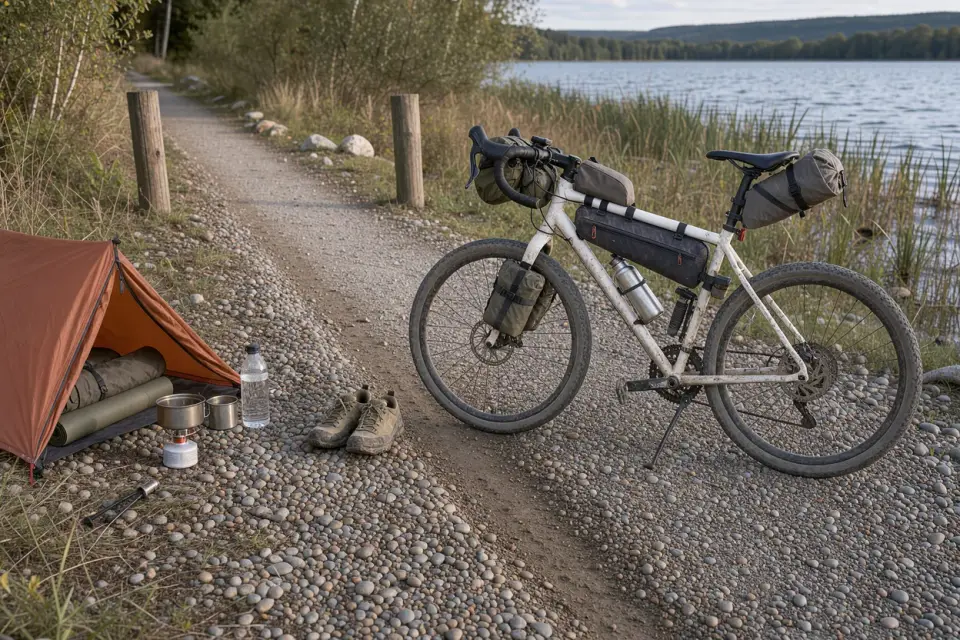
To help overlanders evaluate stopovers based on movement opportunities, the following comparative framework outlines how common campsite styles support casual walking and cycling.
Remote Dispersed or Wild Pitch: Trail connectivity depends entirely on location, ranging from pathless wilderness to rugged tracks. Vehicle transit to find smooth walking surfaces is often unnecessary if you are comfortable with uneven ground, but surface firmness is unpredictable and traffic exposure is typically very low. It suits self sufficient overlanders seeking total seclusion, though navigation requires vigilance.
Managed Farm or Estate Site: Often features direct footpaths or bridleways intersecting the property boundary, eliminating the need to drive elsewhere for an evening stroll. Surfaces generally consist of unpaved farm tracks, pasture, or crushed gravel. Traffic is minimal, limited to farm vehicles, though seasonal mud and livestock gates are common considerations.
Commercial Trailhead Holiday Park: Delivers immediate access to graded multi use trails and asphalt lanes directly from the pitch. Vehicles can remain parked for days. Surfaces are typically hard packed, flat, and well maintained with minimal traffic within the park boundaries. This option discounts predictable ease and excellent amenities for unhurried cycling and walking.
Questions to Ask Campsite Operators Before Booking
A brief phone call or message to a campground manager can clarify whether a site suits your walking and cycling preferences before you commit your rig to a pitch. Practical enquiries prevent frustrating surprises upon arrival.
Is there direct, off road pedestrian or cycle access out of the property, or must visitors travel along main public roads?
What are the ground conditions of the tracks surrounding the pitches, especially following recent wet weather?
Are there designated storage areas, wash down points, or secure anchor points for bicycles if they are kept outside the vehicle?
Do entrance gates or trail access points lock at night, and are there curfew restrictions that affect returning from an evening walk after sunset?
Are dogs permitted on the adjacent public rights of way, and are there working livestock fields travellers should know about beforehand?
Hypothetical Decision Example: Choosing a Basecamp for the Weekend
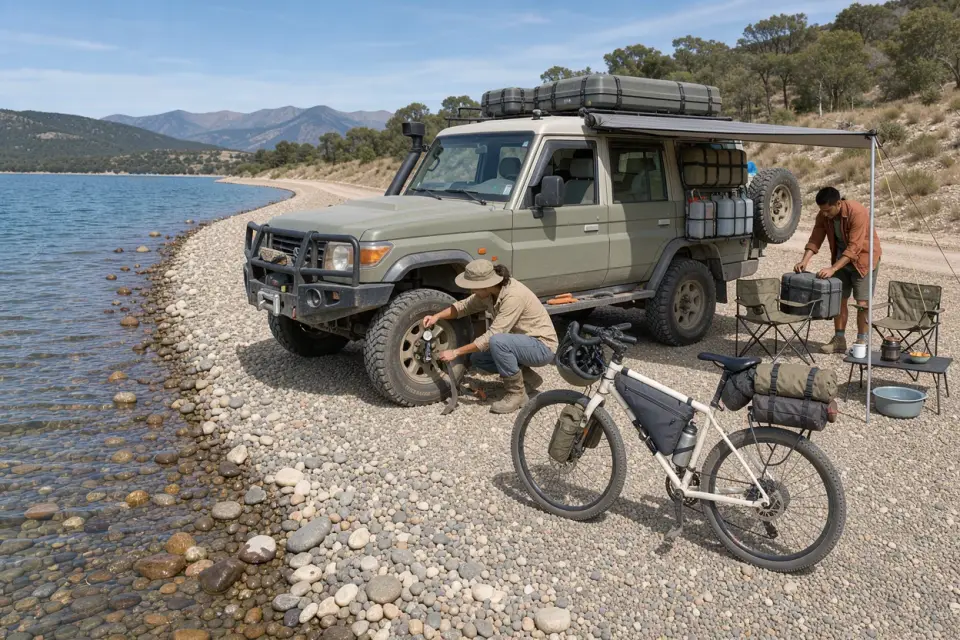
Consider this hypothetical scenario: an overland couple travelling in a converted four wheel drive camper is planning a three night stopover in a forested valley. They wish to spend their mornings exploring on foot and their late afternoons cycling to a local village, avoiding moving their camper once pitched.
Option A is a scenic hillside farm pitch situated three miles from the village along an unlit, narrow country lane with blind corners and high hedgerows. The pitch is cheap and private, but any walking or cycling requires braving vehicle traffic on the road or navigating steep, unmarked sheep tracks.
Option B is a managed campsite situated adjacent to a disused railway line that has been converted into a flat, shared use greenway leading directly to the village. The site is slightly more populated and carries a modest booking fee, but it provides instant, traffic free trail access right from the vehicle door.
Tradeoff analysis: While Option A appeals to the desire for wilderness solitude, it severely limits low stress walking and cycling. Option B compromises slightly on remote atmosphere but perfectly aligns with their goal of easy daily movement without repacking the vehicle. For a trip centred on walking and cycling, Option B proves the more practical, relaxing choice.
Rest Days, Bedtime Routines, and Road Longevity
A successful overland expedition is not a continuous marathon of driving. Scheduling deliberate rest days where the ignition key stays in your pocket allows you to fully enjoy camp life, prepare simple nourishing meals from local ingredients, and reconnect with fellow travellers or camp neighbours.
Pairing a gentle evening stroll with a quiet wind down routine helps regulate sleep patterns after days filled with changing scenery and road vibrations. Fresh air, modest movement, and reduced screen time inside the camper promote deeper rest, ensuring you wake refreshed for the next driving stage.
Always remember that wellbeing on the road is personal and should never feel like a chore. Listen to your body, choose activities that bring genuine enjoyment, and adapt your overland route to support a sustainable, healthy travel rhythm.
Common questions
How can overlanders tell if a campsite discounts safe walking routes before arriving?
Review satellite imagery, local public right of way maps, and recent guest notes to assess whether walking begins at the pitch boundary or requires navigating narrow, verge less rural roads with active vehicle traffic.
What is the best way to manage bicycles on an overland vehicle without cluttering living space?
External swing away hitch carriers or lockable interior garage compartments maintain living room inside the rig. Keeping bikes easily accessible prevents them from becoming an inconvenient obstacle during quick camp setups.
How does camp setup time influence willingness to take an evening walk or ride?
Complex camp deployments often leave travellers feeling too tired to venture out before sundown. Streamlining awnings, bedding, and kitchen routines frees up daylight and energy for a casual stroll or pedal around the local area.