
AI assisted editorial. Published following automated quality checks, not independent fact verification. Confirm factual, safety and legal matters with appropriate professionals.
The short answer
Deciding between a fixed rear garage bed and a convertible lounge hinges on how you balance gear storage against indoor living space. A permanent raised bed secures bulky expedition equipment underneath and avoids daily bedding teardown, while a convertible rear lounge discounts expansive seating, broad dining space, and open sightlines during long spells of bad weather.
Key takeaways
- Fixed garage layouts protect outdoor equipment inside the rig and eliminate the friction of making and unmaking the bed each day.
- Rear lounges provide substantial social and dining space, which proves invaluable during prolonged wet weather or indoor work sessions.
- Staggered sleep schedules favour a permanent bed layout, allowing one traveller to rest without monopolising shared living furniture.
- Convertible setups require dedicated storage for bedding during the day, which competes directly with general luggage and pantry space.
The Daily Living vs Gear Volume Spectrum
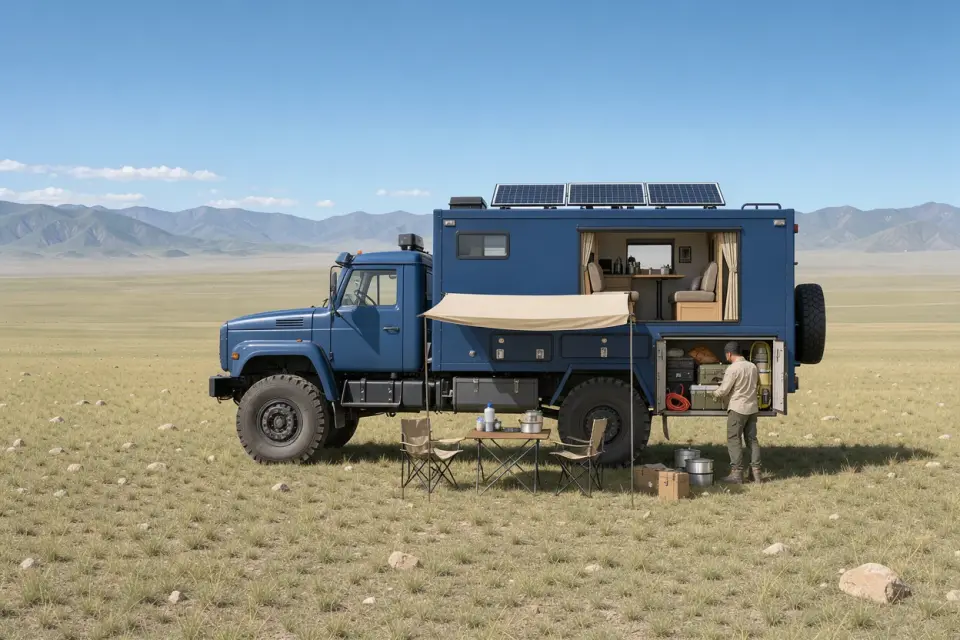
Every overland build involves an unavoidable compromise between interior human habitat and exterior cargo capacity. The rear third of an adventure vehicle represents the largest contiguous volume available to planners, making the choice of how to furnish this zone fundamental to your life on the road. The decision generally falls along the Daily Living versus Gear Volume Spectrum, a framework that contrasts daytime domestic comfort directly against equipment carriage.
On one end of the spectrum is the fixed transverse bed sitting above an enclosed gear garage. This configuration assumes your primary camp activities happen outdoors or around a compact forward seating area, reserving the rear for high volume equipment storage below and an undisturbed sleeping platform above. It treats gear security and bed readiness as top priorities.
On the opposite end sits the convertible rear lounge, typically arranged in a U shape or parallel bench configuration. This approach dedicates maximum interior cubic capacity to daytime relaxation, dining, and remote working. The space can transform into a vast sleeping area at night, but it does so by forfeiting dedicated, full height exterior access cargo space underneath.
Living Routines, Weather, and Daily Friction
The practical difference between these floorplans reveals itself in how everyday tasks unfold in camp. Overlanding often involves travelling across varied climates, and extended periods of rain, wind, or dust will inevitably force you inside. In foul weather, a rear lounge provides an inviting communal area where multiple travellers can stretch out, cook, eat, and read without feeling confined to cab seats or a narrow forward bench.
Furthermore, opening the rear barn doors of an overland rig while sitting in a U shaped dinette creates an unbroken connection to the landscape. This open sightline makes compact camper cabins feel significantly larger than their exterior footprints suggest.
However, that daytime openness comes with continuous logistical friction. Converting the lounge into a bed requires dropping a central table, shifting backrest cushions into place, and retrieving duvets or sleeping bags from cupboards each night. In the morning, the process must be reversed before anyone can sit down for breakfast. Over weeks or months on remote tracks, this daily routine can become a tiresome chore, particularly after demanding driving days.
Storage Practicalities for Overland Equipment
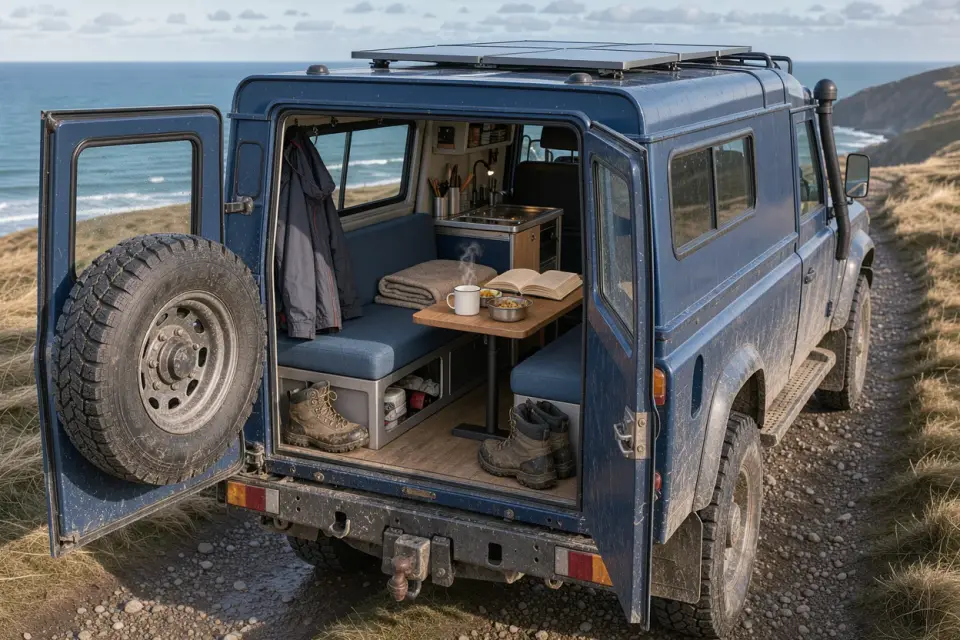
For travellers carrying technical outdoor equipment, recovery tools, and off grid utility systems, storage architecture often dictates vehicle choice. A raised fixed bed creates a clean structural separation between clean domestic living space above and dirty mechanical equipment below.
The underneath garage allows you to load mud caked recovery tracks, spare fluids, bulky tools, hiking packs, and leisure gear directly from the rear doors without dragging them through the interior living quarters. It also provides a logical home for high capacity freshwater tanks and auxiliary power banks, keeping plumbing and wiring safely isolated beneath a sturdy timber deck.
In contrast, a convertible lounge accommodates gear exclusively within under seat storage benches. Accessing these compartments usually requires tilting seat cushions and disturbing sitting companions. Bulky, awkward items such as folding bicycles, inflatable paddleboards, or comprehensive toolboxes rarely fit into partitioned bench boxes, forcing travellers to mount them externally or sacrifice cabin floor space while in transit.
Questions to Ask Builders and Converters
If you are evaluating custom builds or production overlanding campers, examining floorplan details with the seller will prevent costly misjudgements. Begin by asking how systems maintenance is handled: 'How do I inspect water pumps, shutoff valves, or battery fuses when the rear space is packed with equipment?' In both layouts, utility access must remain straightforward when weather turns bad.
For lounge layouts, enquire about cushion construction and storage: 'Where is full size bedding intended to live during daytime transit, and what density foam is used to prevent bottoming out across seams at night?' Seating foam that feels soft during a brief showroom test may prove uncomfortable as a sleeping mattress over long journeys.
For garage layouts, ask about vertical clearances: 'What is the exact vertical clearance from the garage floor to the bed framing, and what headroom remains above the mattress?' Ensuring you can sit upright in bed without bumping your head against overhead lockers is vital for long term comfort.
Hypothetical Decision Example: Morning Routines on Trail
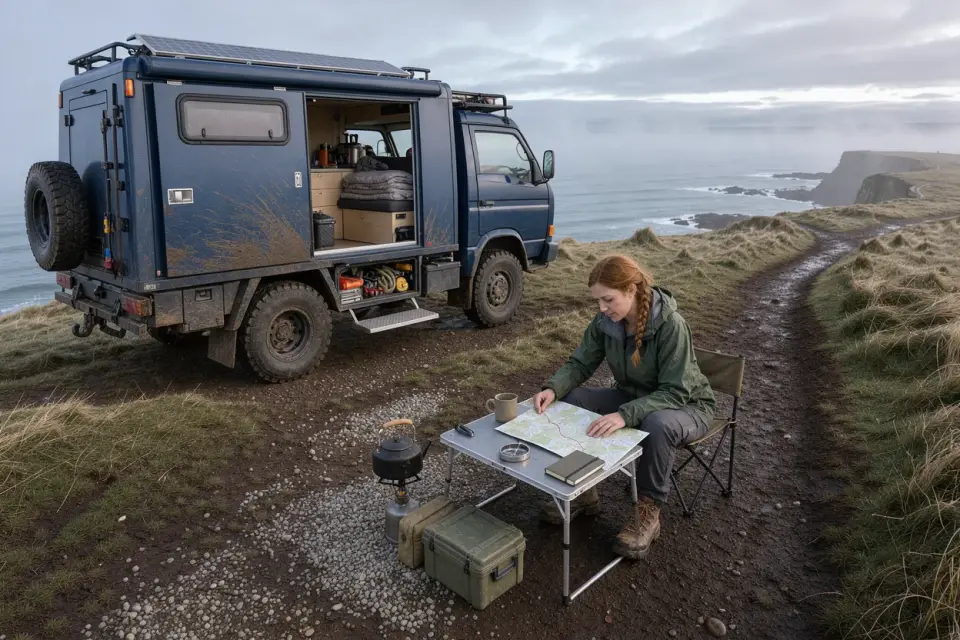
Consider a hypothetical couple planning a six month expedition through varied terrain, travelling with two folding bicycles, heavy hiking backpacks, and photography gear. They hold distinct morning habits: one partner rises early at sunrise to brew coffee and prepare maps, while the other prefers to sleep an hour longer.
If this couple selects an open convertible rear lounge, their differing routines create an immediate friction point. The early riser cannot use the primary table or seating without dismantling half the sleeping platform, inevitably waking their sleeping partner. Furthermore, packing away the bikes and backpacks requires lifting under seat benches or leaving gear outside exposed to the elements overnight.
By choosing a fixed transverse bed over a tall rear garage instead, their gear remains locked away cleanly below the sleeping deck. The early riser can slip quietly out of the permanent bed and use a compact front swivel table to read and make breakfast, leaving the partner undisturbed on the untouched mattress. For their specific lifestyle and equipment volume, the fixed bed provides the smoother, lower stress routine despite sacrificing the wider daytime lounge.
Common questions
Does a permanent rear bed make a small camper feel too cramped inside?
A permanent bed does reduce the sense of open volume because it creates a solid horizontal barrier across the vehicle. However, combining a fixed rear bed with swivel front cab seats creates an efficient front dining nook, keeping distinct living and sleeping zones separate.
How much time does converting a rear lounge bed actually take each day?
Converting a rear lounge typically takes between three and seven minutes each morning and evening. While brief, this process requires moving and straightening multiple cushions, securing bedding, and locking tables into place twice every day of your trip.
Can you carry bicycles inside a vehicle fitted with a rear lounge layout?
Carrying standard bicycles inside an intact rear lounge is generally impractical without completely blocking the central aisle and living area. Most travellers with lounge layouts must mount bicycles externally on rear door carriers or tow bar racks.
Which layout works better for solo overlanders working remotely on the road?
Solo travellers often find convertible lounges exceptionally comfortable for remote work, as they provide a generous desk surface and broad seating. A solo traveller can also choose to leave the bed made up across half the lounge while retaining permanent single side seating.