
AI assisted editorial. Published following automated quality checks, not independent fact verification. Confirm factual, safety and legal matters with appropriate professionals.
The short answer
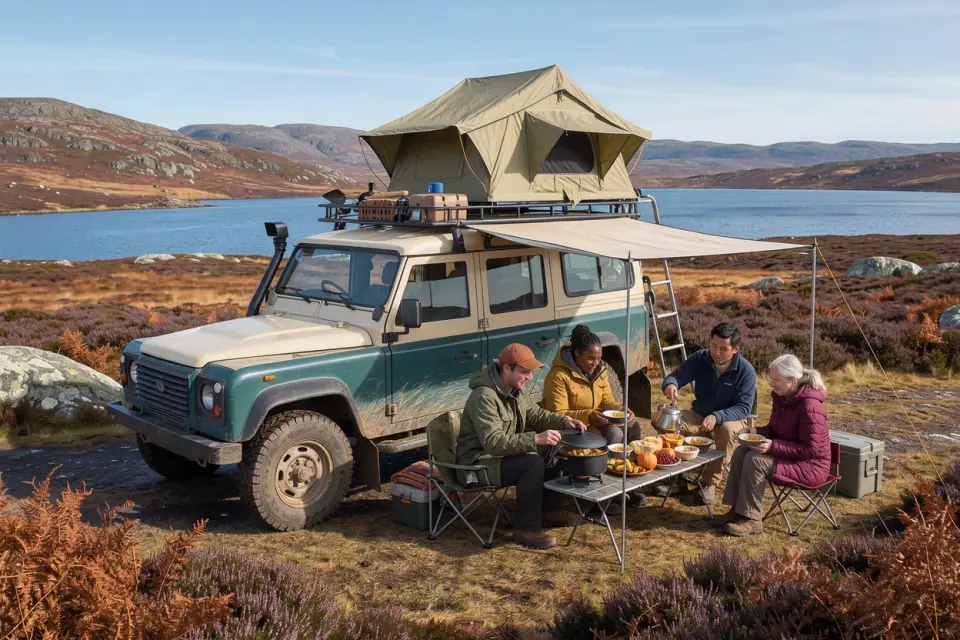
Hosting a holiday gathering during an overland trip does not require a domestic kitchen or a vast pitch. Whether marking the United States Thanksgiving on 26 November 2026 or simply using late autumn travel for an off grid communal meal, small space overland gatherings succeed through streamlined one pot cooking, weatherproof outdoor living, and shared logistics across rigs.
Key takeaways
- Design a compact menu around a single robust heat source rather than attempting complex multi course timings on camp burners.
- Pool communal equipment like awnings and folding tables across attending vehicles to establish a sheltered social hub.
- Distribute preparation, water sourcing, and wash up tasks beforehand to keep host fatigue low inside a compact camper footprint.
- Prioritise communal downtime, scenic walks, and early night routines over elaborate schedules that strain travel reserves.
Embracing Autumn Gatherings in Camp Life
Celebrating on the road shifts the focus from rigid domestic traditions to community, shared scenery, and the unique camaraderie of vehicle based travel. While the US holiday falls on 26 November 2026, other nations mark autumn harvest milestones on different dates or omit them altogether. Regardless of your cultural background, late November discounts a welcome excuse to slow travel down, link up with fellow overlanders, and cook a hearty communal feast.
Life on the trail brings natural constraints that actually enhance the occasion. Living out of a 4x4, campervan, or roof tent encourages you to pare back the fuss. Instead of spending hours managing complex ovens and crowded dining rooms, a mobile celebration thrives on open air, warm layers, and informal hospitality organised around a tailgate or fold out galley.
Keeping expectations realistic is the cornerstone of a memorable road gathering. A compact vehicle cabin cannot double as an expansive dining room. Success relies on viewing your vehicle as the support base while using external awnings, windbreaks, and campfire circles as the true communal living room.
Simplifying the Feast: Practical Camp Galley Strategies
Traditional holiday recipes are notoriously demanding on oven capacity, workspace, and refrigeration, three things notoriously scarce in an overland rig. Attempting to roast a whole bird and juggle multiple baking dishes on a dual burner camping stove is a quick route to cold food and blown gas supplies.
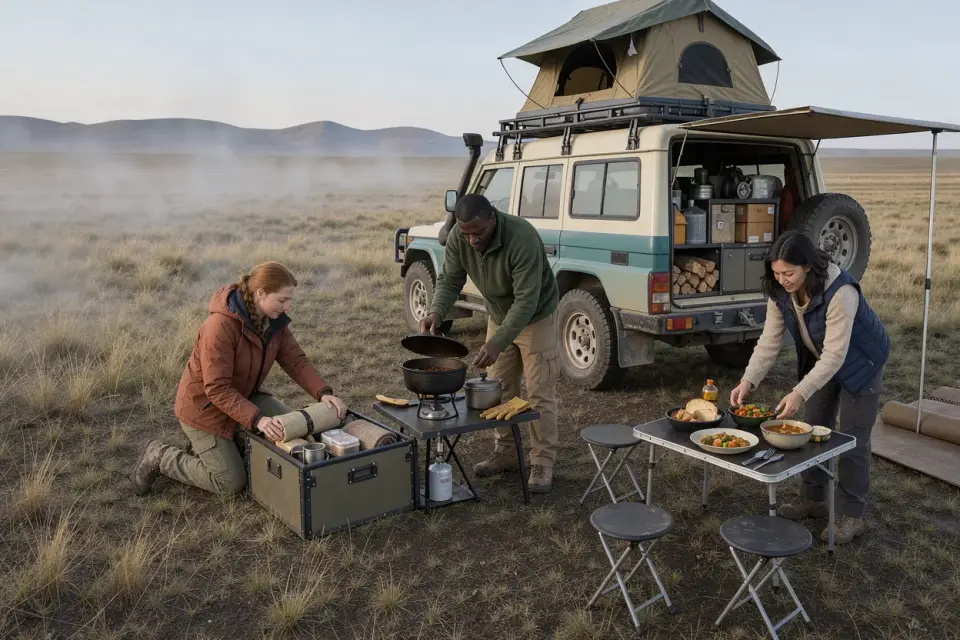
Reframe the feast around resilient, one pan staples. Slow braised joints in a cast iron Dutch oven, thick autumn vegetable potages, and skillet based sides preserve the comforting spirit of the feast while demanding minimal galley space. Pre prepping root vegetables and spice mixes at home or in town before heading onto remote tracks saves precious vehicle water and counter space on the day.
Refrigeration management requires equal restraint. An overfilled portable compressor fridge works harder, consumes more battery reserve, and makes ingredient retrieval frustrating. Prioritise chilled space for fresh proteins and rely on robust seasonal produce, such as squash, onions, and root vegetables, that store securely in dry ambient crates.
Shelter, Comfort, and Communal Camp Logistics
Late season travel across the Northern Hemisphere often brings crisp days, sharp wind chills, and early sunsets. Creating an inviting environment across several vehicles requires strategic camp arrangement rather than relying solely on interior living space.
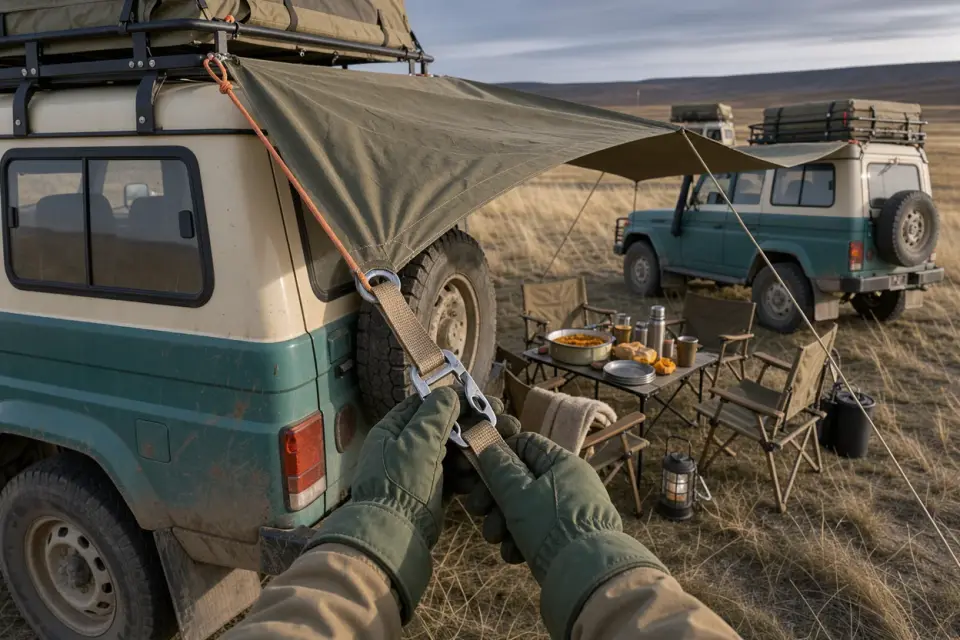
Position rigs in a horseshoe or L shaped formation to form an effective windbreak against dominant gusts. Overlapping vehicle awnings or securing a central tarp between roof racks creates a dry, shared gathering shelter where campers can congregate without cramming into one person's compact living quarters.
Seating and table space should be pooled collaboratively. Encourage every crew to bring their own camp chairs, mugs, and thermal drinkware. Using personal mess kits that each traveller washes and stores themselves avoids drowning the host vehicle in greasy washing up bowls when camp water supplies are finite.
Balancing Activity, Rest, and Social Connection
Sustained vehicle travel can generate physical fatigue, especially when driving rough tracks or coping with colder weather. A seasonal camp gathering should serve as an intentional rest day rather than a high pressure social performance.
Build movement naturally into the itinerary by stepping away from camp for an unhurried morning trail walk or a stroll along surrounding forest tracks. Low intensity outdoor activity helps offset long stints seated behind the wheel, supports regular sleep patterns, and lets guests enjoy the landscape without rigid timelines. Remember that physical stamina and travel preferences vary widely between individuals, so keep trail excursions entirely optional.
Equally important is acknowledging the need for solitude. Living in small rigs alongside other travellers can occasionally feel overwhelming. Provide space for quiet reading, early retirements to roof tents, or solo downtime without social friction. A relaxed gathering honours individual rhythms as much as communal moments.
Practical Comparison: Camp Cooking Formats for Groups
Choosing how to cook for multiple people in camp depends directly on your rig configuration, weather exposure, and fuel reserves. Comparing your options helps prevent chaotic meal times.
Centralised Dutch Oven Cooking: One primary vehicle manages a heavy cast iron pot over coals or an open burner. Advantages include rich, slow cooked flavours, low fuel burner consumption, and minimal overall pan washing. The main trade off is a lengthy cook time and the need for safe, permitted ground fire conditions or sturdy heat proof stands.
Multi Rig Potluck Sharing: Each vehicle prepares one distinct dish using their own stove and fuel supply before gathering at a shared table. Advantages include lighter fuel drain on a single host and varied culinary offerings. The trade off lies in coordinating burner timings in cold weather, which can lead to staggered courses or rapid heat loss.
Pre Cooked Reheat Stations: Meals are batch cooked prior to departure and brought up to serving temperature in camp. This discounts the fastest serving time and lowest water use for clean up, but demands dedicated fridge or cooler capacity and sacrifices the sensory atmosphere of open air cooking.
Questions to Ask Camp Hosts and Gear Providers
Before setting out to host or attend a late autumn holiday gathering on the road, clarify these practical details with campsite managers or equipment sellers:
When speaking to private campsite operators or public recreation managers, ask: What are the specific ground fire regulations and charcoal disposal rules for group pitches during late autumn? Are water points insulated or shut off for winterisation at this time of year?
When purchasing cold weather shelter or cooking gear, ask suppliers: Is this awning or tarp fabric rated for sustained wind loads and condensation when bridging between vehicle roof racks? What is the practical boiling efficiency and fuel consumption rate of this stove when operating in low single digit ambient temperatures?
Hypothetical Decision Example: The Late Autumn Rendezvous
Consider this hypothetical scenario involving two overland vehicles planning a joint November gathering in an upland national forest. Rig A is a medium wheelbase van fitted with an internal diesel heater, an induction plate, and an 80 litre water tank. Rig B is an estate car with a rooftop tent, a compact dual burner propane stove, and limited indoor living space.
Faced with forecasted evening drizzle and near freezing temperatures, the crews assess their layout. An initial suggestion was to crowd everyone inside Rig A for dinner. However, four adults and muddy boots would quickly overwhelm the van's living space, create severe interior condensation, and leave the host with all the clean up.
Instead, they adopt an integrated outdoor solution. They park the vehicles to create a leeward courtyard, deploy Rig A's side awning, and lash an auxiliary tarp to Rig B's roof bars to fully enclose a sheltered outdoor dining zone. Rig A supplies hot water for drinks and wash up, while Rig B uses their propane stove under the awning to simmer a pre made hearty stew. Each traveller eats from their personal thermal bowl. After a shared meal and an evening stroll, both crews retire to their respective sleeping setups with zero cabin clutter and preserved battery reserves.
Common questions
How do you manage camp dishes in cold weather without running out of water?
Wipe plates and pans thoroughly with scrapers or paper towels to remove grease before washing. Use a two basin system with warm water and biodegradable soap, and encourage each traveller to clean their own personal bowl and cup immediately using minimal hot rinses.
What is the best way to keep shared food warm in windy conditions?
Serve directly from heavy lidded cookware such as cast iron Dutch ovens or thermal insulated food pots rather than transferring meals to shallow serving platters, which lose heat rapidly in cold outdoor air.
How should overland crews coordinate food if dietary requirements differ?
Adopt a modular base meal, such as a hearty bean, potato, or squash stew, and offer separate cooked proteins, cheeses, or flatbreads on the side so individuals can customise their portions without requiring multiple complex main pans.