
AI assisted editorial. Published following automated quality checks, not independent fact verification. Confirm factual, safety and legal matters with appropriate professionals.
The short answer
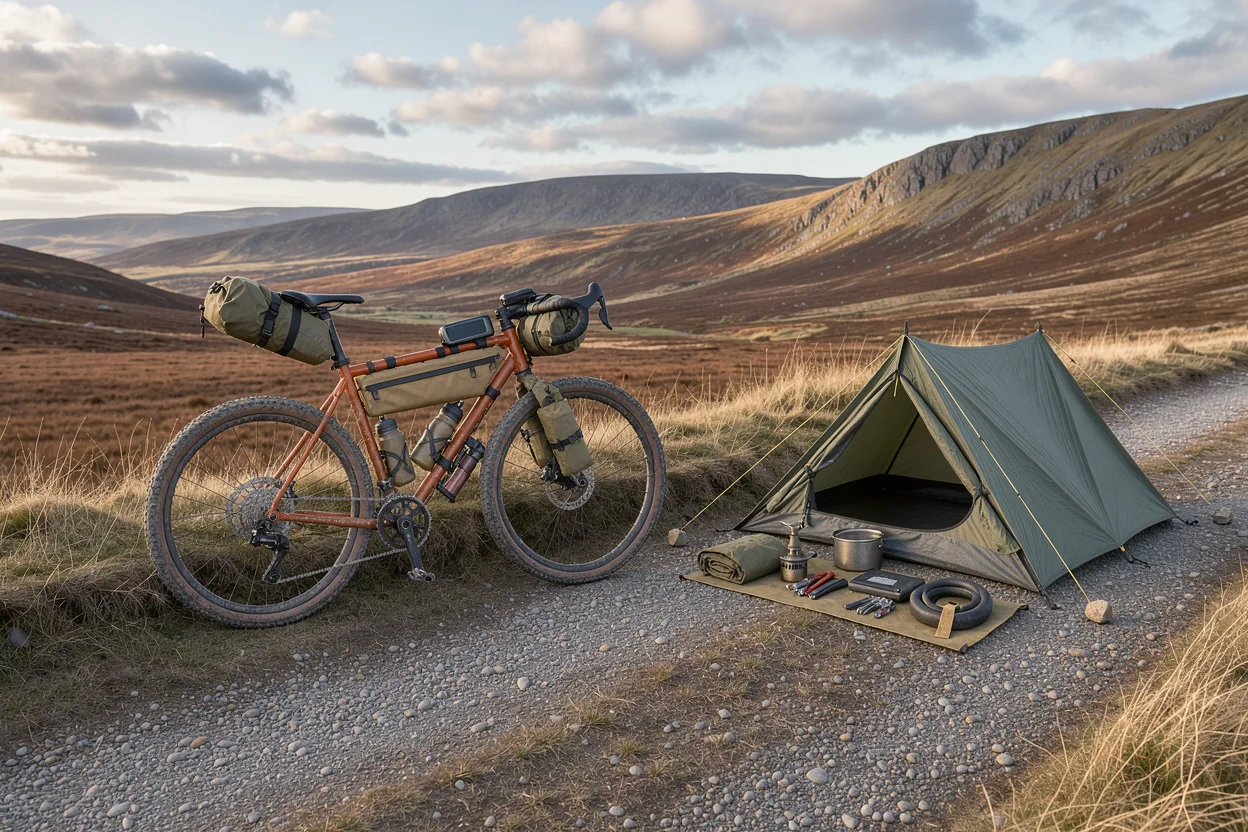
Self supported bikepacking requires a disciplined balance between load stability, durability, and practical utility. To travel successfully without support vehicles, riders must assemble an integrated system encompassing modular frame luggage, weather appropriate shelter, dependable navigation, and essential mechanical spares adapted to their route and bicycle geometry.
Key takeaways
- Distribute luggage weight central and low on the bicycle to preserve handling dynamics across off road terrain.
- Evaluate luggage using a clear framework that weighs rack free soft bags against traditional low profile panniers.
- Select shelter and sleep kits strictly according to anticipated local precipitation, night temperatures, and insect pressure.
- Ensure your mechanical kit includes spares matched precisely to your bike's specific brake, drivetrain, and tyre standards.
Luggage Architecture: Practical Comparison Framework
Choosing how to attach gear to a bicycle is the foundational decision of any self supported journey. Bikepackers generally select between two distinct architectures: modern rackless soft bags (harnesses, seat packs, and frame bags) or minimal rack mounted micro panniers. Understanding the functional tradeoffs of each approach ensures you do not compromise handling on technical trails or run out of volume on extended routes.
Rackless soft systems attach directly to the handlebar, front triangle, and seatpost via robust straps. Their primary advantage is trail agility; by hugging the bicycle's centreline, they prevent violent load shifting on singletrack and eliminate mechanical rack failure points. The tradeoff is reduced packing volume and slower access during daily stops, demanding strict minimalism with clothing and camp gear.
Conversely, lightweight rack supported systems use narrow rear or front racks to secure small, structured bags. This framework yields higher carrying volume, simpler packing routines, and better clearance for riders with small bicycle frames where clearance between saddle and rear tyre is limited. However, racks introduce rigid mounting hardware that can loosen under continuous vibration, adding minor weight penalties and increasing overall bike width on overgrown tracks.
When comparing both frameworks, evaluate three criteria: route terrain, frame clearance, and trip duration. Rough, rocky terrain strongly favours rackless soft luggage to reduce mechanical stress. Extended expeditions requiring several days of food and water between resupply stops often necessitate the added capacity of low profile racks.
Shelter, Sleep, and Environmental Protection
Your sleep system must provide complete recuperation without dominating valuable frame pack volume. The three primary options are freestanding tents, ultralight tarps or bivi bags, and non freestanding trekking pole shelters adapted for cycling via compact aluminium or carbon poles. Each requires distinct compromises in liveability, packed bulk, and weather resistance.
Bivi bags and minimalist tarps offer the lowest weight and smallest pack size, sliding easily into handlebar rolls or fork cages. They perform exceptionally well in arid or fast moving scenarios where camp is merely a brief pause between riding stints. Their limitation lies in prolonged foul weather: managing wet cycling apparel inside a restrictive bivi can saturate sleeping insulation over consecutive days.
Compact double wall tents demand more volume and carrying weight but provide an enclosed living space to dry kit, protect against biting insects, and endure prolonged rainstorms. For self supported riders traversing unpredictable climates, the modest weight penalty often protects against sleep deprivation and hypothermia, which directly undermine physical safety on remote stages.
Insulation selection involves balancing down fill against synthetic fibres. Down achieves the highest warmth to weight ratio and compresses tightly, but fails catastrophically if exposed to persistent moisture. Synthetic insulation maintains thermal properties when damp and dries rapidly, making it safer for prolonged tours in humid or coastal environments, despite its larger packed dimensions.
Self Sufficiency: Hydration, Spares, and Trail Repairs
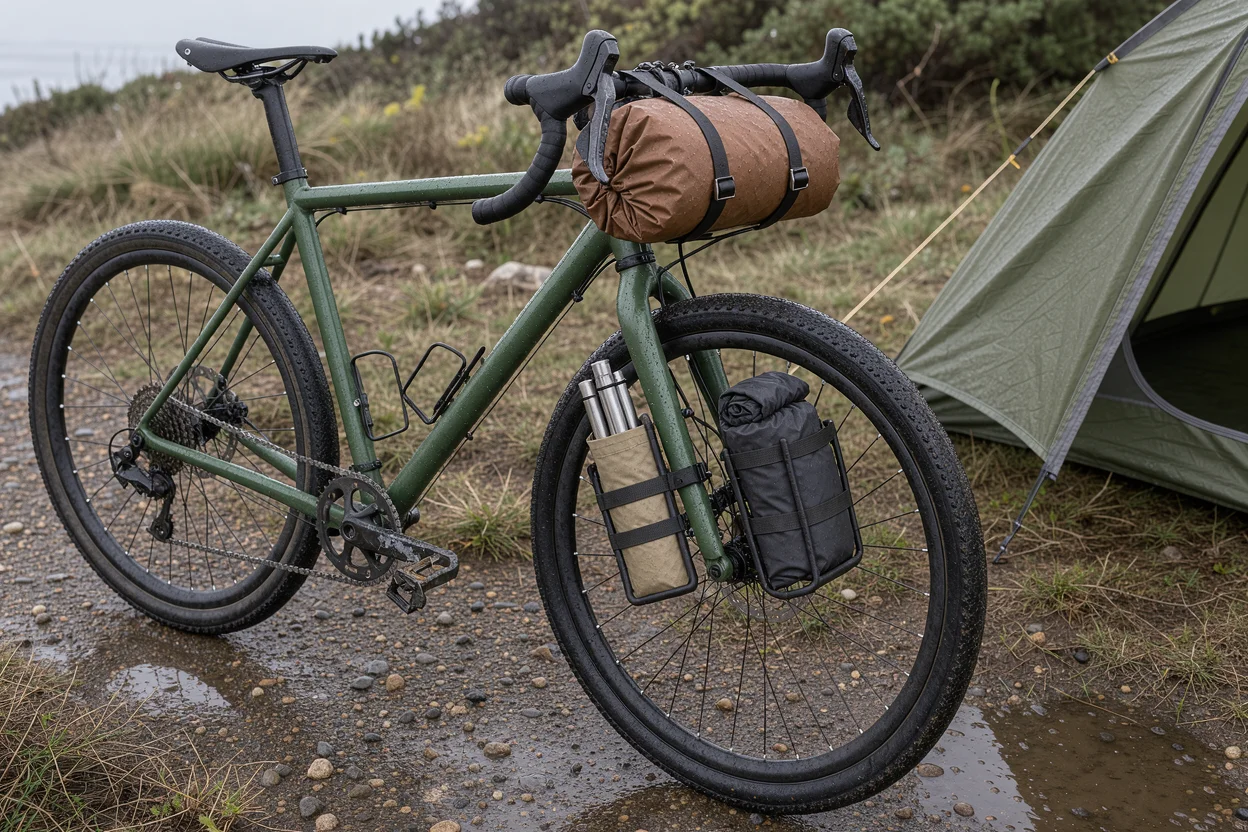
Self supported travel dictates that any breakdown in water supply or propulsion must be solved in the field. Hydration capacity should never rely solely on standard frame mounted bottles, as custom frame bags frequently occupy bottle cage mounts. Solutions include bladder reservoirs housed inside the frame pack, stem mounted feed bags, or fork mounted bottle cages secured with dedicated bosses.
A multi stage water filtration strategy is vital. Relying on a single mechanical squeeze filter risks failure from silt clogging or freezing temperatures. Carrying chemical purification tablets as a lightweight backup provides redundancy when sourcing water from agricultural run off, remote streams, or dubious community taps.
Mechanical kits must be tailored precisely to the bicycle being ridden rather than bought as generic multi tools. Tubeless tyre repair requires high viscosity plugs, vulcanising patches, a valve core tool, and spare sealant, alongside a standard inner tube for sidewall tears. Drivetrain resilience demands a dedicated quick link, chain breaker, and a spare derailleur hanger specific to your frame model.
Fasteners vibrate loose rapidly on unpaved surfaces. Inspect all mounting hardware daily, and carry spare metric bolts matching your frame's accessory eyelets. A short strip of heavy duty duct tape wrapped around a pump barrel and several high tensile zip ties provide versatile solutions for emergency field fixes.
Questions to Put to Equipment Retailers and Bag Makers
Before purchasing bespoke luggage or major kit components, consult retailers with targeted questions to avoid costly packing incompatibilities. First, ask: 'What is the exact clearance required between the bottom of the saddle bag and the rear tyre when the saddle is fully dropped or suspension is fully compressed?' This prevents dangerous tyre rub during heavy impacts.
Second, enquire: 'Are the bag fabric, zips, and seams fully welded and waterproof, or merely water resistant?' Many bags tolerate light showers but absorb water under hours of wheel spray, necessitating internal dry bags.
Third, ask: 'How does this frame bag accommodate external cable routing or modern wide profile frame tubing?' Ensuring strap placement does not crush hydraulic lines or abrade paintwork preserves mechanical function and resale value.
Finally, enquire: 'What specific repair parts, replacement straps, or buckle spares are readily available for this luggage line while travelling?' Modular straps that use standard ladder locks are far easier to fix in rural areas than proprietary moulded clips.
Hypothetical Decision Example: Mountain Track vs Mixed Gravel Touring
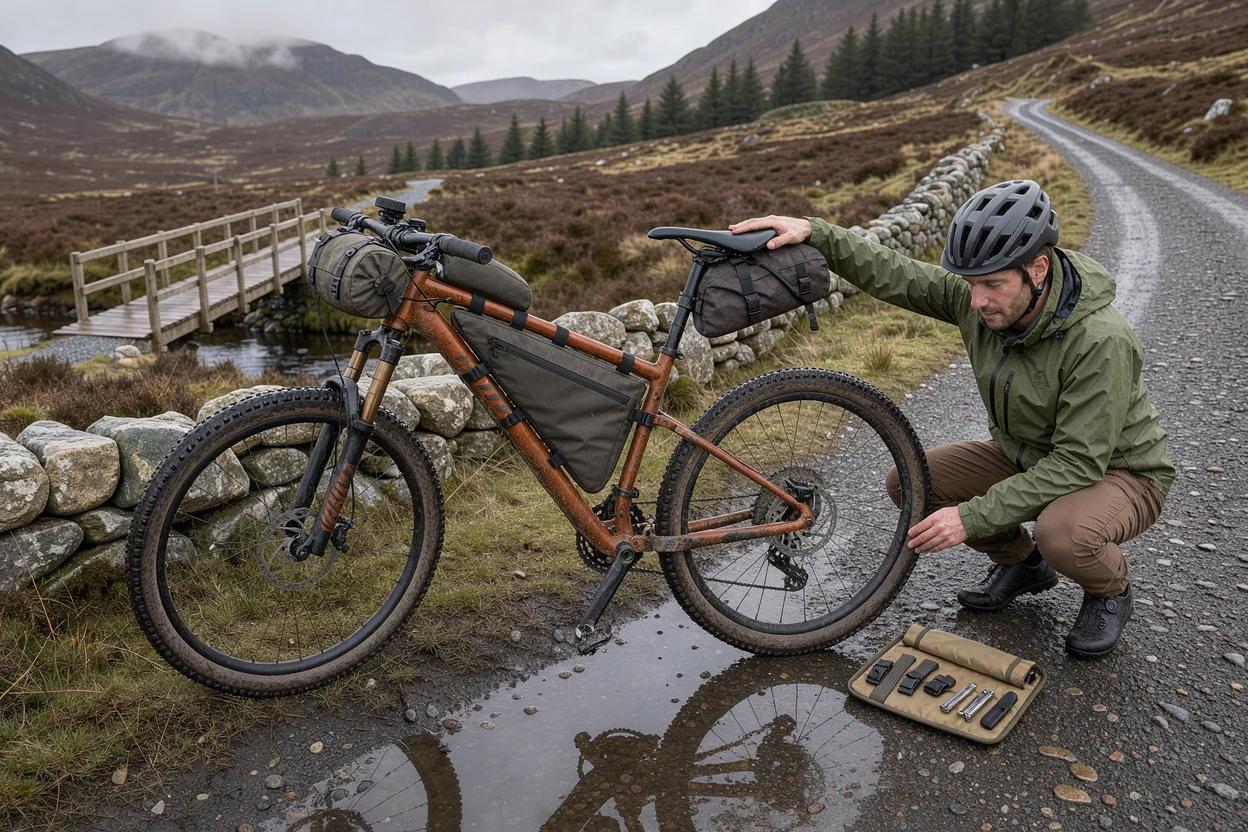
Consider a hypothetical rider, Rider A, preparing for a seven day journey across remote highland tracks featuring rocky singletrack, significant elevation gain, and unpredictable precipitation. Rider A must choose between a rack and pannier configuration and a direct mount soft bag setup.
If Rider A chooses micro panniers, they gain convenient access to bulkier layers and simple camp cooking gear. However, the wider profile risks catching trailside brush on narrow singletrack, and sustained high frequency vibrations on rough descents risk shearing rack mounting bolts, leaving the system mechanically compromised far from road assistance.
Conversely, if Rider A selects a rackless system harness on the handlebars for a dry bag tent, a central full frame bag for water and heavy tools, and an anti sway seat pack for dry sleepwear the bike retains natural handling on technical climbs and descents. Volume is restricted, requiring Rider A to omit redundant clothing and opt for a compact synthetic sleeping quilt.
The decision framework confirms that the rackless soft bag system is the appropriate selection for Rider A's remote singletrack route, prioritizing handling balance and mechanical resilience over packing volume and camp luxury.
Common questions
How do I determine whether my bicycle frame can handle bikepacking luggage?
Check your frame manufacturer's stated weight limits and eyelet load ratings. For rackless bags, measure clearances between tyres and contact points, ensuring full suspension compression does not cause tyre contact.
Is a fully waterproof bag system strictly necessary for all weather touring?
While fully welded waterproof bags offer peace of mind, water resistant bags lined with lightweight internal roll top dry sacks provide reliable, cost effective protection against sustained road spray and heavy downpours.
What is the single most critical spare part to carry on a self supported trip?
A replacement derailleur hanger specific to your bicycle's exact frame make and year is essential, as bent or snapped hangers cannot be repaired on the trail and universal spares rarely fit modern dropouts.
How should heavy items be packed within a bikepacking setup to preserve handling?
Dense, heavy gear such as tools, spare parts, cooking stoves, and water bladders should be packed inside the lower half of the frame bag, keeping the bike's centre of gravity low and centred.